
Trade Among Geopolitical Rivals: Michele Ruta
The podcast with IMF trade chief Michele Ruta examines how today’s geopolitical rivalries—most notably between the United States and China—are reshaping global trade. Ruta argues that countries should not retreat from commerce but instead broaden and diversify their trade relationships to enhance economic resilience. He traces the long‑standing link between trade policy and geopolitics, from Roman grain controls to Napoleon’s Continental System, and shows how modern export controls on semiconductors and critical minerals echo those historic tactics. Unlike the Cold‑War era, the US and China are deeply interwoven, making a full disengagement costly for both sides and for third‑party economies. Ruta highlights a surprising finding: even rival states retain incentives to cooperate when the welfare costs of pure confrontation become too high. He proposes a “geopolitical exemption” within the WTO framework—a controlled, bilateral mechanism that allows strategic decoupling while limiting spillover effects on other nations. The exemption would function as a safety valve, akin to existing flexibilities for free‑trade areas, but tailored to the unique US‑China integration. If adopted, such a tool could prevent a protracted trade war, preserve global supply‑chain stability, and give businesses clearer expectations. Absent it, policymakers risk a rapid slide into mutual restriction, which historically takes decades to reverse, harming growth and innovation worldwide.
Geoeconomics Revisited: Josh Lipsky and Matteo Maggiori
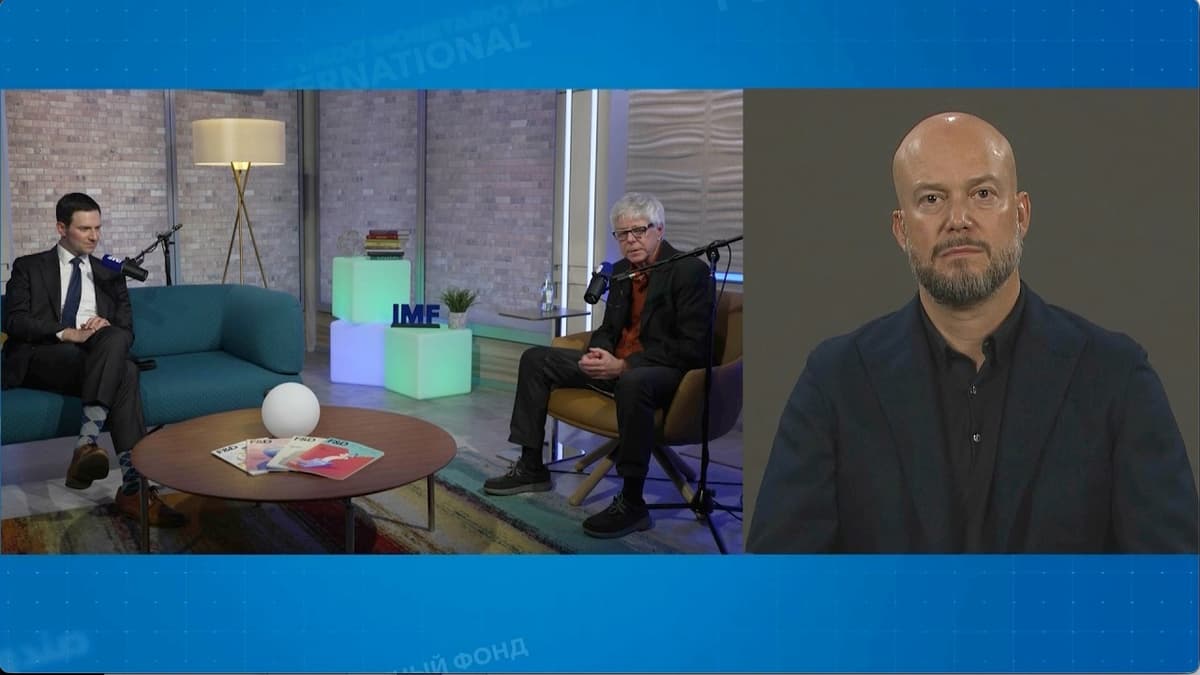
The IMF podcast revisits geoeconomics, featuring Atlantic Council’s Josh Lipsky and Stanford’s Matteo Maggiori. They frame the discussion around two historical flashpoints – the 2022 G7 decision to freeze roughly $300 billion of Russian sovereign assets and a 1945 Hirschman study of...

Gracelin Baskaran on the Race for Minerals
Gracelin Baskaran, a mining economist, explains that the transition to clean‑energy vehicles dramatically raises demand for critical minerals – an electric car uses roughly 210 kg versus 32 kg for a conventional internal‑combustion model. She outlines how this surge has turned minerals...

Barry Eichengreen and Chima Simpson-Bell on Currencies that Shine
The podcast features economists Barry Eichengreen and Chima Simpson‑Bell discussing the gradual erosion of the U.S. dollar’s dominance as the world’s primary reserve currency. Their recent NBER paper documents a steady decline in the dollar’s share of identified foreign‑exchange reserves—from...
AI Subscriptions
The podcast explores how consumer‑price statistics treat AI subscription services that retain a flat $20 monthly fee while their capabilities expand dramatically. Host Jim Tebrake and price‑statistics expert Barra Casey explain that the Consumer Price Index (CPI) aims to track...
Lotteries
The Economy podcast unpacks how statisticians record lottery tickets in national accounts, treating each ticket as a service rather than a good. A purchase is split: the operator’s costs—printing, advertising, taxes—are counted as production and thus included in GDP, while the...
Factoryless Goods Production
The episode tackles "factory‑less" goods production—where a firm designs a product but outsources its physical assembly abroad—and asks which country records that activity in its GDP. Jennifer Ribarsky of the IMF explains that GDP is a value‑added measure, so the...
2026 Spring Meetings Recap
At the 2026 Spring Meetings in Washington, DC, the IMF and World Bank held a joint press briefing to release key reports including the Fiscal Monitor and Global Financial Stability Report. Leaders emphasized safeguarding economic integrity by confronting corruption and...
The Economics of Rare Earths: Global Implications of Shortages and Industrial Policy
The IMF research team examined the economics of rare earth elements, highlighting their essential role in electric vehicles, defense systems, wind turbines and consumer electronics. Although the global market is modest—about $31 billion in 2024—the downstream impact spans trillions of dollars,...
Governor Talks: Qatar - Turning Shock Into Strategy: Fiscal Policy and Long‑Term Growth
The IMF spring meeting featured Qatar’s Finance Minister Al Kawari outlining how the emirate’s fiscal policy framework turned an unexpected regional war into a manageable strategic challenge. He highlighted the pre‑established Shock Stability Fund and sizable sovereign reserves that allow Qatar...
Governor Talks: Uruguay: Why Policy Frameworks and Communication Matter for Inflation
In a recent Governor Talks session, Uruguay’s central bank governor emphasized that robust policy frameworks and clear communication are essential tools for anchoring inflation expectations. He highlighted Uruguay’s recent success in reducing headline inflation to around 5% year‑over‑year, attributing the...

Europe’s Growth Agenda: Turning Today’s Challenges Into Lasting Gains
Europe’s growth model is under pressure as productivity gains have slipped below 1% annually and investment remains uneven across member states. Geopolitical tensions, especially wars in the Middle East, are destabilising energy markets and stoking inflation risks. Policymakers must balance...
CD Talk | Strengthening Fiscal Capacity in Fragile and Conflict-Affected States: Insights From Syria
The IMF resumed capacity development in Syria after a 14‑year hiatus, helping the Ministry of Finance rebuild fiscal institutions. Staff from the Fiscal Affairs Department, Global Public Finance Partnership, Middle East and Central Asia Department, and METAC delivered support on...
The Macroeconomics of Defense Spending, Conflicts, and Recovery
The International Monetary Fund’s new research, slated for the World Economic Outlook next week, examines how wars and surges in defense spending reshape macroeconomic fundamentals. Drawing on data from 164 countries since 1946, the study quantifies the economic toll of...

Trade in Value Added
The episode explains that conventional trade statistics record gross shipments, obscuring the true economic contribution of each nation. Host Jim Tebrake and trade‑statistics specialist Eric Strassner introduce Trade‑in‑Value‑Added (TiVA) as a framework that attributes the actual value created by each...