
What If Humanity Never Masters Fusion?
The video asks a provocative question: what if fusion power never becomes a practical, cheap baseload source? Rather than treating fusion as a technological singularity, the speaker frames it as a potential upgrade to an already diverse energy portfolio. He stresses that civilization cannot pause its growth while waiting for a miracle; existing fuels and grids must keep moving. Key insights include the distinction between physical possibility and economic scalability. Fusion could deliver dense, on‑demand power, but it still requires reactors, cooling, transmission, and massive capital—factors that make it a late‑stage competitor to modern renewables, advanced fission, and emerging storage solutions. Cheap, grid‑scale batteries already turn intermittent solar and wind into quasi‑baseload resources, while space‑based solar promises continuous power if launch costs fall. Illustrative examples highlight that solar is now among the cheapest energy sources worldwide, and that fission, despite political hurdles, remains a mature, high‑density option capable of powering cities for decades. Synthetic fuels derived from abundant electricity could replace fossil hydrocarbons, preserving existing transport infrastructure without relying on fusion. The overarching implication is clear: policymakers and investors should prioritize a resilient, multi‑source mix and invest heavily in storage technologies rather than banking on a single breakthrough. Fusion, if realized, will be an upgrade—not a foundation—so the path to a sustainable, advanced civilization lies in leveraging and improving the tools we already have.
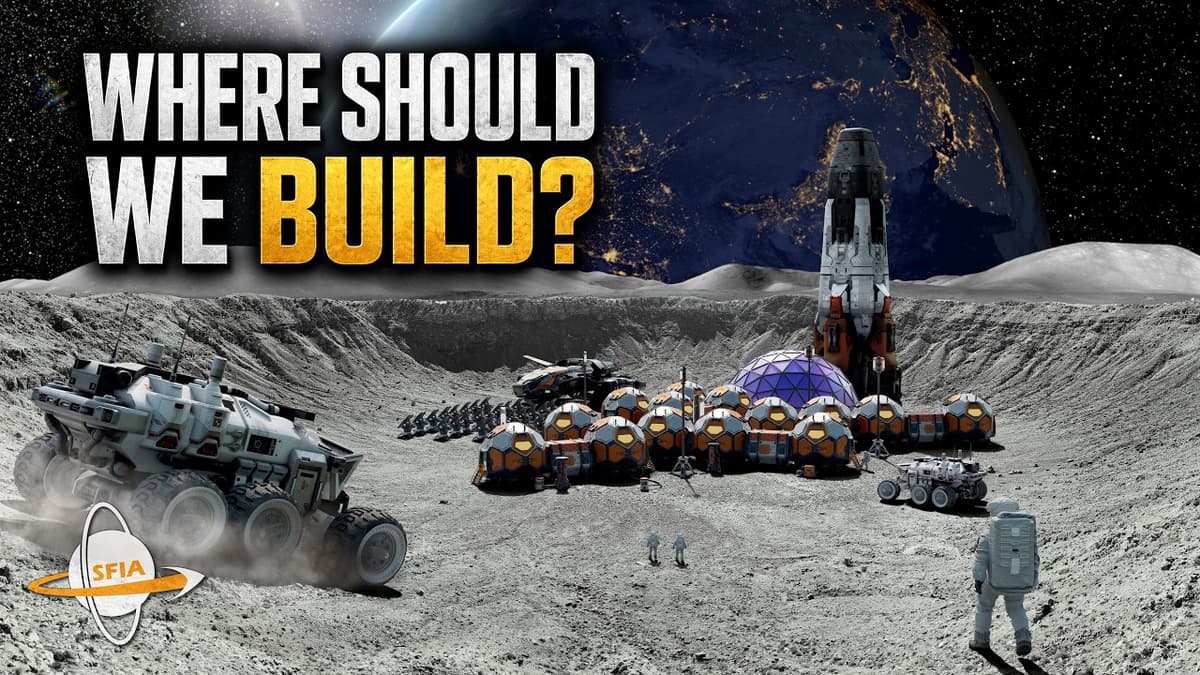
The Moon Base: Shackleton Crater vs Other Sites
The video evaluates four primary locations for humanity’s first lunar outpost—Shackleton Crater, lava‑tube subsurfaces, equatorial mare sites, and the far side—highlighting each site’s unique advantages and constraints. Shackleton offers near‑continuous sunlight and direct access to water ice, while lava tubes...
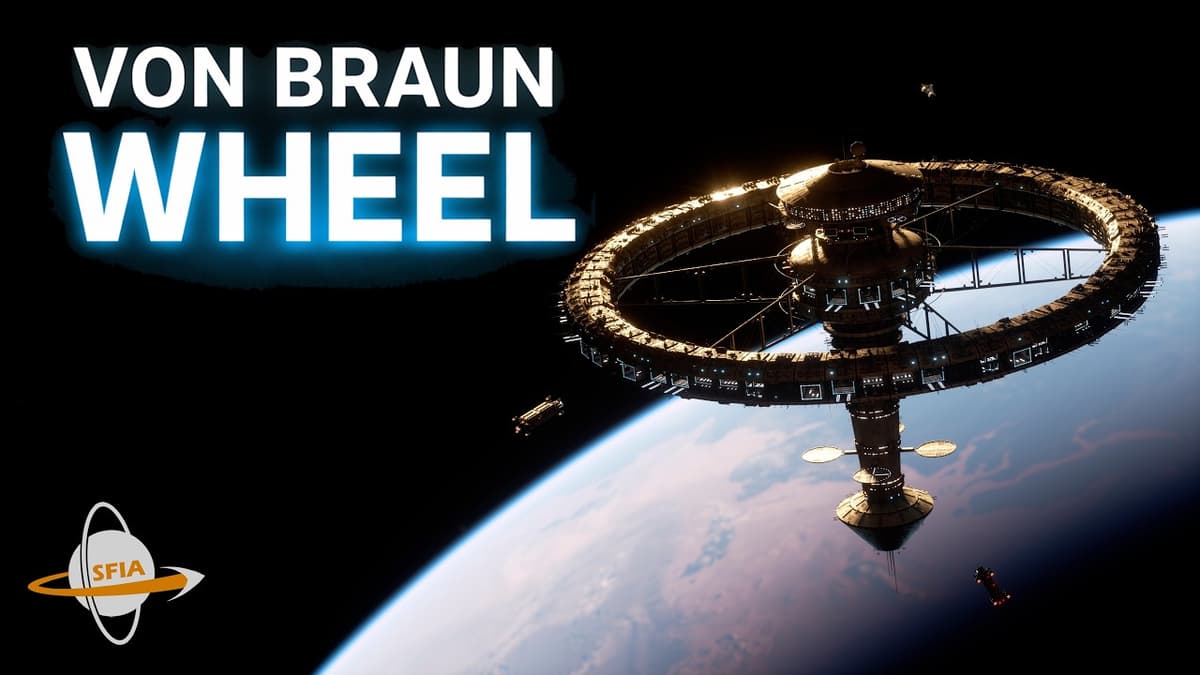
The Von Braun Wheel - Building Humanity’s First Rotating Space Station
The video revisits Wernher von Braun’s 1950s blueprint for a rotating space station – the so‑called von Braun Wheel – a 250‑foot (75‑meter) wheel designed to generate artificial gravity in low‑Earth orbit. The proposal, detailed in Collier’s magazine, placed a heavy‑lift rocket...
How Far Away Could Aliens Hear Earth?
The video examines Earth’s radio “loudness” and its relevance to the Search for Extraterrestrial Intelligence (SETI), asking whether our planet can be heard across interstellar distances and whether we might already be listening to alien civilizations. Earth constantly radiates radio energy...

The Zoo Hypothesis and the Fermi Paradox... Are We Being Watched?
The video tackles the Zoo Hypothesis as a bold answer to the Fermi Paradox, proposing that the universe’s silence is not evidence of emptiness but a deliberate policy of non‑interference by far‑older extraterrestrial societies. It argues that a civilization that arose...
Don’t Panic: A Guide to Artificial Intelligence
The video opens with a calm invitation to stop fearing artificial intelligence, arguing that panic mirrors past reactions to steam engines, computers and the internet. It frames AI as a powerful, yet non‑sentient, set of tools that can augment human...
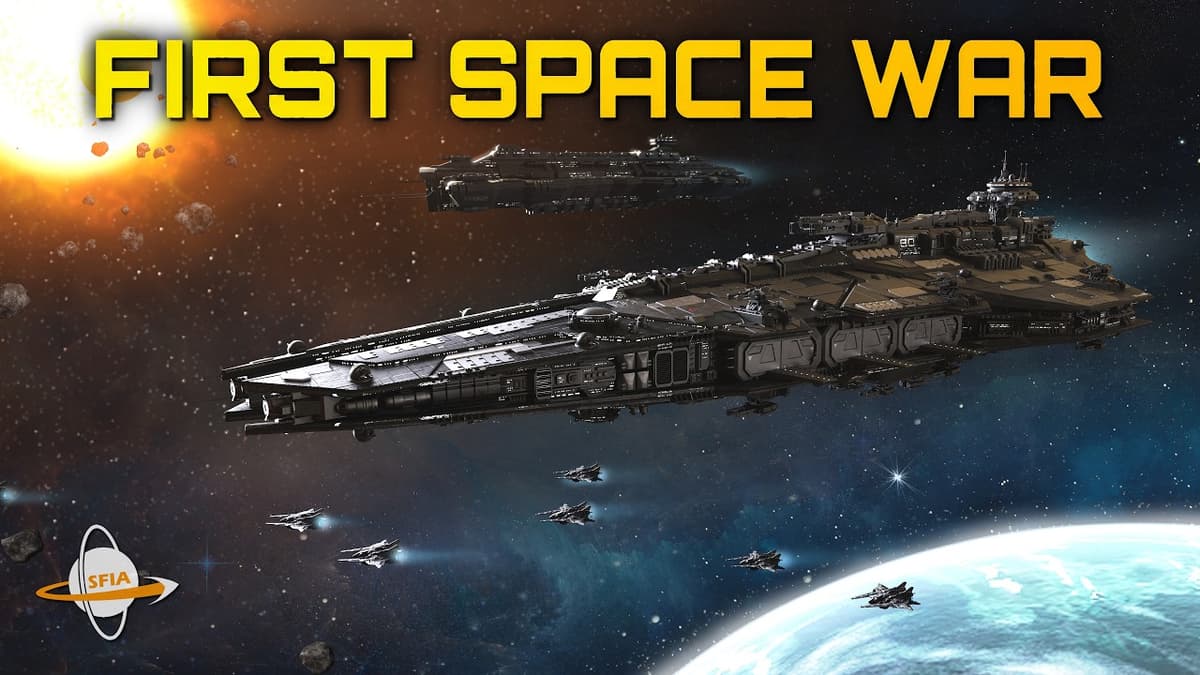
The First Interplanetary War: Tactics in the Solar System
The video argues that the first true interplanetary war will begin only when humanity’s population, industry and military are distributed across distinct planetary or orbital habitats, turning separate "wards" into rival civilizations. It contrasts this reality with the tidy, two‑sided...
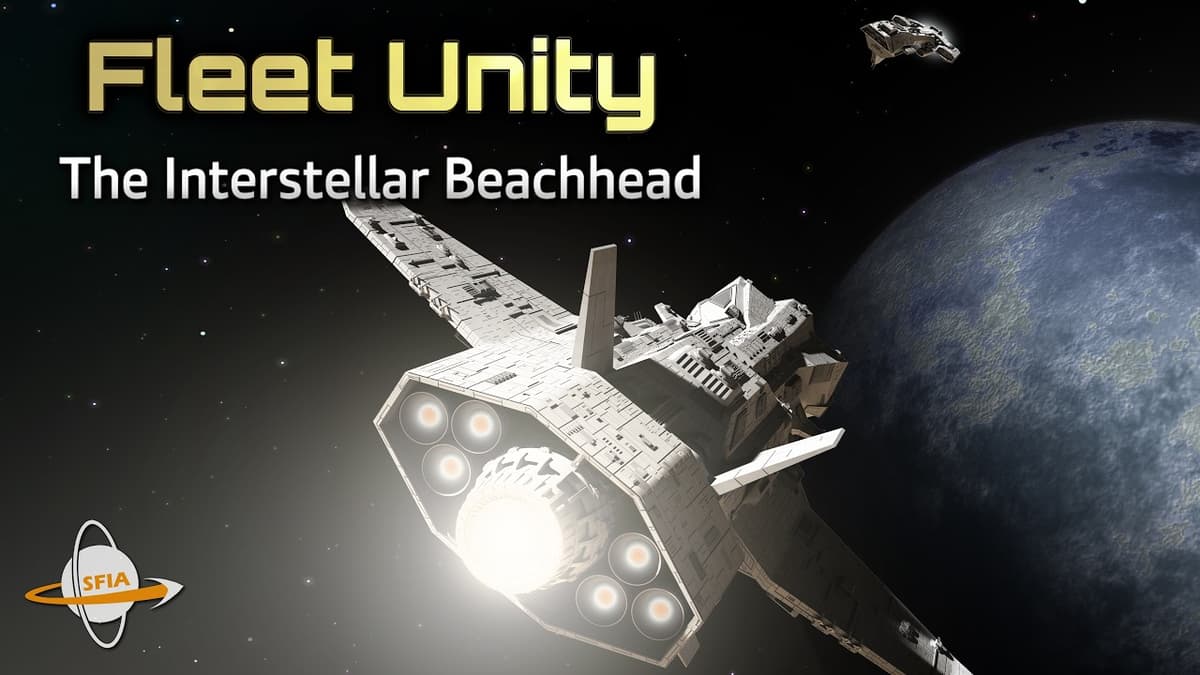
Fleet Unity: The Eridani Expedition - Interstellar Beachhead
The episode of Isaac Arthur’s “Fleet Unity: The Eridani Expedition – Interstellar Beachhead” follows the Vanguard Squadron, a lean vanguard detached from the massive Unity armada, as it performs the first deliberate slowdown burn near the 82 G Eridani system. Rather than...
How to Find an Alien Civilization
The video traces the evolution of the Search for Extraterrestrial Intelligence, from its mid‑20th‑century roots in narrow‑band radio listening to today’s broader technosignature strategies. Early SETI relied on the tidy notion that alien societies would broadcast obvious “hello” signals, prompting...
Nomadic Aliens – Cultures That Wander the Galaxy
The video explores the concept of nomadic alien fleets—civilizations that have abandoned fixed worlds and now drift through space. Isaac Arthur argues that such nomadism is rarely a lifestyle choice; instead, it emerges as a survival response to planetary loss,...
The Tokamak Problem: Can We Ever Make Fusion Practical?
The video tackles the "Tokamak Problem," explaining why turning fusion into a practical power source requires far more than mimicking the Sun’s processes. It argues that a commercial reactor must generate energy at rates millions of times higher than stellar...
Would Interstellar Dust Destroy A Fast Spaceship?
The video examines whether a single grain of interstellar dust could catastrophically damage a spacecraft traveling at relativistic speeds. It begins by noting that the space between stars is almost a vacuum—about one atom per cubic centimeter and roughly one...

Genetic Bottlenecks – How Few People Can Start a World? Or Restart One?
The video examines how genetic bottlenecks threaten the long‑term viability of small, space‑based colonies. It contrasts the biological minimum needed to avoid extinction with the much larger population required to sustain a functioning civilization—complete with skills, institutions, and cultural continuity. Key...
Fleet of the Void - Designing Warships for Deep Space
The video examines how warships would need to be designed for deep‑space combat, emphasizing that conventional naval analogies break down in the vacuum where distances, light‑time delays and lack of resupply dominate. It argues that the decisive factor is information superiority;...
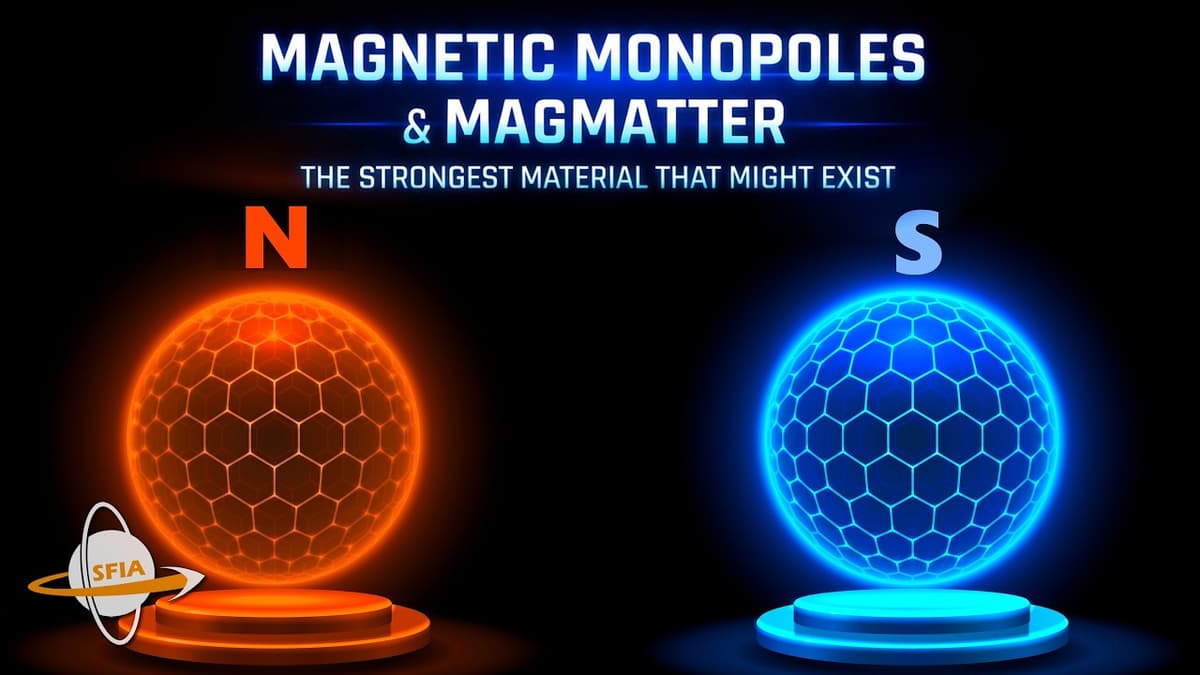
Magnetic Monopoles & Magmatter - The Strongest Material That Might Exist
The video explores magnetic monopoles—hypothetical particles carrying isolated magnetic charge—and the speculative material “magmatter” that could be built from them. It reviews Dirac’s argument that a single monopole forces electric charge quantization, and notes that Grand Unified Theories almost inevitably generate...