
Early “Misleading” Button Boosts Norm‑Driven Fact‑Checking Impact
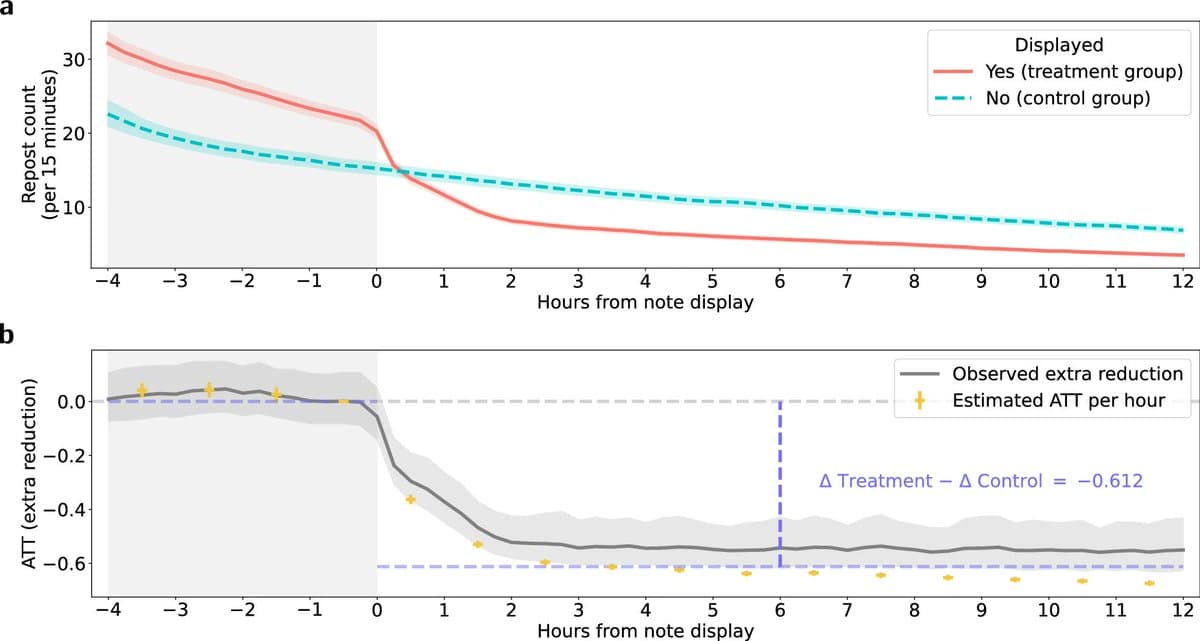
Community-based fact-checking is a promising approach to correct misleading posts. Exposing users to community notes reduces the subsequent spread of misleading posts by 61.2% (an increase the odds that users delete their misleading posts by 94.3%) Although community notes are effective in reducing the spread of posts once annotated, they usually appear too late to intervene in the early and most viral stage of the diffusion. As a result, their system-wide effect is modest. This is based on an analysis of 237,180 community fact-checked cascades reposted more than 431 million times https://t.co/OxFrUDo9kZ One reason I think they are effective is because they harness social norms--if other people *like me* find the comment misleading that is often more compelling that a simple fact check. We found that a more effective strategy might be adding a "misleading" button right on social media posts. This allows people to see social norms much faster (before content goes viral). This is 5X more effective than other strategies for fighting misinformation and does not require fact-checkers or official content moderation. In additional, it works really well for polarizing content--which community notes struggle to stop. https://t.co/2G6OXH89ER
Great Ideas Thrive in Collaborative, Incremental Environments
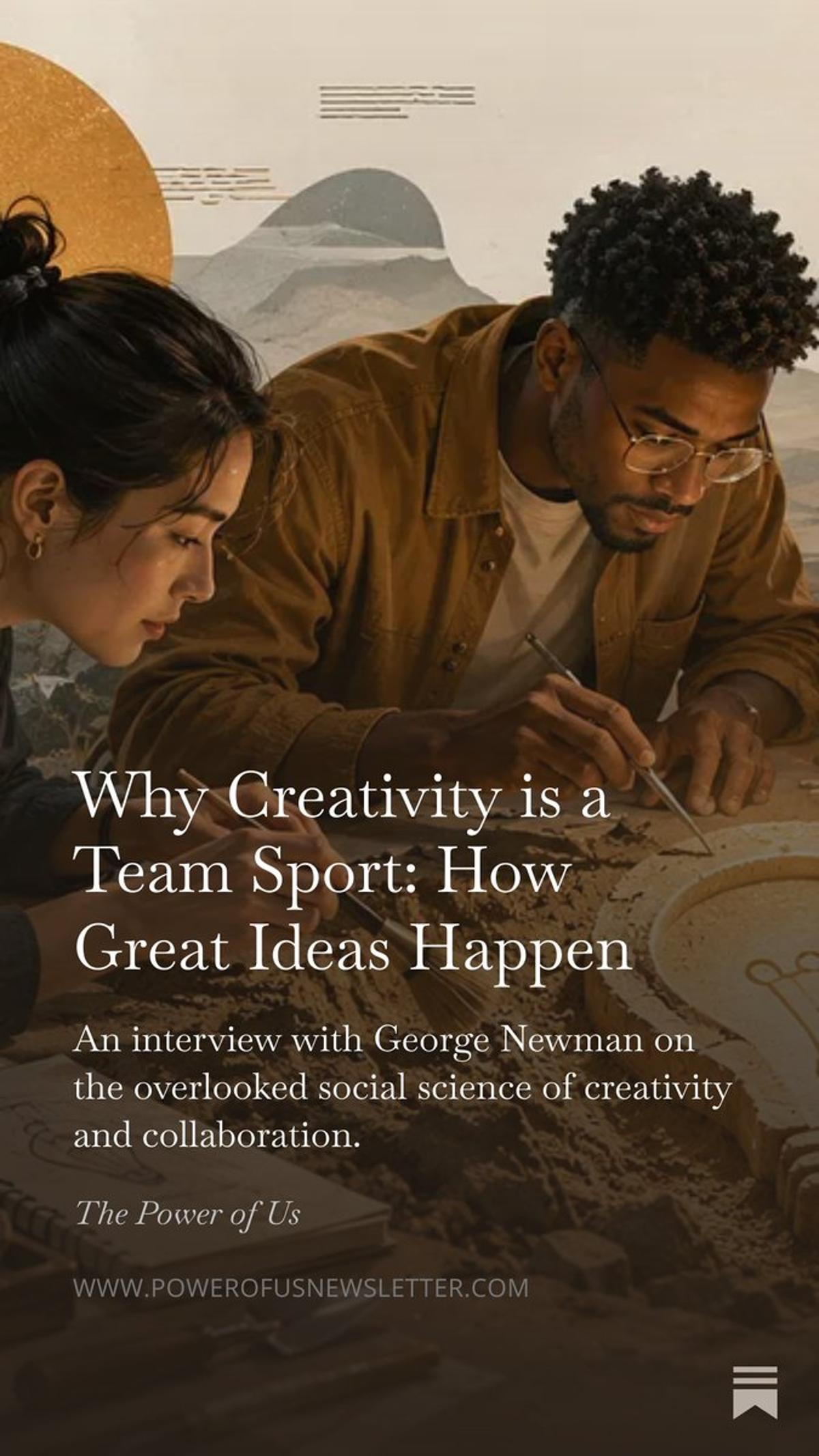
Creativity is a team sport Our latest post interviews George Newman about his new book "HOW GREAT IDEAS HAPPEN". He challenges the idea of individual genius and explains how our environments and the people around us matter a lot more than...
National Identity Triggers Self-Like Brain Response to Outsiders
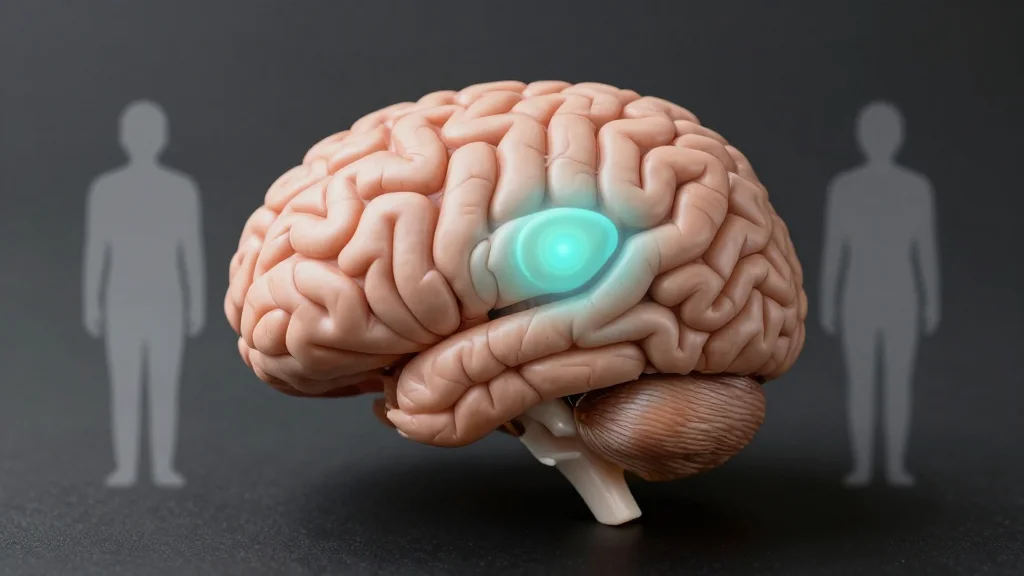
National identity reconfigures brain responses from “them” to “us” A new paper finds that briefly priming national versus ethnic identity increases ventromedial prefrontal cortex activation for ethnic out-group faces, a pattern typically reserved for self and in-group processing. This helps explain...
Substack Gains Google Scholar Citations, Boosting Academic Credit
Good news for academics—substack is now piloting a project to allow for citations to Google Scholar. This means if you write a great piece on substack and someone cites it in an academic journal, then you will get a DOI and...
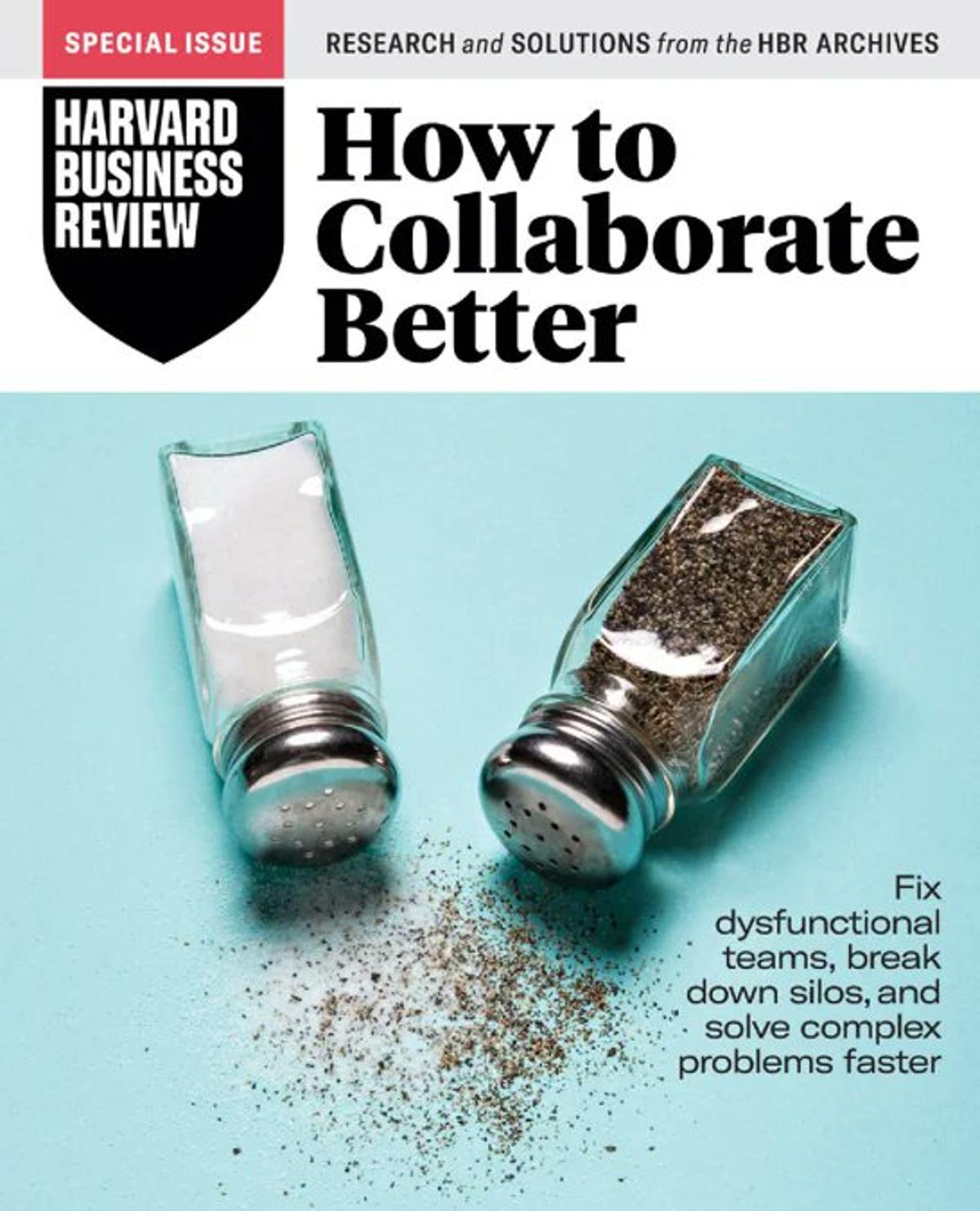
Align Incentives, Not Identities, to Build Collaborative Teams
Most teams don’t fail because people are “bad collaborators.” They fail because incentives and competing identities sort them into silos. My new @HarvardBiz piece explains how to create successful teams in a special issue on "How to Collaborate Better" Along with @LauraKriska...
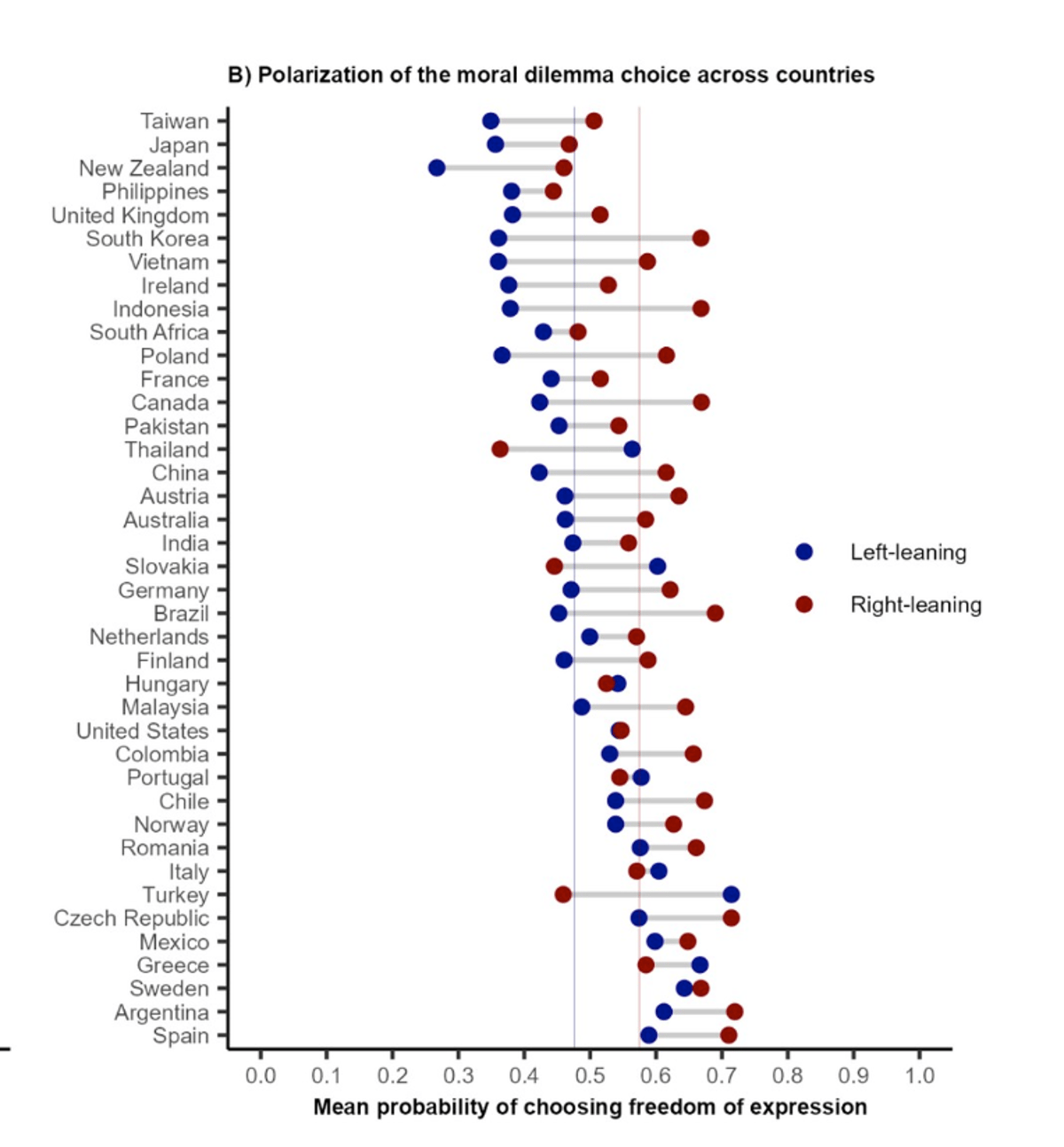
World Split on Free Speech vs Misinformation, Right Leans Free
The dilemma of balancing freedom of expression against limiting the spread of misinformation is a central debate in modern information ecosystems. In our latest paper, we measured citizens’ preferences for...
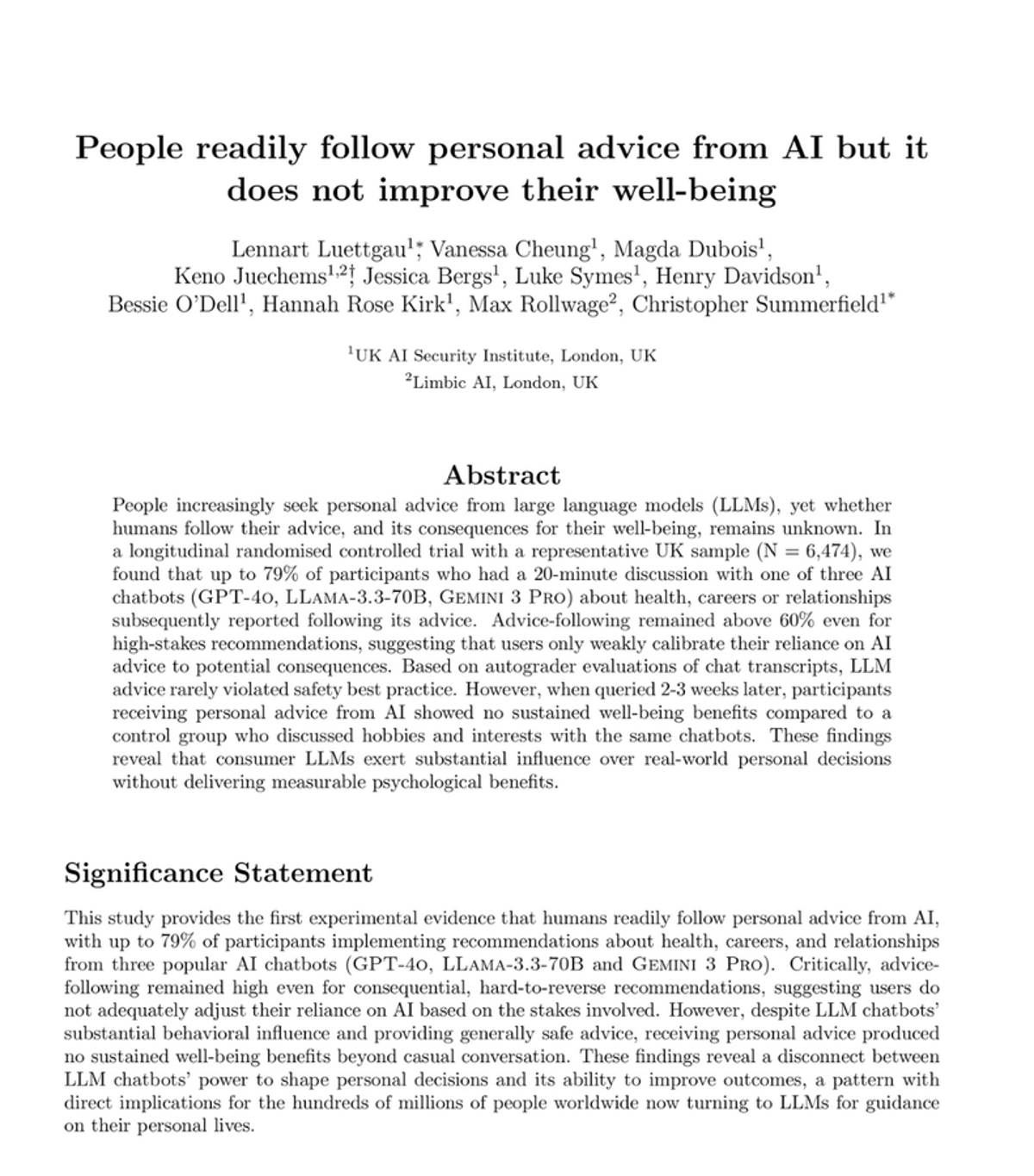
AI Advice Sways Choices, but Offers No Lasting Well‑being
Most participants who had a 20-minute discussion with AI chatbots about health, careers or relationships followed its advice. However, 2-3 weeks later, participants receiving advice from AI showed no sustained well-being. These findings reveal that LLMs exert substantial influence over...
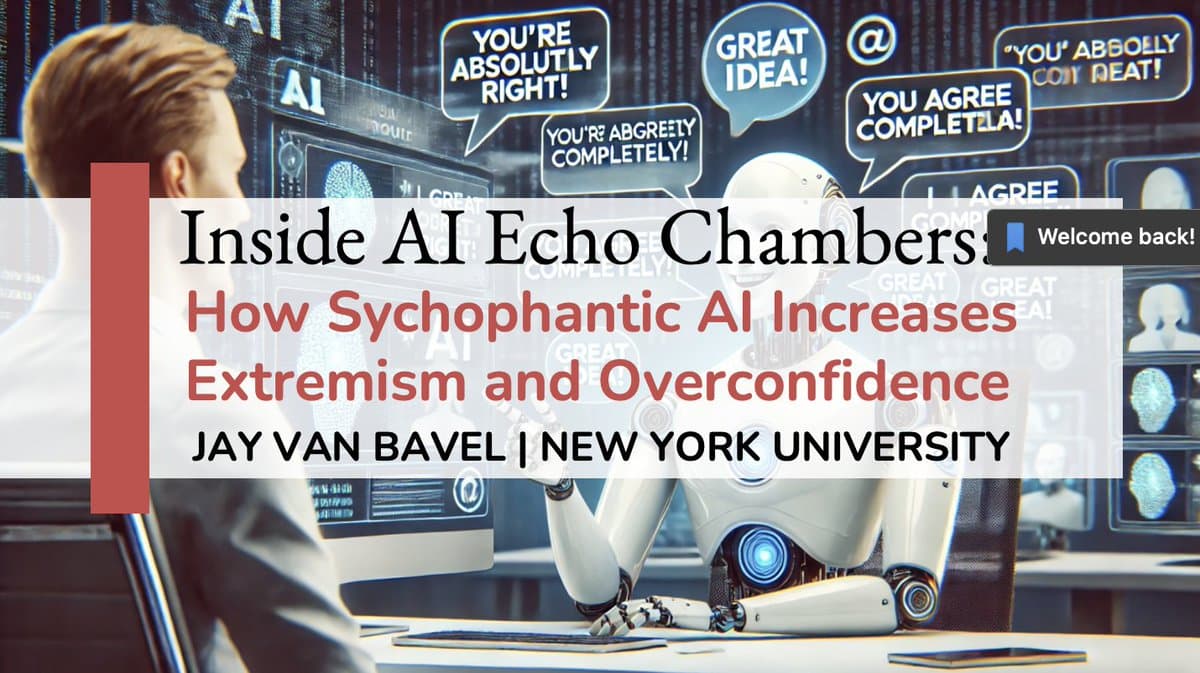
Sycophantic AI Fuels Extremism and Overconfidence
I am giving a talk right now on how Sycophantic AI increases attitude extremity and overconfidence It is followed by a live Q&A and the recording will be online to watch any time. https://t.co/CxD6ReG5Pf https://t.co/VA2Ea7LKXL
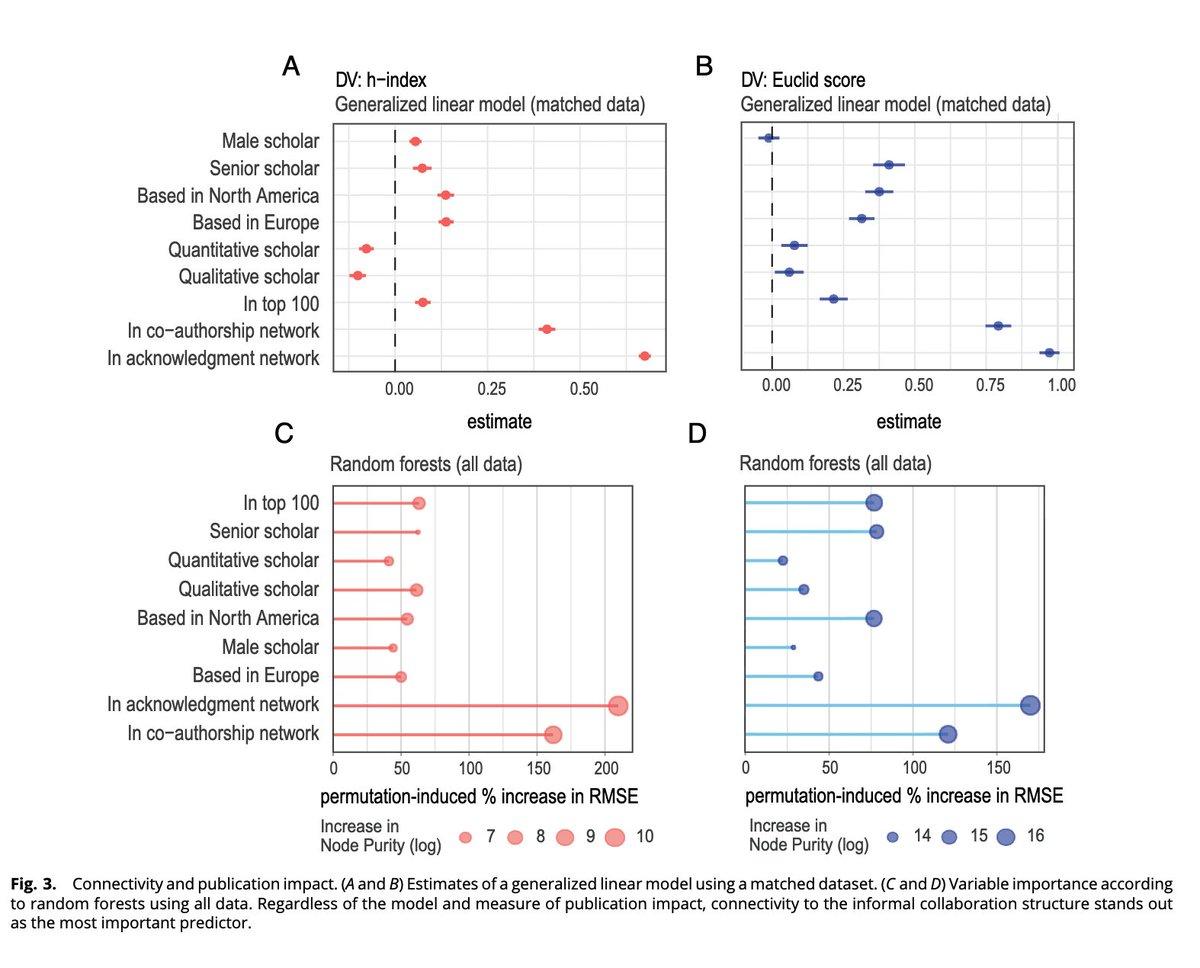
Acknowledged Mentors, Not Metrics, Drive Scientific Impact
The best predictor of scientific impact isn't gender, seniority, methodology, or geography, it is the informal network of colleagues and mentors who provide guidance and feedback. We are often ignore the most important source of success. Informal support networks are the...
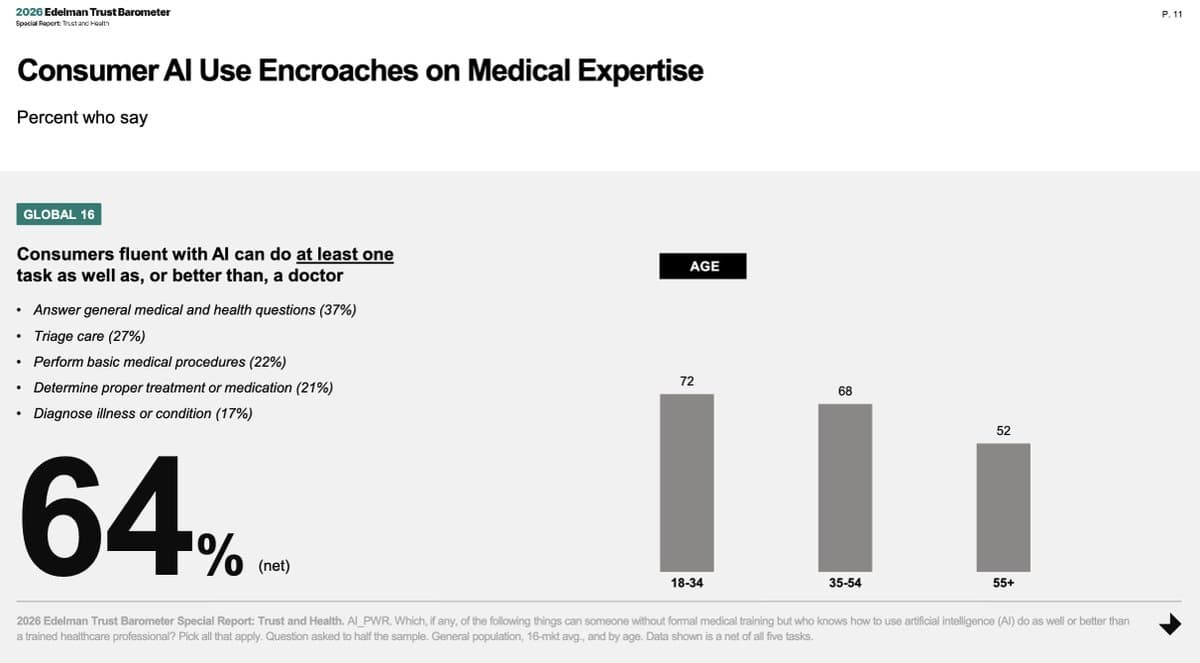
AI Threatens Trust in Doctors, Especially Among Youth
AI is going to radically reshape who we trust and how we get information. A new report from @EdelmanPR finds that AI is reshaping perceptions of medical expertise, with 64% of consumers believing users fluent with AI can match or...

Science Consensus Beats Doom Narratives for Climate Action
There are very serious downsides to doomerism. It might be fun to get engagement on social media, but the reward system there does not apply very well to the things that drive real policy change or behavior. We should be...
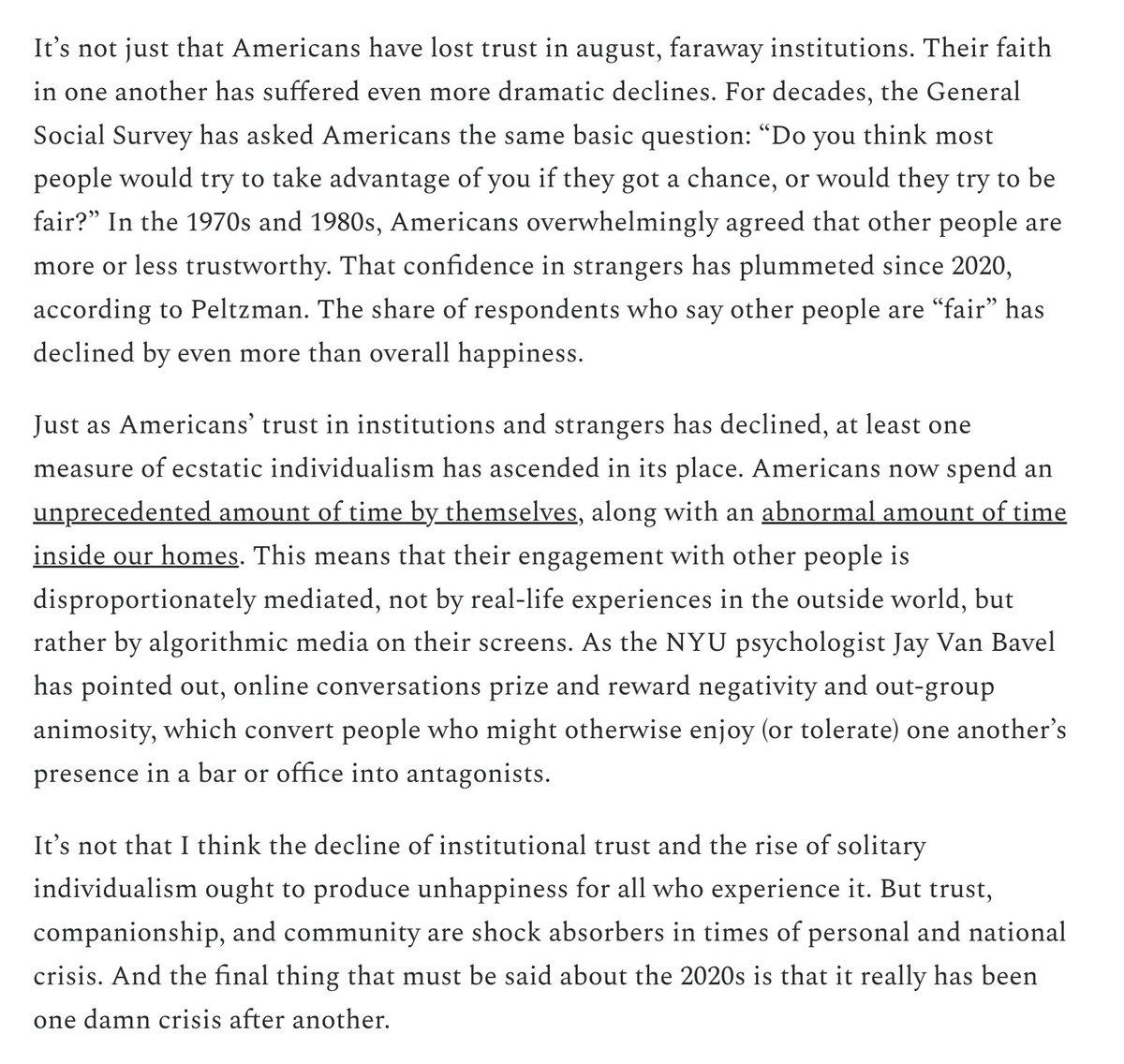
Wealthy America’s Hidden Crisis: Uncovering the Roots of Sadness
If American is so rich, how’d it get so sad? @DKThomp does a fantastic deep dive on this issue, pulling together evidence from economics, public health, and technology to understand the origins of our collective misery: https://t.co/p83ZLqOhWj How do we begin to pull...
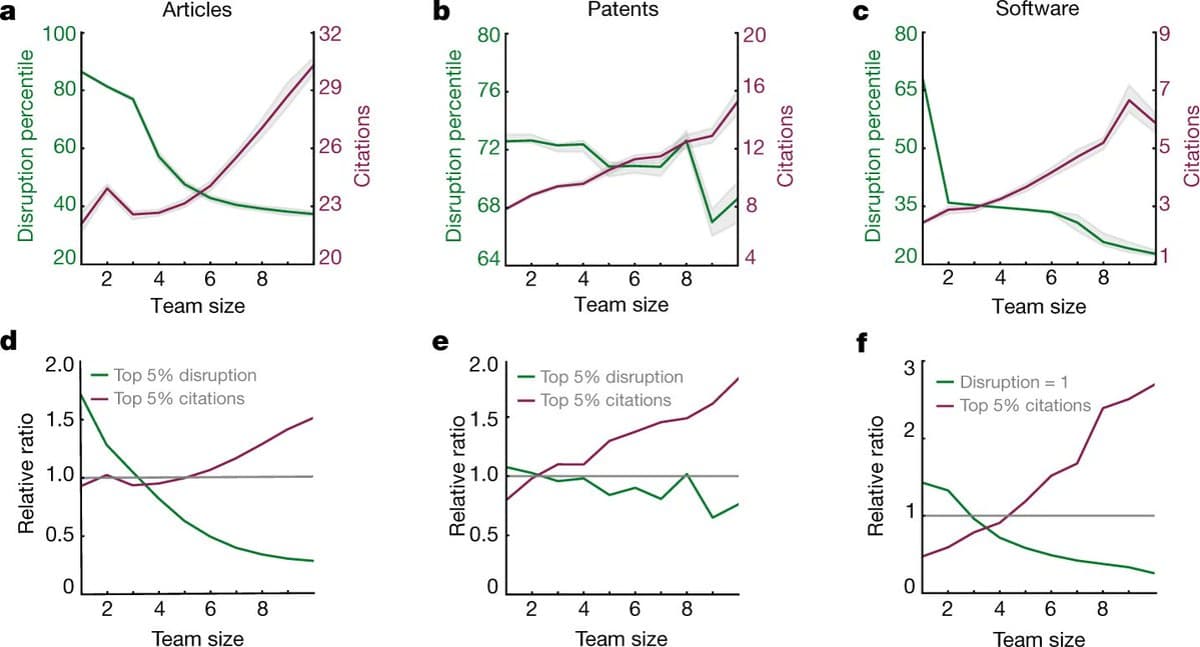
Small Teams Disrupt; Large Teams Focus on Development
Large teams develop and small teams disrupt science and technology This analysis of +65 million papers, patents and software products finds that smaller teams have tended to disrupt science and technology with new ideas and opportunities, whereas larger teams have tended...
Tiny Elite Shapes Misinformation, Distorts Public Perception
A small fraction of online actors now exerts outsized influence over what the public sees, believes, and argues about. In a new short review paper, we trace how social media influencers can turn fringe claims into viral narratives—often by exploiting...

Algorithmic Amplification Distorts Discourse, Demands Multidisciplinary Action
I was at the @UofC Business School this week for a conference on one the central challenges of our time: how AI and social media are reshaping public discourse, political polarization, misinformation, and democratic governance. We discussed how algorithmic amplification can...