

Quasi-Stars, the Little Red Dots and the James Webb Telescope
The James Webb Space Telescope has uncovered a population of compact, extremely red point sources—dubbed little red dots—in deep‑field images taken since July 2022. These objects appear at redshifts corresponding to roughly 600 million years after the Big Bang and vanish from observations after about 1.5 billion years, making them a transient phenomenon of the early universe. The dots are unusually bright for their size, show a strong Balmer break, and emit almost no ultraviolet or X‑ray radiation, suggesting they are enshrouded in dense dust or gas. Their rapid spin inferred from spectral lines points to accretion onto a massive central object, yet the lack of typical active‑galactic‑nucleus signatures leaves their nature ambiguous. Several explanations have been proposed. One view treats them as nascent supermassive black holes embedded in dusty proto‑galaxies; another invokes direct‑collapse black holes that formed without a supernova. A third, gaining traction after the 2023 Rubies study, identifies them as quasi‑stars—hypothetical massive stars powered by an internal black hole that later collapses into a supermassive seed. The Cliff object, with an extreme Balmer break and no UV output, exemplifies this scenario. If the quasi‑star interpretation proves correct, it would provide the first observational evidence of a long‑standing theoretical pathway for rapid black‑hole growth, forcing a revision of early‑universe models. Even if the dots turn out to be dusty black‑hole embryos, they still expose gaps in our understanding of galaxy assembly and the timing of black‑hole seeding, guiding future JWST surveys and next‑generation observatories.

Tektites and the Unknown Asteroid Impact
The video explores tectites—natural glass droplets created when asteroid impacts melt surface material and fling it into the atmosphere. It explains that tectites differ from volcanic glass by being extremely dry and chemically identical to shallow Earth sediments, confirming an impact...

An Intriguing Conundrum Regarding Life on Mars and More
The video surveys a wave of new Martian discoveries that collectively revive the debate over past life on the Red Planet. Researchers analyzing sedimentary rock from the Jezira crater’s Cheyava Falls identified “leopard‑spot” patterns and minerals such as vivianite...
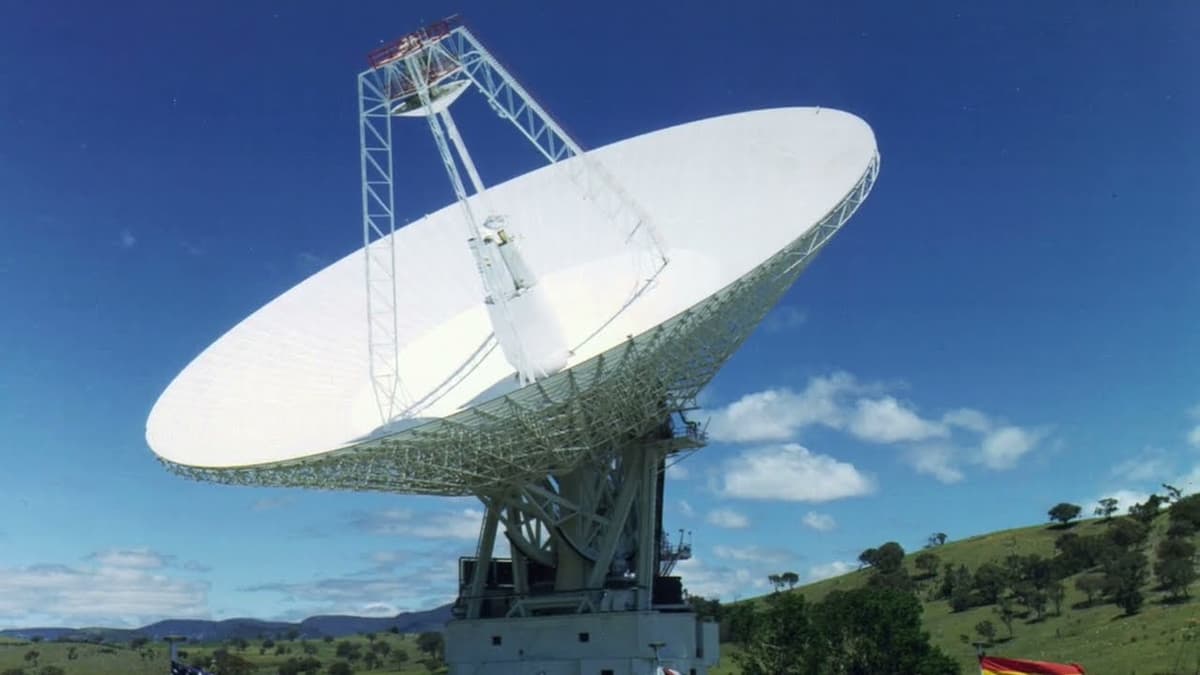
100 New SETI Candidates Found in SETI@Home Data Set
The video reports that a fresh re‑examination of the SETI@Home data set has produced a shortlist of one hundred promising candidate signals. After the original citizen‑science effort processed roughly twelve billion detections from the Green Bank and Arecibo telescopes, researchers applied...
The First Second of Everything: The Cosmic Neutrino Background
The video explains that while the cosmic microwave background (CMB) marks the earliest light we can see—about 380,000 years after the Big Bang—the universe became transparent to neutrinos just one second after the event. This cosmic neutrino background (CNB) carries...