

Learn Agentic AI in 2026 With These 7 Steps
The video presents a seven‑step roadmap for mastering agentic AI by 2026, targeting beginners through senior developers. It begins with a solid foundation—understanding large language model (LLM) fundamentals, prompt engineering, and basic input‑output interactions—before moving into core components such as the React pattern, memory architectures, and context engineering. Key insights include the necessity of tool‑calling via the React pattern to fetch real‑time information, the three tiers of memory (in‑memory, external, long‑term) for stateful agents, and the role of orchestration frameworks like LangGraph and LangChain in building scalable multi‑agent systems with human‑in‑the‑loop safeguards. The roadmap also emphasizes retrieval‑augmented generation (RAG) using vector databases, chunking strategies, and advanced techniques like self‑reflective RAG to leverage proprietary enterprise data. Notable examples feature the supervisor‑worker architecture for delegating tasks across agents, the "mem" service for external memory handling, and concrete prompts such as “act like a chatbot assistant” to illustrate context engineering. The presenter repeatedly stresses that mastering these steps enables rapid, production‑grade deployment of AI agents. For businesses, the seven‑step framework translates into a repeatable, future‑proof process: acquire foundational LLM skills, integrate external tools, manage memory and context, orchestrate agents efficiently, and embed RAG pipelines. Companies that adopt this methodology can accelerate AI‑driven automation, reduce time‑to‑value, and maintain a competitive edge as agentic AI becomes mainstream.

Vectorless RAG Tutorial With PageIndex-No VectorDB And Chunking Required
The video introduces a new approach called vectorless Retrieval‑Augmented Generation (RAG) that removes the traditional reliance on vector databases and chunk‑based embedding pipelines. Kurish Nayak demonstrates how the open‑source PageIndex library creates a hierarchical JSON tree from a PDF’s table...

Why Oracle Laid Off 30k Employees Despite Strong Revenue Growth
Oracle announced cutting roughly 30,000 employees—about 18% of its global workforce—despite reporting strong revenue growth in its latest quarter. The move underscores a strategic shift toward artificial‑intelligence‑driven services and cloud infrastructure. The layoffs are projected to free $8‑10 billion in cash, which...

Deploy Openclaw In Cloud
The video walks viewers through deploying OpenClaw, a private AI assistant, on a Hostinger VPS using the platform’s one‑click deployment feature. Krishna demonstrates selecting the KVM2 plan—two CPU cores, 8 GB RAM, 100 GB NVMe storage, and 8 TB bandwidth—at a monthly cost...

AI Learning Path For 2026- Data Science, Generative and Agentic AI Roadmap
The video outlines a comprehensive AI learning roadmap for 2026, presented by Krishna, that categorizes three distinct pathways—traditional, modern, and advanced—tailored to a learner’s existing knowledge and career goals. Each route builds from foundational Python programming through data science, machine...

How I Built a Production-Grade Agentic AI Customer Support System Using Claude Code
Claude’s new Cloud Code lets developers build a production‑grade, agentic AI customer‑support system with minimal coding. The video walks through setting up the tool, selecting models (Opus, Sonnet, Haiku), configuring via terminal or VS Code, and using Git‑based CI/CD pipelines. Sunonni Savvita demonstrates...

Guardrails with LangChain: A Complete Crash Course for Building Safe AI Agents
The video introduces Guardrails as essential safety mechanisms that sit around an AI agent’s pipeline, ensuring only safe inputs are processed, approved actions are taken, and compliant outputs are returned. Using LangChain’s middleware framework, the presenter explains how developers can...

Mastering LLM Chatbots And RAG Evaluation Crash Course
The video introduces a crash‑course on evaluating large‑language‑model (LLM) chatbots and Retrieval‑Augmented Generation (RAG) applications, emphasizing practical implementation with LangChain and the LangSmith observability platform. Krishna walks viewers through setting up API keys, installing required libraries, and configuring the LangSmith...
Testing Sarvam AI Conversation Agent and Its Amazing
The video is a live demo by Kesh Nayak of Sarvam AI, India’s full‑stack sovereign AI platform, illustrating its conversational‑agent capabilities for an e‑commerce support scenario. The agent, presented as a Quick Cart customer‑service rep, smoothly manages order‑status queries, refund requests,...

Live Day 3- Building AI Agents For Production
The live Day 3 session walked participants through the practical steps of building production‑ready AI agents. After a brief recap of earlier theory, the instructor opened a shared GitHub repository, demonstrated how to clone the project, and outlined the folder hierarchy...
Live Day 2-Building AI Agents Crash Course
The video provides a concise introduction to large language models (LLMs), explaining that they are deep‑learning algorithms trained on petabytes of text data. It emphasizes that the term “large” refers both to the massive training corpora and to the billions‑to‑trillions...
Live Day 1-Building AI Agents Crash Course
The video introduces a hands‑on crash course that walks developers through building a full‑stack application with Next.js and Supabase, starting from an empty repository and ending with a live deployment on Vercel. It outlines a step‑by‑step workflow that begins with...
End To End Multimodal LLMOPS Project Azure Deployment With Observability And Orchestration Engine
The video introduces an end‑to‑end LLMOps demonstration called the Azure Multimodal Compliance Orchestration Engine, built to showcase how a production‑grade AI pipeline can be assembled from scratch using Azure managed services. The presenter walks through the project’s architecture, highlighting components...
Oracle AI Database 26AI Vector Search Capabilties Is Amazing!!
Oracle unveiled its next‑generation AI‑native offering, the Oracle Database 26AI, emphasizing built‑in vector search capabilities that blend traditional SQL with high‑dimensional similarity queries. The video walks viewers through provisioning a free autonomous AI database instance, selecting workload types, configuring network...
Industry Ready AI Projects With Deployment
Krishna announced a new product – an end‑to‑end, industry‑grade AI project library with deployment on AWS, GCP and Azure, sold as a yearly subscription. The catalog currently contains 47 projects spanning agentic AI, computer vision, data analytics, deep learning, generative AI,...
Building Deep Agents Tutorial With Langchain- Part 1
The video introduces deep agents, a next‑generation AI architecture that moves beyond the simple request‑response loop of traditional, or "shallow," agents. Krish Naik explains that shallow agents rely on a single LLM decision to either generate an answer or call...
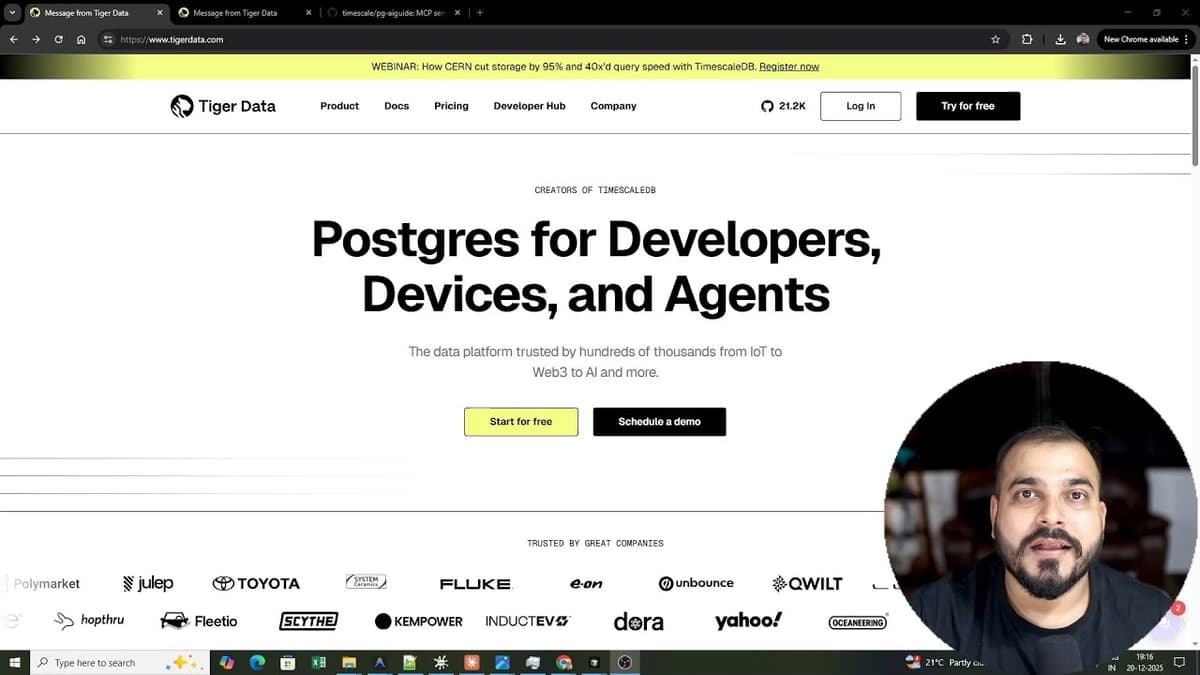
AI-Powered Database Schema Design
The video spotlights a persistent pain point for AI product teams: designing efficient PostgreSQL schemas from scratch. Krish Nayak explains that generic large‑language models often miss optimal data types, table relationships, and indexing strategies, leading to sub‑par implementations. To address...
Updated Langchain Version V1 Crash Course- Build Autonomous Agents
The video serves as a crash‑course on the newly released LangChain v1, walking viewers through the framework’s most significant updates and demonstrating how to build autonomous agents with the latest features. Krush Nair frames the tutorial as a one‑shot guide for...
Day 4-Live Session-Getting Started With Generative And Agentic AI In 2026
The live session titled “Day 4‑Live Session‑Getting Started With Generative And Agentic AI In 2026” opened with the presenter outlining a comprehensive roadmap for anyone looking to break into AI, from fresh graduates to senior executives. He emphasized that the...
Day 3-Live Session- Learning Python With Vibe Coding In 2026
The video is the third live session of the “Learning Python with Vibe Coding in 2026” series, where the instructor recaps the first two days and pivots the curriculum toward using large language models (LLMs) to solve business problems without...
Day 2-Live Session- Learning Python With Vibe Coding In 2026
The video is the second live session of the "Python in 2026" series by Vibe Coding, aimed at professionals who need a rapid, production‑ready introduction to Python rather than a textbook‑style curriculum. The instructor frames the class as a shortcut...

How To Approach Python With Vibe Coding In 2026
YouTuber Krishna outlines a four-part roadmap for learning Python in 2026 centered on generative AI and ‘‘vibe’’/agentic coding. He recommends mastering Python fundamentals (data structures, OOP, numpy/pandas, logging, error handling), adopting the new UV package manager for environment and dependency...
Live Session- Learning Python With Vibe Coding In 2026
In a live YouTube session, data scientist Monul Kumar launched a new Python-for-2026 series aimed at teaching coding approach rather than rote syntax, positioning Python as the foundational skill for machine learning, deep learning and generative AI. He emphasized adapting...
Build Advanced Retrieval-Augmented Generation (RAG) with MongoDB Vector Search
Presenter Kash Nayak demonstrates how to build a retrieval-augmented generation (RAG) application using MongoDB Vector Search, walking viewers through account setup, cluster deployment, and the end-to-end architecture. He outlines the three RAG stages—data injection (embedding generation), vector storage in a...
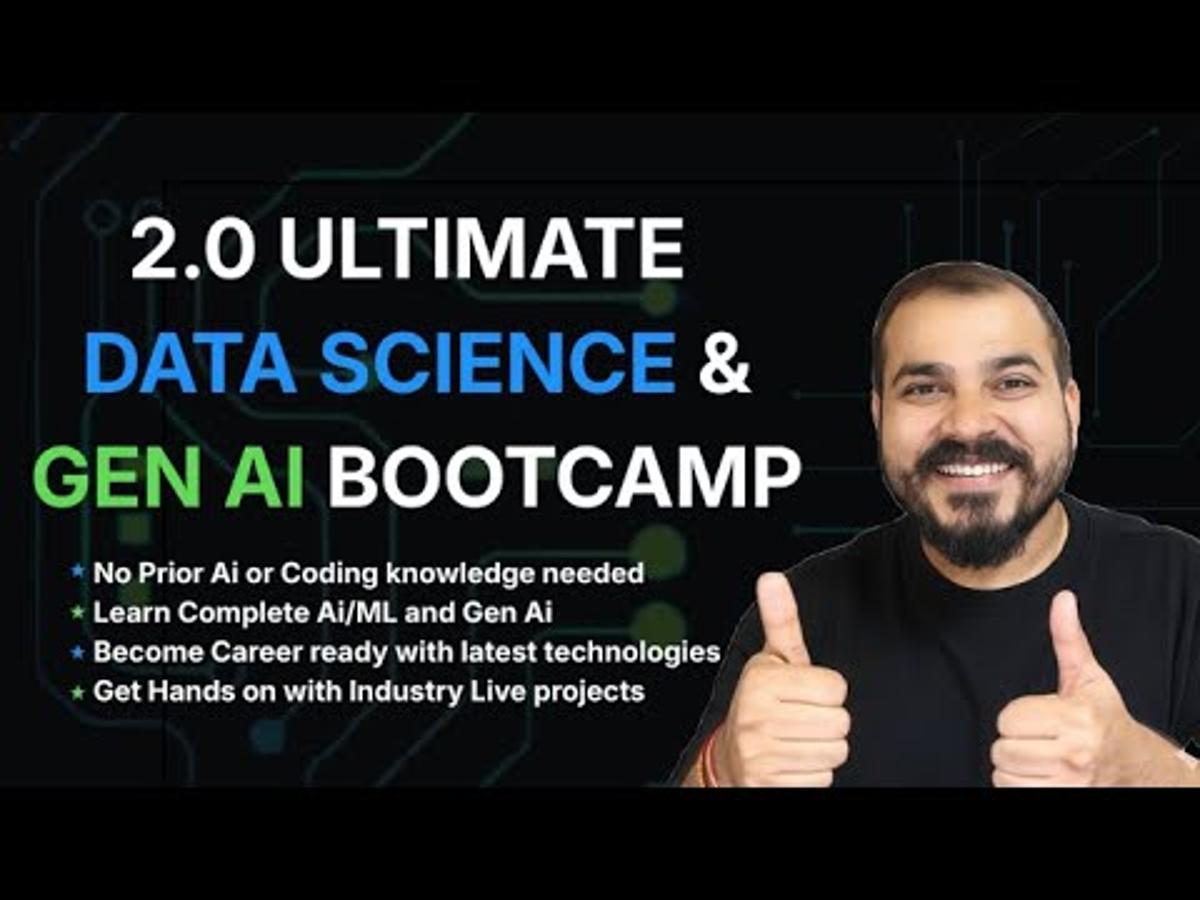
Best For Beginners-2.0 Ultimate Data Science & GenAI Bootcamp Announcement
The video announces the launch of the 2.0 Ultimate Data Science & Generative AI bootcamp, slated to begin on January 11, 2026. Classes will run every Saturday and Sunday from 9:00 a.m. to 1:00 p.m. IST, with an additional weekday session on...
Agentic AI Bootcamp With No Code Tools N8n Udemy Course Announcement
Hello all, my name is Krishna and welcome to my YouTube channel. In this video Krishna announces a brand‑new Udemy offering – a comprehensive “AI Automation and Agentic AI Bootcamp” built around the no‑code workflow platform n8n. The course was...
Google Antigravity IDE- The Best Agentic Next Gen IDE
The video introduces Google’s newly announced Antigravity IDE, positioned as a next‑generation, agentic AI development environment that aims to compete with tools like Cursor, VS Code, and Google Cloud Code. The presenter, Prash Nayak, walks viewers through the download, installation, and initial...
What Are Deep Agents? Shallow Agents Vs Deep Agents
The video introduces the concept of “deep agents” and contrasts them with the more common “shallow agents” that power today’s generative‑AI tools. Krishna walks viewers through the evolution from simple LLM‑only applications to independent agents, then to multi‑agent systems like...