

Higher Spend Doesn't Guarantee Greater Share of Voice
Just because you're spending more money on a set of target accounts doesn't mean they see you more than your competitors. There's a good chance that your extra investment is being matched by the same level of extra investment from competitors. This is at the heart of Share of Voice (SoV), and it's a perspective that is missing in much of modern B2B marketing, because marketers are so separated from the market and reduced to promotion only. But our promotion, along with all the other ways our brand creates exposure in the market, happens alongside that of our competitors. If a brand is twice our size, then it will likely take up twice as much brand presence - not just because of ad spend, but also because of how many customers they have, the word of mouth that comes from that, as well as proportionate amounts of press pick up and even LLM mentions. So, when we make a conscious choice to focus on something and invest in it, we have to ask "is this uniquely gaining us an outsized SoV?". With target accounts, our wish list likely looks mostly the same as everyone elses, which means we might be simply spending to match everyone. But, there are other avenues where the opposite occurs. Identifying underserved segments is a long-standing place where brands find pockets of market share they can build on, because they can show up bigger despite not being so. One big caveat to SoV, which happens to be a very common B2B SaaS scenario, is where outside funding allows small brands to majorly outspend on marketing, but this is also the very proof of the concept. When brands appear to the market, or some segment of it, bigger than they are it tends to provide a pathway to actually becoming bigger since you can better the odds of being remembered and bought. And while SoV is, in the modern fragmented world of marketing, effectively impossible to truly measure, we can still apply the strategic thinking, and track the impact in the outcomes of metrics like Share of Search. But it requires the ability to think, and research, from a larger market perspective. Because brands who act with out a view of the market do so at the blind mercy of it.

ABM Spending Often Just Keeps Pace with Competitors
Those high-value accounts that we place in our ABM lists are often the exact same accounts that our competitors are pursuing as well. Which can mean, from a macro level view, that all the extra expense we put into ABM...

When SaaS UI Vanishes, Brand Becomes the Product
Many say that the future of SaaS means no product UI, but that has big implications for brand assets and the importance of brand itself. In the consumer goods world, the product itself is often one of the most important...

AI Mentions Turn Visibility Into Brand Consideration
Brand visibility and discoverability are only part of the much bigger marketing job of becoming a considered brand. Showing up where your potential customers go looking isn't a trivial thing, but being discoverable doesn't mean you get discovered. Visibility is...

Branded Search Turns Brand Into Measurable, Real‑Time Asset
Brand does not need to be a mysterious and vague concept to report on. With a defensible metric like branded search, we can give very real shape to brand and show with real precision how our efforts are building it....

Data‑driven Marketing Masks Unscientific Assumptions
Being data-driven does not necessarily mean you are being scientific. In fact, it's often more common that it masks a totally unscientific approach to how we conduct and prove the impact of marketing. Marketing is a very complicated thing because...

Tech Leaders Must Embrace Marketing for Real Growth
A lot of tech leadership has a disdain for marketing because they were convinced that to need it is to be a failure. “Advertising is the tax you pay for being unremarkable” - Robert Stephens This ridiculous mentality that has...

AI Disrupts SaaS Pricing by Lowering Build Costs
SaaS is far from dead but it is definitely experiencing some massive changes in perceived value relative to price. Anyone who has taken an economics classes is familiar with the Price Elasticity Curve, where demand changes in response to price....

AI Shifts SaaS Pricing: Value Over Discount
With AI disrupting SaaS buying, it's never been more important for marketing leaders to understand the 4Ps - particularly price. The big narrative on LinkedIn is all about marketers using AI to better execute, but when it comes to actually...

Reach and Resonance Both Needed for Effective Marketing
Resonance is not a replacement for reach, but rather a qualitative input into it. You often see the narrative, especially when reach is getting harder to achieve like with declining organic LinkedIn, that the real focus anyway is on resonance....

Customer Journey Isn't Marketing Journey—Don't Linearize Growth
It's a pedantic but important point to say that the customer journey and the marketing journey are not the same thing, and the marketing journey is certainly not just a subset. When we decide to buy something, there's a certain...

Marketing, Not Sales, Should Spot Emerging Competitive Threats Early
Waiting for a competitor to start winning deals is far too late a moment to be taking them seriously, because sales data is a lagging indicator. Yet this is how it works in a lot of B2B organizations, and it's...

AI Marketing Is Reactive; Brands Need Proactive Awareness
There is still a big brand marketing gap in the industry and the massive push to use AI isn't solving it. Most of what's being done to attract business with AI right now is reactive marketing - showing up in...

Stop Chasing Unicorn Prospects; Target Experienced B2B Buyers
When we apply a performance marketing mindset to the top of the funnel, we can end up putting a lot of effort and expense into building an audience that often isn't big enough, and sometimes isn't even real. In B2B...

Brand Fuels Performance; Performance Rarely Builds Brand
It's often said that "brand drives performance, and performance builds brand", but in many cases only the first half of that statement is true. Which is problematic when you have a program whose budget heavily favors performance marketing. Brand definitely...

Word of Mouth: Byproduct of Growth, Not a Tactic
Word of mouth is not a tactic, but rather a byproduct of growth. This is an important distinction, because we tend to look at things in marketing through a tactical and operational lens, where we can take steps to predictably...

Buyers Satisficing: Time Constraints, Not Fear, Drive Choices
It can be too easy to look at buyer research and come away with a perspective that buyers make overly-safe, incomplete, and sub-optimal decisions. Worse, it can be too easy as a marketer to see buyers as needing us to...

Small Brands Must Build Perceived Size, Not Just Presence
The necessary trick of the small brand is to look bigger than you are. Many of the tools are simple ones, like leaning heavily on the logos and testimonials of clients, and more recently attention has gone towards AI by...

Measure Real Brand Demand in AI Search, Not Just Visibility
🚨 Track your brand's real consideration and demand in AI search. 🚨 This is, without a doubt, the biggest Storybook product release, and one I've been developing since I first launched the platform. The question of AI search has come...

Visibility Alone Won’t Drive Sales Without Brand Trust
Showing up in an AI overview is a form of distribution and not necessarily consideration. It’s highly potentially valuable, in the same way that getting on the shelf at Walmart creates big opportunity potential, but for many product that alone...

Search Data Reveals Pizza Hut’s Local Market Share Shifts
Branded search data has very powerful potential to track even highly localized market movements, and Pizza Hut is a really good example of this. As has been reported in recent days, the Pizza Hut brand has been struggling, announcing a...
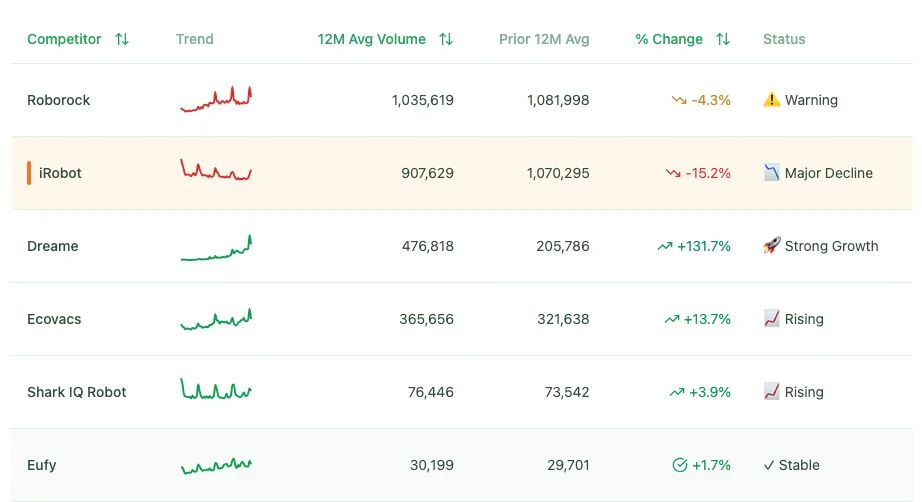
Underinvesting in Brand? Search Data Shows Hidden Cost
Instead of being asked why we should invest more in brand, it might be more important to ask if we're actively underinvesting in it right now. Very typically, leadership takes the position that more (or any) brand marketing needs to...
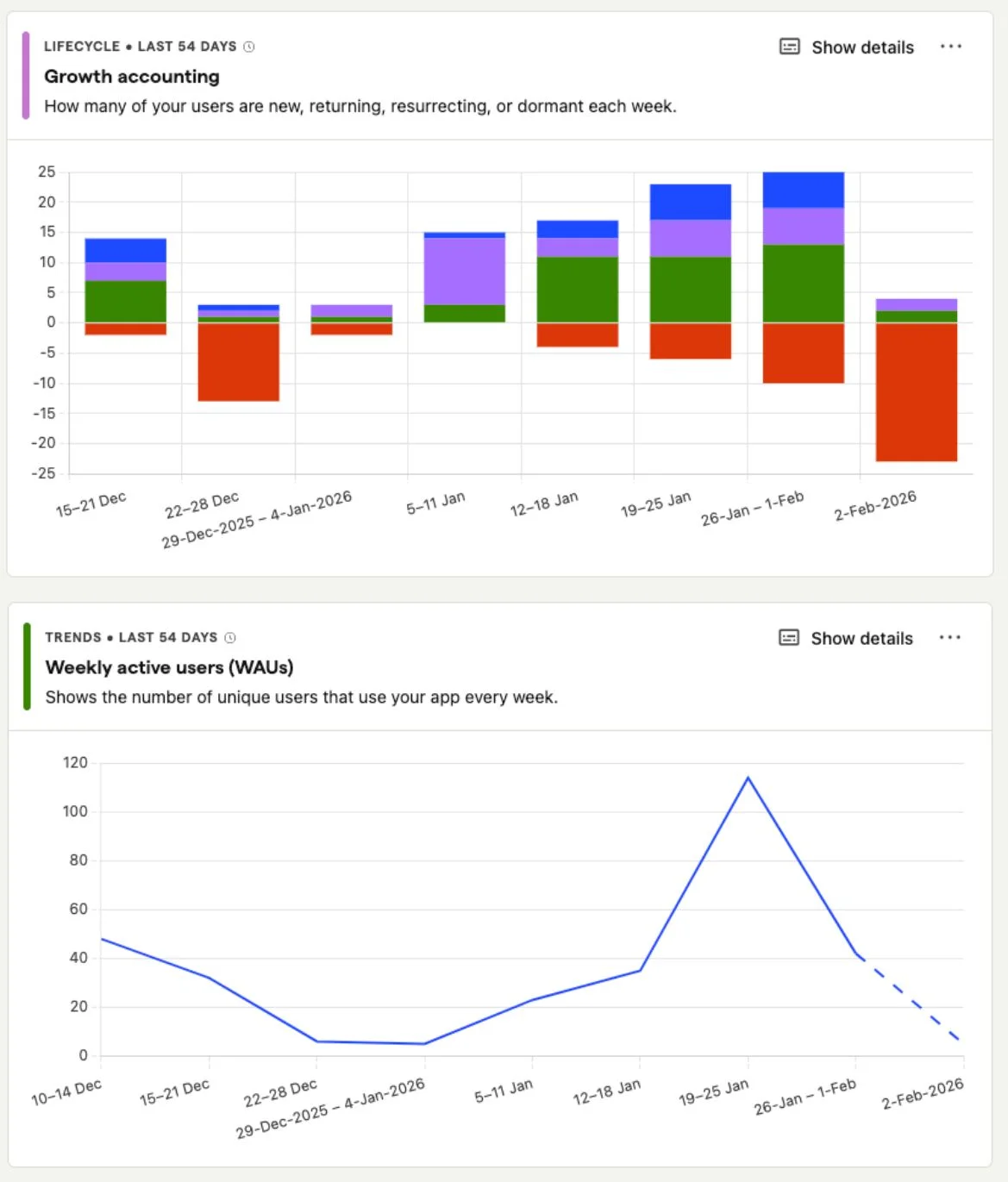
Metrics Can Gamify Products, Distracting From Real User Value
Now that I'm tracking user and account metrics for Storybook , I'm really starting to appreciate how much they can make you gamify things that don't necessarily improve the user experience. For example, Storybook's data updates monthly, which means that...

Lightweight Rivals Can Swiftly Become Major Threats
Competitors can go from a nuisance to a viable threat much more quickly than many brands realize, and by the time it's impacting the sales conversations it can be much harder to address. For market leaders, especially ones who have...

Prioritizing Guided Onboarding for Complex Data Platform
I spent 2025 building out the best product I could for brand and category tracking, and my current next product focus is making sure that I surround it with a strong onboarding and training experience. The double-edged sword of adding...

Joining Insight Collective to Shape Marketing's Complex Future
My belief in marketing effectiveness has only grown as I've seen the landscape getting more and more complex for marketing. Through my own journey into it, and building the Storybook platform around the learnings, it's also connected me with some...

AI Efficiency Obsession Sacrifices Creative Quality
I was told a story this week about a big agency pitch, where a whole section was dedicated to how much efficiency they had found through AI. Effectively, how much self-inflicted commoditization they’d accomplished which they could pass on as...

Categories Are Buyer‑Defined; Demand Remains Finite
Categories are largely artificial constructs, and often quite subjective and fluid to buyers, changing over time and even in individual buying situations. What we get compared to to by a buyer is not up to us, and isn't decided by...

Urgent Pain Drives Price Sensitivity, Not Just ROI
Price is a really important element in marketing, and it's important to understand its role in demand even if you can't control it. Price impacts demand more than just about anything else we can affect in marketing, not only in...

Prioritize Share of Voice Over Short‑Term ROI
Companies are very quick to ask if marketing is getting enough return from its budget, but rarely ask if that budget is doing enough to maintain a presence in the market. When marketing is judged on the short-term efficiency of...

Innovators Need a Different Marketing Playbook Than the Masses
There's a lot to be learned about new product marketing through how people discover new music. Everyone knows people, and maybe you are one, who likes to find bands others aren't listening to yet, to be at the edge of...

Latent Demand: Unseen Needs Outpace Traditional Unmet Wants
The concept of the problem-unaware buyer is a long-standing one, especially in tech, where the dream is to unlock and dominate a whole new market through innovation. It falls often into the category of latent demand - a very real...

Measure Category Health, Not Just Internal ROI
As you take on 2026, many will be looking at their full prior year of performance metrics to answer "what worked best that we can lean more into?" I think there's a critical view to add, and it's a highly...

Effective Brand Marketing Is Product‑centric, Not Just Quirky Campaigns
There's a very big difference between trying to get someone to start thinking of you and preventing them from forgetting you - and a lot of the brand marketing we talk about is the latter. Big brand campaigns, the ones...

Disruption Thrives at Market Fringes, Not the Status Quo
There's a famous quote from the economist John Maynard Keynes, that "the market can remain irrational longer than you can remain solvent." He was speaking about investing but it has just as much application to marketing, because many a better...

Budget Limits, Not ROI, Often Stifle Brand Growth
Sometimes, the answer genuinely is that marketing doesn't have enough budget to do what the company is asking. It's not a popular answer to give, and there's even a tired cliche about how marketing always wants more money to spend,...

First‑mover Edge Fades Fast without Relentless Innovation
First-mover advantage is just that - an advantage. But it is anything but a guarantee of staying the leader, and that couldn't be better displayed than with the news of the iRobot bankruptcy filing and buyout announcement. The Roomba was...

From Experiment to SaaS: Storybook’s 2026 Momentum
I didn't fully appreciate how good it would be to hit send on an email like this, and to see the spike in user activity that follows across such a wide variety of industries. As the year is coming to...

Share of Voice Drives Brand Dominance Beyond Performance Marketing
Share of Voice (SOV) is not a concept you hear as often anymore, because performance marketing has shifted so much of our thinking towards precision. We think instead about how we can reach the exact right people at the exact...

Marketing Science Overlooks Small Brand Constraints
The challenge with marketing science and effectiveness research is that it tends to be anchored around large brands, but wants to deliver advice to both large and small ones. This is not a criticism of the work, which is always...

True Market Disruption Requires Economics, Not Marketing Hype
If you want to disrupt the market, it's pretty important to understand how markets work and what facilitates disruption. The truth is market dynamics are not very intuitive, and real market share change is highly dependent on the right conditions...

Price Beats Promotion: The True Driver of Adoption
“Aside from the price, I actually like the idea.” In a post I read recently detailing a failed product launch from a YouTube celebrity, this line stood out. In this short sentence, there's a huge amount of insight into just...

Macro‑Level Disruption Beats Performance‑Only Marketing
Marketing strategy should ultimately start from the market-level, but the truth is we've pushed out much of that ability. With the reduction of marketing to just promotion, with the hyper-focus on performance, and with the way we judge marketing in...

Growth Shifts When Market Conditions Change, Not Brand Effort
Growth is highly dependent on the conditions that surround us, and they are often a combination of factors. Take this global Share of Search example for Roborock and the robot vacuum category, where a strong upward trajectory in branded search...

Brand Tracking: Strategic Lens for Real Market Demand
Brand tracking too often gets reduced to a data story that feels very far from revenue impact and too much about feelings. But it can actually be an incredibly strategic lens to understand demand in the market and how we...

Marketing's Influence Prevents Short‑Term Brand Decline
The narrative that marketing needs to earn a seat at the table is perhaps the most ludicrous bit of industry gaslighting ever. Marketing is a load bearing function, and one that needs a position of influence to stop companies from...

Marketing Success Depends on Conditions, Not Just Tactics
Much as we’d like it to be, marketing is not deterministic or meritocratic. Great ideas and execution often fail, and mediocre ones can thrive - the common variable is the conditions in which the marketing happens. Yet so much of...

Differentiation Is Fleeting; It Reshapes Categories Permanently
Meaningful product differentiation is always a temporary thing as competitors inevitably catch up, but it's also what gives rise to brands and even categories in the first place. And, more importantly, it's also often a matter of pure semantic classification....

AI Push Drops Brand Searches, Top SEO Tools Remain Dominant
With the Semrush acquisition news, I thought it would be interesting to take a look at the SEO competitor cohort from a Share of Search perspective. What stuck out to me was how brand searches for the category leaders are...

Maintain Market Share by Maximizing Overall Brand Exposure
As buyers, we base a lot of our perceptions about the landscape on how much we hear about brands relative to each other. Not just in terms of advertising, but in overall brand exposure, including how often we see brands...