
I Didn’t Know AI Could Do THIS
Creators are now feeding AI screenshots of Google Maps, drawing a route, and receiving photorealistic video that follows the exact path. The technique leverages generative video models to turn static map data into moving footage that looks like a drone fly‑over. Results are strikingly realistic, offering a new shortcut for visual storytelling. Short‑form filmmakers can obtain establishing shots without expensive equipment or aerial permits.
Anthropic Is Raising Prices And Pissing People Off
Anthropic announced a 50% increase in weekly Claude Code limits through July 13, but simultaneously unveiled a new subscription structure that will charge users at the higher API rate once monthly credits are exhausted. Under the revised plan, each tier provides...

Your AI Setup Needs This
The video spotlights AMD’s new Ryzen AI Pro processors, designed for business‑grade laptops that can run demanding generative‑AI workloads locally. By integrating a dedicated neural‑processing unit, a high‑performance GPU and a power‑efficient CPU on a single die, AMD promises faster...

AI Coworkers Are Officially Here
The video introduces Victor, an AI coworker that lives inside Slack, eliminating the need to jump to separate AI platforms. By embedding directly where teams already collaborate, Victor promises a smoother workflow for users accustomed to Slack’s ecosystem. Victor can handle...
Deepseek V4 May Disrupt The Entire AI Economy
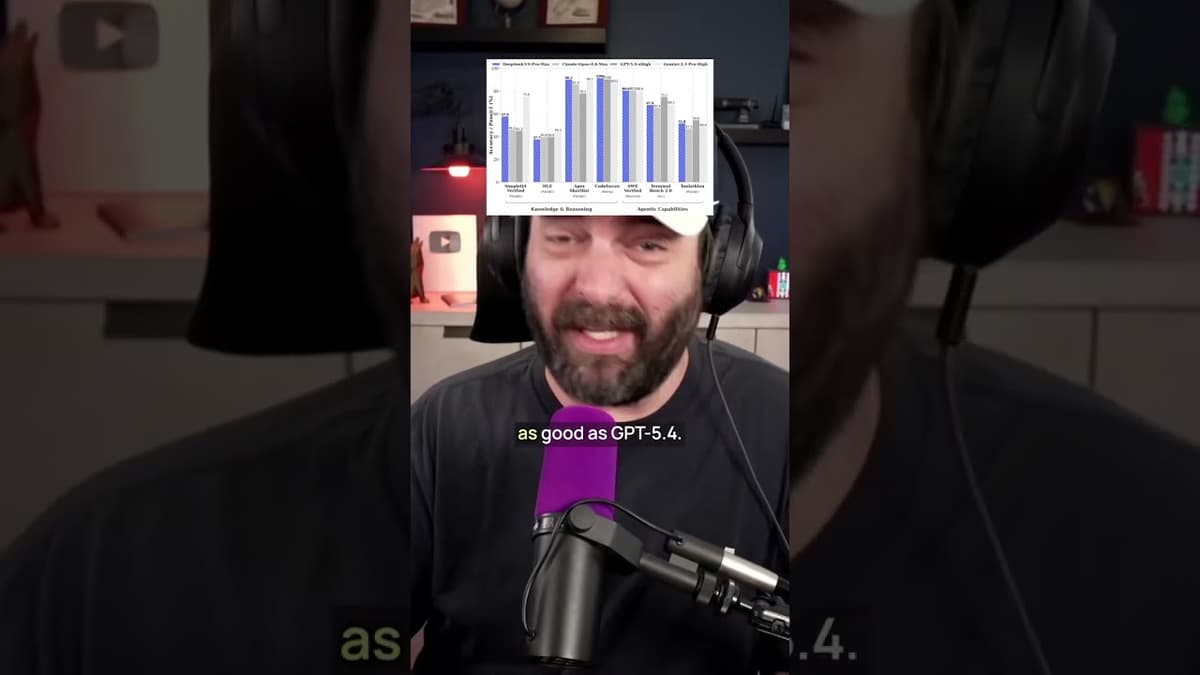
Deepseek V4, the latest open‑source large language model, claims near‑state‑of‑the‑art capabilities while offering a massive 1 million token context window. The model’s performance is said to match GPT‑5.4 and Claude‑4.6, yet its pricing is dramatically lower—$1.74 per million input tokens and $3.48...

The AI Solution Nobody’s Talking About
The video introduces Haptics, an AI platform that observes users’ daily workflows to automatically pinpoint repetitive actions and generate bespoke AI agents that execute those tasks without manual prompt engineering. Unlike generic AI‑over‑workflow advice, Haptics continuously monitors activity, connects to APIs,...
Is Claude's New Model Any Good?
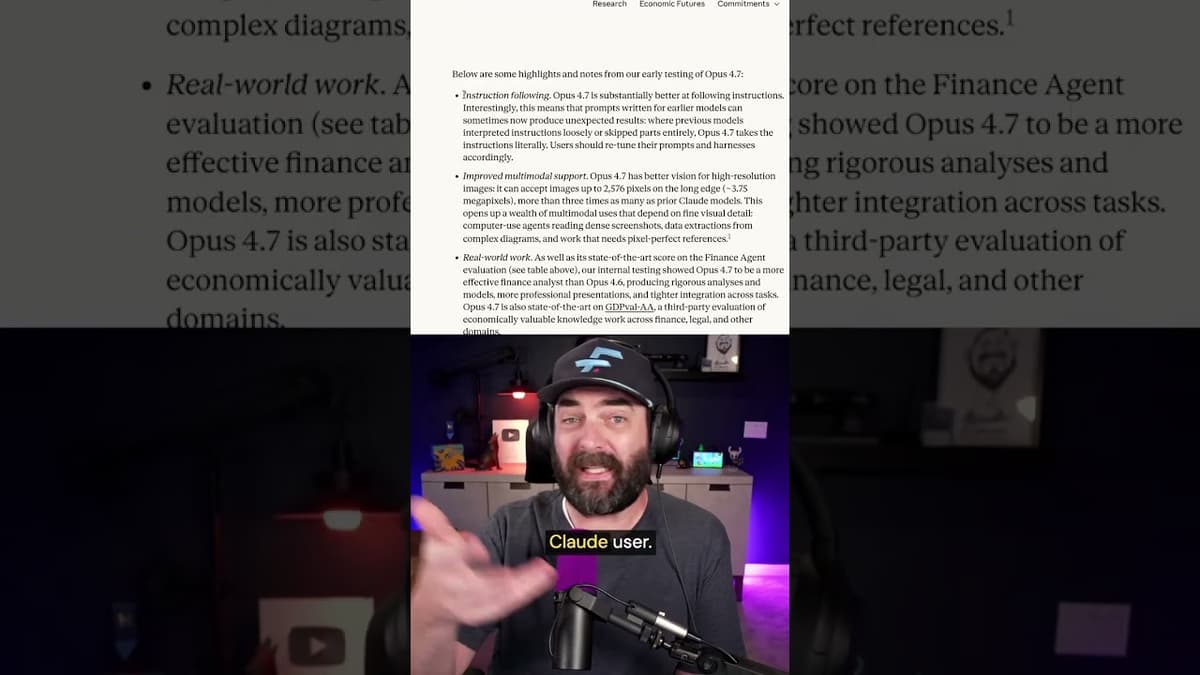
Anthropic unveiled Claude Opus 4.7, its latest flagship model aimed at developers. The release follows a series of incremental upgrades—Opus 4.6 and the Mythos preview—that have already shown strong gains in code generation. Benchmarks reveal Opus 4.7 achieving a 64.3% agentic‑coding...

Testing Out OpenAI's New "Super App"
The video showcases OpenAI’s push toward a unified “super app,” demonstrated through Codeex, which now bundles conversational AI, image creation, and code generation into a single interface. By consolidating these capabilities, Codeex aims to become the one‑stop shop for developers...

Making $$ From AI Videos??!
The speaker explores the idea of building an app that automatically creates AI‑generated short videos for YouTube monetization. While the technology exists, he cautions that success hinges on compelling narratives and high‑quality visuals, not just automation. Data points reveal that roughly...

Is Claude Mythos A Marketing Ploy?
The video questions whether Anthropic’s “Claude Mythos” restriction is genuine safety or a hype‑driven marketing stunt. It notes a recurring pattern: AI firms label models “too powerful” to attract capital and create buzz, citing earlier GPT concerns about misinformation that indeed...

Perplexity “Computer” Is Kind of Insane
Perplexity’s latest offering, dubbed the “Computer,” leverages a dedicated Mac Mini that runs continuously and connects both to users’ local applications and Perplexity’s secure backend. The service provisions an available Mac Mini on demand, allowing subscribers to tap into a full‑desktop environment...

Is ChatGPT Making You Dumber?
A recent MIT study suggests that heavy reliance on large language models may blunt independent thinking, likening the effect to building a tolerance for mental effort. The video creator reports personal difficulty generating ideas without AI after prolonged use, prompting...

News Update: OpenAI & Anthropic Feud Heats Up
The video outlines an escalating rivalry between OpenAI and Anthropic after OpenAI announced a partnership with the Department of Defense, claiming alignment on safety red lines, while internal messages suggest OpenAI has no control over Pentagon decisions. The fallout prompted users...

How To Use AI On Your Phone WITHOUT Internet
The video spotlights Locally AI, a mobile application that enables artificial‑intelligence interactions without any internet connection. By leveraging on‑device processing, the tool claims to keep user prompts and outputs entirely private, sidestepping data collection by major providers such as OpenAI,...

Sam Altman Compares Training AI To Raising Kids
In a viral clip, OpenAI CEO Sam Altman likens the process of training large language models to raising a child, framing AI development as a form of digital parenting. Altman points out that while critics focus on the electricity required to...