

3 ETFs for a Small-Cap Revival
The video argues that 2026 could mark a small‑cap revival as falling rates, broader growth and still‑attractive valuations revive investor interest. Over the past six months small‑cap indexes have outperformed large‑cap peers, and Morningstar’s 2026 outlook expects the trend to continue. The presenter warns against indiscriminate buying, emphasizing low fees, broad diversification and disciplined strategies as essential risk mitigants. Three ETFs meet those criteria. Vanguard’s VB (0.05% fee) tracks the CRSP US Small Cap Index with 1,800+ stocks and a gold Morningstar rating. Avantis’s AVSC (0.25% fee) employs a rules‑based, value‑profitability tilt, earning a silver medal. Schwab’s SCHC (0.08% fee) follows the FTSE Developed Small Cap ex‑US Index, covering 2,000+ international firms and also holds a silver rating. Together they give investors a low‑cost, diversified pathway to capture any forthcoming small‑cap upside, both domestically and abroad, potentially enhancing portfolio returns while keeping turnover and concentration risk low.

The Long View: Wade Pfau - Higher Bond Yields Are a Plus for Retirees
The Long View podcast features retirement economist Wade Pfau discussing how today’s higher bond yields reshape retirement planning. Pfau notes that a 30‑year Treasury Inflation‑Protected Securities (TIPS) ladder now offers roughly a 2.4% real yield, which translates into a sustainable,...

3 Dividend Stocks for April 2026
Morningstar’s dividend‑stock video spotlights three recent dividend raisers—Air Products & Chemicals, Fidelity National Information Services, and Swiss‑based Roche Holding (RO). Each company carries a Morningstar economic moat rating, signaling durable competitive advantages, and all are positioned as potential income generators...

These 8 Funds Could Help Steady Portfolios During Rough Markets
The Investing Insights episode spotlights eight balanced and allocation funds that can help investors weather heightened market volatility, especially amid geopolitical tensions such as the war in Iran. Russ Kinnel of Morningstar explains that mixing equities with bonds automatically dampens swings,...

Retirement Withdrawal Sequencing Rules of the Road
The video walks viewers through the complexities of sequencing retirement withdrawals to minimize tax liabilities, featuring Morningstar’s personal‑finance director Christine Benz. Benz outlines the tax hierarchy of account types—Roth IRAs and 401(k)s at the top with tax‑free distributions and no required...

3 Funds for the HALO Trade
The video discusses a “halo trade” strategy to protect portfolios from AI‑driven disruption by shifting into heavy‑asset, low‑obsolescence stocks, dubbed “halo” stocks. The host screens funds with strong industrial exposure and minimal tech holdings, highlighting three options: Lazard Global Listed Infrastructure...

3 Core Stocks to Scale Back On
Morningstar’s chief U.S. market strategist Dave Sakara warned investors that core holdings drifting into overvalued territory merit profit‑taking. In a recent Morning Filter episode he outlined three heavyweight names—Caterpillar, Walmart and Honeywell—that now trade well above Morningstar’s intrinsic estimates. Caterpillar, the...

Strategies for Boosting Retirement Spending: How Advisors Can Maximize Client Outcomes (Safely)
Morningstar’s 2025 "State of Retirement Income" paper, presented by Christine Benz, Amy Arnot and Jason Keepart, revisits the perennial question of how much retirees can safely spend. The team replaces the historic 4% rule with a forward‑looking framework that incorporates...

The Long View: Emily Guy Birken: What to Do in the Five Years Before You Retire
The Long View podcast features Emily Guy Birken, author of *The Five Years Before You Retire*, who argues that the five‑year horizon before retirement is the sweet spot for making meaningful financial adjustments. She explains that this period is...

3 Great Funds for Your IRA in 2026
The video outlines three high‑quality mutual funds that investors should consider as core holdings for their Individual Retirement Accounts in 2026. It emphasizes the need for low‑cost, long‑standing managers that can endure market cycles and remain viable over the next...

Where’s the Best Place to Stash Your Cash?
Morning Star’s Margaret Giles and Christine Benz explore where investors should park cash as yields retreat after Federal Reserve rate cuts. While nominal returns on cash‑type assets remain above inflation, the conversation underscores that cash’s primary function is preservation of...

2 Cautionary Tales From Private Equity and Private Credit Markets
The episode spotlights two high‑profile setbacks in the public‑private market convergence: ERS’s XOVR ETF, which blends listed stocks with private‑equity stakes—including a coveted SpaceX exposure—and Blue Owl Capital’s direct‑lending fund, which abruptly shut its quarterly redemption window. XOVR’s SpaceX position, fixed...

AI and Economic Moats: Which Stocks Are Most at Risk?
Morningstar’s equity research team announced a sweeping reassessment of economic moats across more than 130 companies, focusing on how artificial intelligence reshapes competitive advantages. The review, led by director Eric Compton, applied the firm’s five‑moat framework—switching costs, intangible assets, efficient...
What Valuable Insights Can You Gain From 1099 Forms?
Investors often file their 1099‑B and 1099‑DIV forms and set them aside, but the documents contain actionable data that can shape portfolio strategy. By dissecting the dividend section, investors can tell which payouts are qualified and which are not, directly...
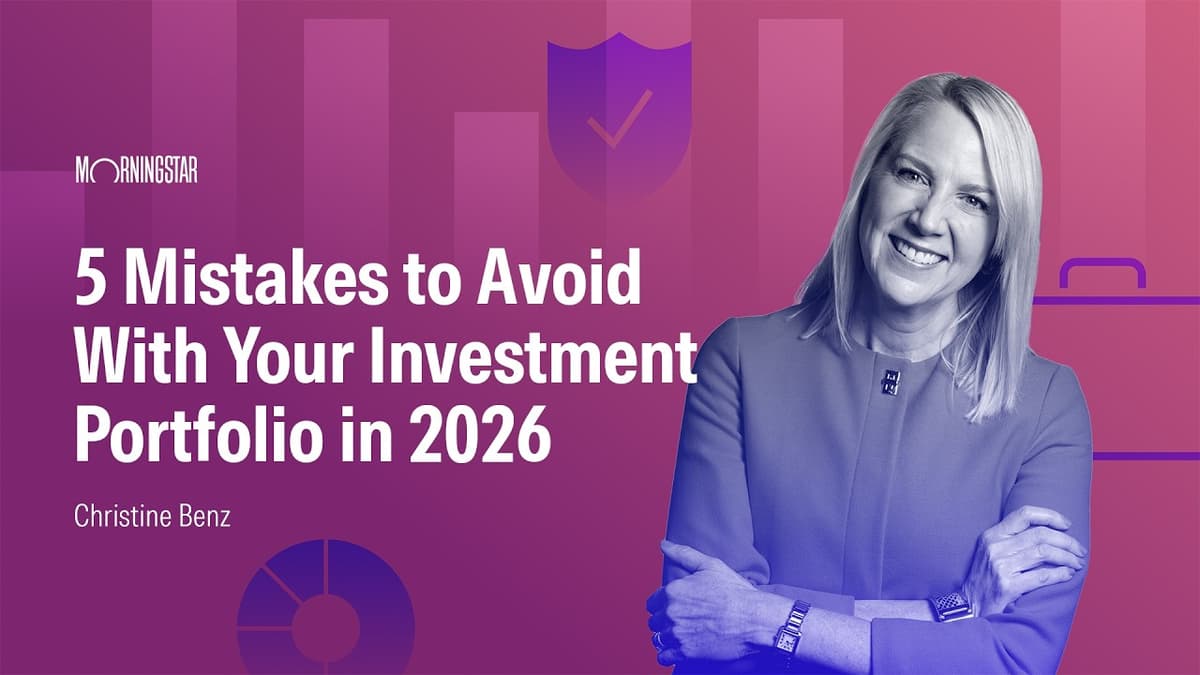
5 Mistakes to Avoid With Your Investment Portfolio in 2026
The Morningstar video, hosted by Margaret Jazz and featuring personal‑finance director Christine Benz, outlines five common portfolio mistakes investors should dodge in 2026. The discussion centers on why past performance should not dictate future allocations and how disciplined diversification can...