Blavatnik Book Talk: How To Win a Trade War – A Friendly Guide to an Unfriendly World
The event introduced "How to Win a Trade War," a new book by trade‑policy veterans Samir Keynes and Chad P. Jones. It argues that the era of avoiding trade disputes is over, and policymakers must now learn to fight strategically, especially against China’s emerging “dual circulation” model that seeks to dominate supply chains while reducing its own imports. The authors stress that while traditional economics views trade wars as zero‑sum, the reality is a world where coercive measures are already being deployed. China’s push for self‑sufficiency, massive market‑share targets in semiconductors, robotics and rare‑earths, and its export controls on magnets illustrate an asymmetric system that threatens global interdependence. Recent government efforts—spanning the Obama, Biden and current administrations—have focused on data‑driven mapping of critical‑material dependencies, revealing that roughly 90% of rare‑earths and permanent magnets are sourced from China. Illustrative anecdotes include a 2011 White House memo assessing Fukushima’s supply‑chain shock to U.S. auto production, and the pandemic‑era scramble for semiconductors and PPE. These stories underscore how limited data once hampered response, prompting today’s sophisticated vulnerability assessments that expose hidden choke points and the need for counter‑strategies. The book’s practical framework urges nations to identify their own strengths, diversify inputs, and develop retaliatory tools rather than merely seeking multilateral cooperation. For businesses and governments alike, the guide offers actionable steps to mitigate coercion, protect critical industries, and navigate an increasingly hostile trade environment.
AI as Social Technology: Astor Lecture by Professor Henry Farrell
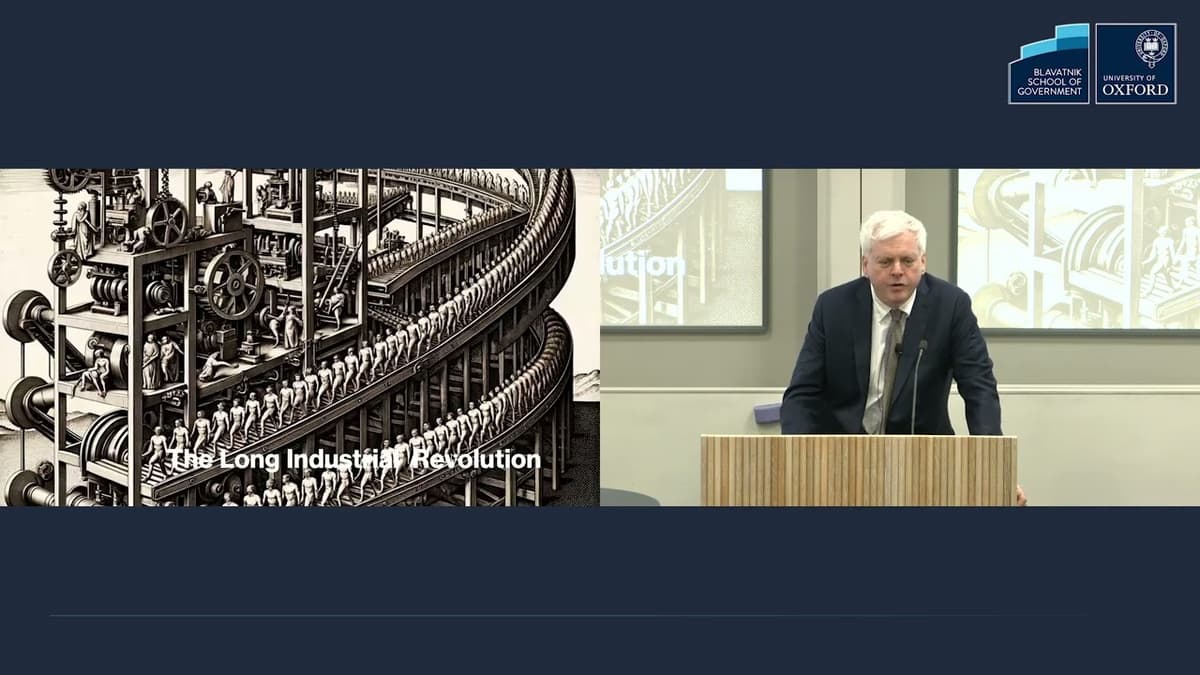
Professor Henry Farrell, a political scientist at Johns Hopkins, delivered the Astor Lecture titled “AI as Social Technology.” He argued that large‑language models and related AI systems should be understood not merely as intelligent agents but as a new form...
Global Innovation in Mental Health: The GALENOS Project
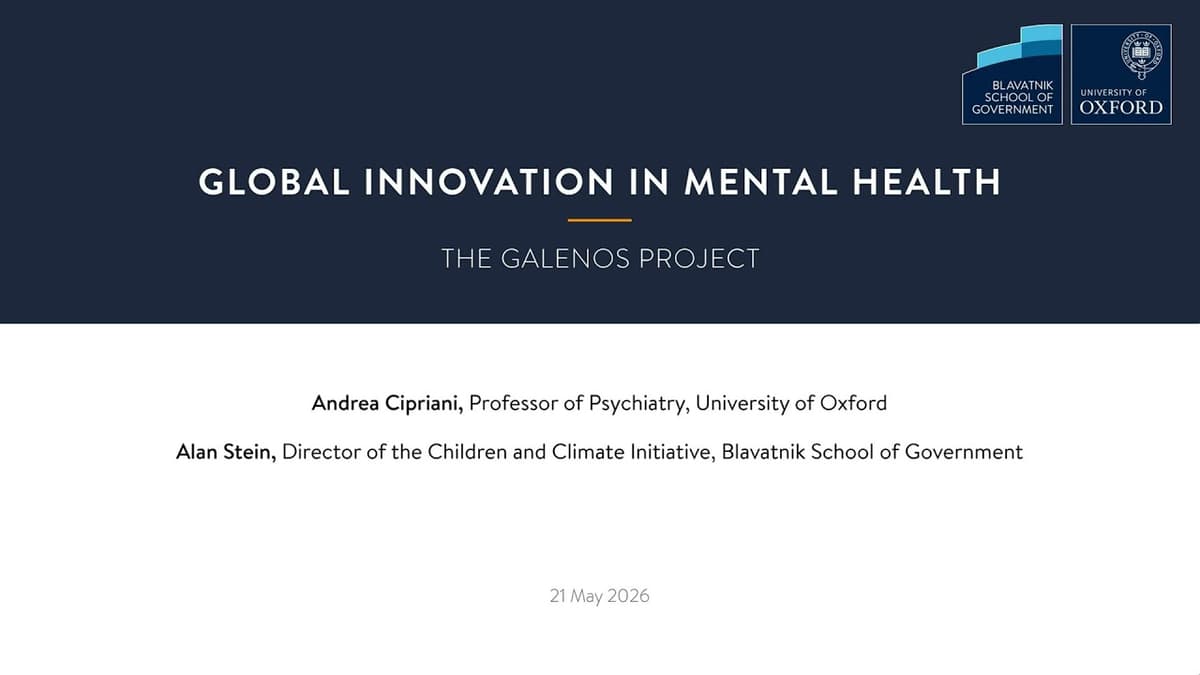
The video introduces GALENOS, a Wellcome‑funded Global Alliance for Living Evidence on Anxiety, Depression and Psychosis, led by Prof. Andre Cipriani, aiming to transform mental‑health research by continuously updating and synthesizing evidence worldwide. Cipriani outlines the crisis of information overload—exponential growth...

Kyoto Prize at Oxford: Azim Surani: The Hidden Logic of the Genome
The Oxford‑hosted Kyoto Prize ceremony featured a talk by developmental biologist Professor Azim Surani, who was honored for uncovering the “hidden logic” of the genome through his work on genomic imprinting. The event, organized by the Inamori Foundation and Oxford’s...
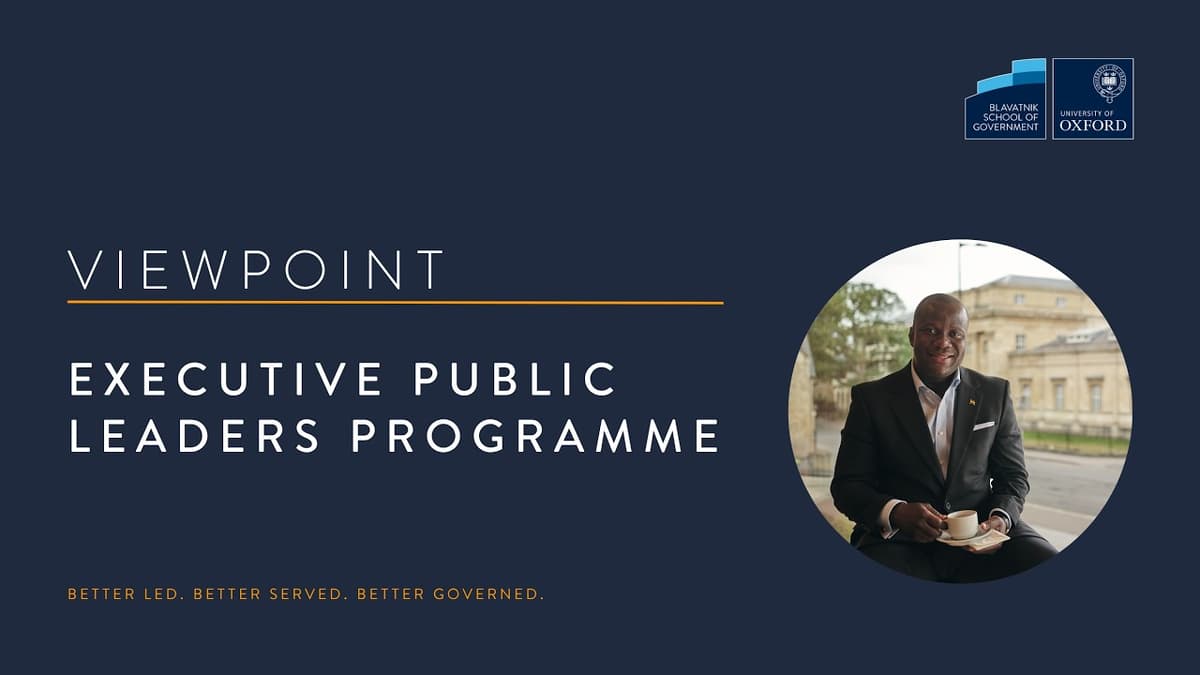
Samuel Jinapor | Executive Public Leaders Programme
Samuel Jinapor, a Ghanaian public official, outlines the Executive Public Leaders Programme, a training initiative designed to sharpen the skills of civil servants and political leaders for large‑scale public‑service delivery. The programme focuses on core ingredients such as scaling operations, maintaining...

Blavatnik Book Launch: Billionaire Backlash
The evening marked the launch of "Billionaire Backlash," a new volume by Professor Peppa Calpa and co‑author Teu Lee that frames the surge of anti‑billionaire sentiment as a potential catalyst for democratic renewal. The authors argue that today’s technological...