

Manual Changes Break Security
The video stresses that any manual alteration of production infrastructure undermines security and operational stability. It advocates a strict "no‑snowflake" policy, insisting that every server, database, and network component be defined as code, typically in YAML files, to guarantee uniformity across environments. By treating infrastructure as code, organizations gain speed, version control, and cost efficiency. Consistent, repeatable builds eliminate drift, allowing teams to deploy resources rapidly while maintaining a single source of truth. This model also supports automated policy enforcement, ensuring security standards are baked in from the outset. The speaker cites AuditBoard’s rollout as a concrete example: their shift to code‑defined infrastructure yielded predictable configurations and the ability to enforce security policies at the provisioning stage. The presenter highlights that such predictability translates into measurable security benefits and operational savings. For businesses, adopting infrastructure‑as‑code eliminates risky ad‑hoc changes, simplifies compliance audits, and accelerates delivery pipelines. The approach positions firms to scale securely while reducing manual error and associated costs.

Building Trust in Low-Touch Teams
The video addresses how leaders can cultivate trust in teams that meet infrequently, such as monthly or quarterly gatherings, emphasizing the challenges of low‑touch environments. The speaker argues that front‑loading alignment and establishing a predictable cadence of interaction are essential. He...

OWASP AI Security Summit May 27
The OWASP Generative AI Virtual Cybersecurity Summit, scheduled for May 27, was announced as a free online event targeting developers and security professionals grappling with the rapid adoption of generative AI. The speaker warned that AI‑generated code, prompt‑injection attacks, and autonomous agentic...

What Could Go Wrong With AI Audit
The video outlines three primary risk categories when employing artificial‑intelligence tools in financial audits: deficient output, misuse of output, and non‑compliant methodology. These risks frame the conversation around how AI can both enhance and jeopardize audit quality. Deficient output refers to...

When Trusted Sites Turn Malicious
The video examines how trusted university domains are being compromised to serve malicious content, specifically redirects to illegal online pharmacies. Attackers exploit outdated WordPress installations, inserting malicious PHP include files that silently forward traffic. This hijacking leverages the institution’s high bandwidth...

AI Is Scaling Cyber Attacks
The video highlights a new frontier in cybercrime: artificial‑intelligence models like Anthropic’s Claude are being weaponized to orchestrate large‑scale espionage operations. A December‑year report from Anthropic detailed a sophisticated campaign that leveraged Claude to automate every stage of an attack. According...

Set AI Security Red Lines Now
The video stresses that enterprises must treat AI deployment in security as a race for speed and precision, not a luxury. Speakers argue that without rapid, accurate tools, organizations fall behind threat actors, making early adoption essential. Key recommendations include instituting...

Play-to-Earn Collapse Risk
The video examines Gala Games’ Town Star, a play‑to‑earn title that distributes its native Gala cryptocurrency to players. Gala sold limited‑edition founder nodes—NFT‑styled farming units—promising holders a share of daily coin emissions. Early participants reportedly paid $1,400 per node, creating a...

Ransomware Uses Your Own Permissions
The video explains how ransomware exploits the very same user‑level permissions that legitimate software relies on. When an attacker gains access to a machine, the malicious code runs under the compromised user’s account, inheriting all read‑write rights the user possesses. Because...
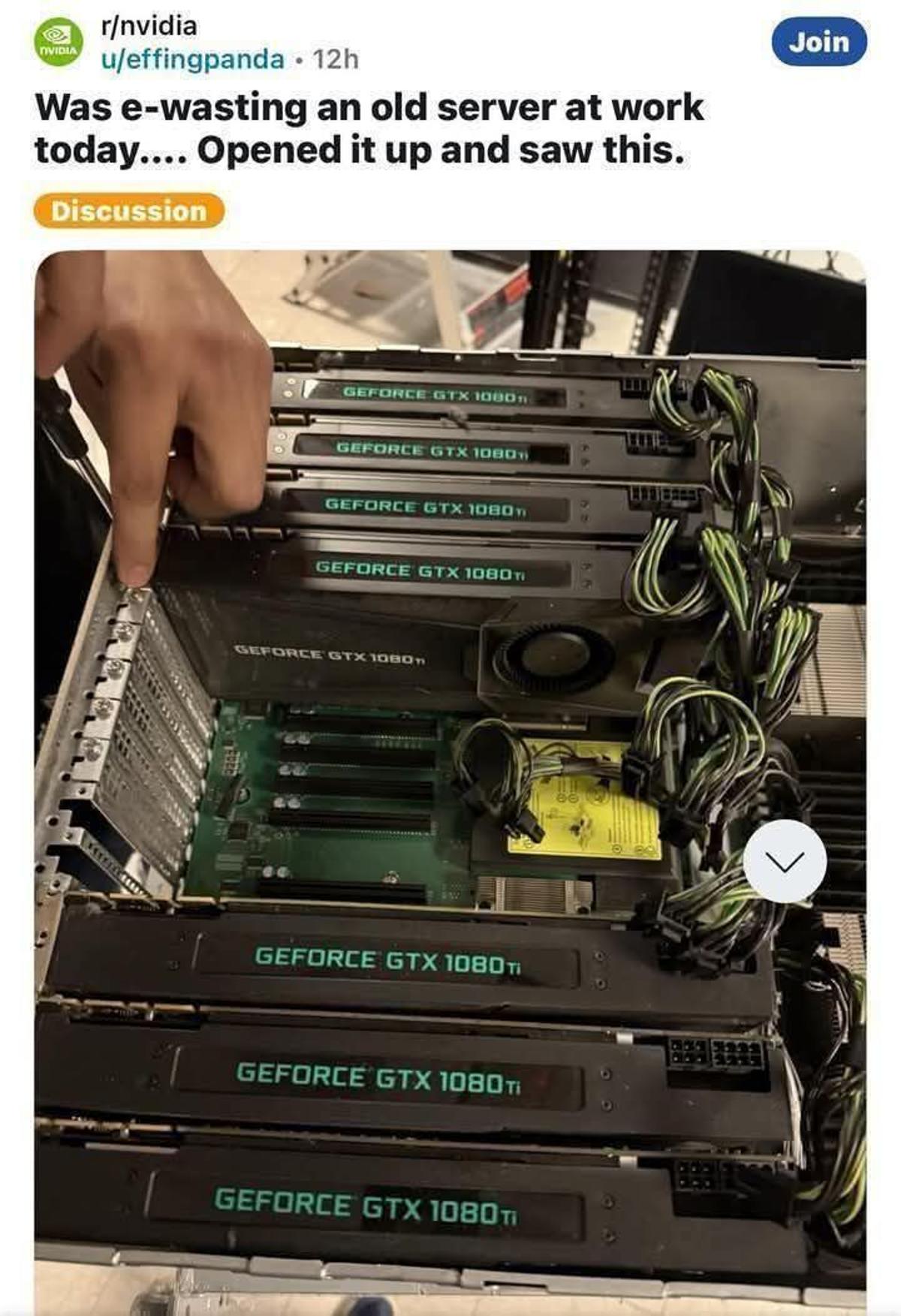
Nvidia Drops Linux Support; Switching to AMD
Funny, I just retired this graphics card as the latest NVidia drivers for Linux no longer support it (older drivers still work). I replaced it with an AMD... https://t.co/4nfkLhfj6p

When Updates Turn Into Malware
The video examines the newly identified "Canister worm," a supply‑chain attack that targets the Node Package Manager (NPM) ecosystem. Researchers attribute the campaign to the threat actor known as TeamPCP, which hijacks legitimate publishers’ accounts to replace package contents...

Supply Chain Defense Limits
The video introduces a new security product designed to defend against software supply‑chain attacks by intercepting each package installation and verifying its integrity. Unlike traditional endpoint protection suites, this tool operates at the package‑manager level, checking every incoming library against...
Cloud Security Isn’t What You Think
The video challenges the common perception that cloud security is merely an after‑thought. It argues that placing sensitive data on third‑party servers demands a security‑by‑design approach, rather than relying on retrofitted safeguards under the shared‑responsibility model. Key points include embedding security...

Anonymous Competition Drives Executives
The video explains how a company added anonymous leaderboards to its learning platform, targeting senior executives’ compliance training. After launch, the C‑suite’s completion rates jumped sharply; executives who saw themselves in the bottom 25% rushed to improve scores, demonstrating a powerful...

Authentication No Longer Means Safe
The video highlights a regulatory pivot toward "in‑use" encryption and intent‑based authentication for financial transactions. After a brief bulletin about encrypting data while it is being used, banks scrambled, signaling the emergence of a new market segment. New standards for...

Security Game Isn’t Fair
The video challenges the conventional view of the security "game" as a balanced contest between defenders and attackers. It argues that the premise—defenders must be right every time while attackers need only a single success—is fundamentally flawed because the playing...

Small Banks at Risk of Collapse
The video warns that community‑bank balance sheets are becoming vulnerable as they embrace stable‑coin assets. Lenders see the digital currency as a cheap source of equity, promising to inject billions of dollars in stable‑coin value to fund new loans and...

Bad Data Breaks AI Systems
The video spotlights a fundamental obstacle to AI adoption: trash data. The speaker likens training an AI model to cooking with premium ingredients, then substituting them with low‑quality groceries from a discount store, illustrating how poor data erodes model performance. He...

AI Agents Are Insider Risk
The video warns that AI agents, increasingly embedded in enterprise workflows, should be viewed as insider‑risk vectors. Security teams must deploy tools that give continuous visibility into what these agents access and how they interact with corporate systems. Key recommendations include...

Pen Test Took Down Campus WiFi
The video recounts a penetration test in which an Nmap scan of a Cisco Wireless LAN Controller inadvertently knocked out the entire Wi‑Fi network at a college campus. The tester describes sending a specific packet sequence that triggered a denial‑of‑service...

Weak Default Passwords Remain Overlooked—Need Solutions
I believe we do not pay enough attention to default and weak passwords. What's your solution? https://t.co/DF0PTqoYaJ

When One Person Is the Plan
The video stresses that zero‑trust security is built on the premise of an inevitable breach, not on the hope that defenses will never be penetrated. It argues that organizations must pair preventive controls with a clearly documented, rehearsed incident‑response plan...

AI Breaks Identity Models
The video argues that artificial‑intelligence workloads no longer fit traditional identity paradigms. Historically, systems distinguished between human users and predictable service accounts—batch jobs, scripts, or headless services—each with a stable, well‑defined identity. The speaker points out that AI agents behave unpredictably,...

Too Many Vulnerabilities to Fix
Organizations are increasingly unable to apply patches because maintaining uptime takes precedence, making remediation disruptive. The sheer volume of disclosed vulnerabilities creates a paralysis that prevents teams from prioritizing effectively. As a result, critical flaws often stay unpatched, undermining overall...

FCC Can’t Define a Router
The Federal Communications Commission released a fact sheet that conspicuously omits any clear definition of a “consumer router,” leaving manufacturers and consumers uncertain about regulatory boundaries. The agency later amended its FAQ to state that a cell‑phone hotspot does not...

AI Can Catch Malicious Updates
An emerging solution uses artificial intelligence to compare each software update against its previous version, flagging anomalies that may indicate malicious code insertion. The approach runs a diff on every patch, feeds the changes to an LLM, and asks whether the...

LLMs vs Machine Learning for Security
The video contrasts the roles of large language models (LLMs) and traditional machine‑learning (ML) techniques in cybersecurity, emphasizing that while both fall under the AI umbrella, their practical applications differ markedly. The speaker argues that ML, with its statistical rigor,...

Your Behavior Can Expose Fraud
The video explains how behavioral biometrics and device fingerprinting are being leveraged to expose fraud in digital payment ecosystems. Rather than tracking a person directly, the technology records a user’s interaction patterns—typing cadence, screen pressure, hand orientation, and device handling—to...

Social Engineering Fraud Explodes
The video highlights a dramatic surge in social‑engineering fraud, noting that roughly 98% of all fraud attempts now rely on manipulating people rather than exploiting system vulnerabilities. This shift reflects attackers’ preference for low‑cost, high‑yield tactics that bypass traditional security...

How Attackers Bypass MFA Today
The video explains current techniques attackers use to defeat multi‑factor authentication (MFA), focusing on the AITM (Authentication‑In‑The‑Middle) attack and abuse of the device‑code OAuth flow. In the AITM scenario, threat actors intercept the Microsoft identity API response, extract the one‑time MFA...

When Vendors Skip Linux Support
The video discusses why many hardware vendors choose not to provide Linux drivers, contrasting the open‑source freedoms of Linux with the practical challenges users face when support is absent. The speaker emphasizes that Linux’s free, modifiable nature—often described as “Libre” or...

AI Configures Vulnerabilities for You
Claude, Anthropic’s large language model, is being used to automate the configuration of vulnerable instances across a range of security appliances—SonicWall, Fortinet, F5, Citrix—so analysts can focus on testing rather than manual setup. The speaker demonstrates asking Claude to “enable”...

Leadership or Career Risk
The video explores the dilemma faced by CISOs with risk‑management backgrounds: whether to step into visible leadership roles that could expose them to heightened scrutiny during cyber or AI crises. The speaker argues that crises should be framed as opportunities rather...

When Crisis Plans Fail to Act
The video spotlights a growing weakness in corporate crisis management: governance structures that do not grant decisive authority when a fast‑moving incident erupts. Ann Marie explains that while most firms maintain detailed incident‑response, communications, and business‑continuity plans, those plans collapse...

Can Small LLMs Solve Security Flaws?
The video examines whether compact language models can address the security vulnerabilities that plague larger AI systems, citing an OpenAI paper that claims small models can be engineered to never hallucinate. It argues that eliminating hallucinations would make it easier...

Security Leadership Styles: Builder, Fixer, or Scale Operator
The video outlines three classic CISO archetypes—Builder, Fixer, and Scale Operator—each representing a distinct approach to security leadership. Builders relish a clean slate, designing programs from the ground up without legacy baggage. Fixers thrive on chaos, transforming disorganized environments into structured...

What Are You Giving Up?
The video stresses the importance of pausing and breathing before entering any transaction, urging viewers to engage their critical faculties rather than reacting impulsively. It frames decision‑making as a moment to assess not just price tags but the broader price...

Spot Scam Red Flags Fast
The video centers on practical tips for spotting common scam warning signs, aimed at consumers who encounter suspicious offers online or via phone. Speakers emphasize that offers that appear “too good to be true,” especially steep discounts such as 90% off,...

LLMs Solve Firmware Upgrade Chaos
The video highlights how large language models (LLMs) are being deployed to untangle the notoriously chaotic process of firmware upgrades across diverse hardware ecosystems. Operators must first locate each device, determine its exact hardware revision, identify the firmware version it...

Don't Rely on Hope for Firmware Security
This is how many view firmware updates. Wishing for the best is not the best security strategy... https://t.co/MnyAcBQT6u

AI Expands the Scam Target Pool
The video discusses how artificial intelligence is reshaping fraudulent schemes, allowing scammers to produce flawless, grammatically correct communications that mimic legitimate business correspondence. Historically, scammers relied on obvious errors—misspellings, broken grammar—to filter for the most gullible victims. With AI tools like...

When Virtual Machines Fail You
The video warns that virtual machines are not a panacea for security; a malicious actor can break out of a VM and gain control of the underlying host. The speaker stresses that relying solely on a locally‑run virtual box or...

Your Attack Surface Just Expanded
Security leaders are redefining the attack surface beyond traditional endpoints, incorporating identities, applications, cloud workloads, and even IoT devices into asset inventories. The video explains how modern security platforms—whether marketed as attack surface management or exposure management—are broadening the asset...

The Hardest Part of Security
The video tackles what the speaker calls the "hardest part of security" – remediation – within the broader context of proactive security programs. It outlines the traditional three‑step framework: identifying assets, gaining visibility, and then prioritizing risks based on the...

Why One-Time Pen Testing Isn’t Enough
The video argues that traditional, once‑a‑year penetration testing is obsolete in today’s fast‑moving tech environment. Adrian emphasizes the shift toward continuous, offensive testing that mirrors real‑world attacks, providing organizations with up‑to‑date visibility into exploitable weaknesses. Key points include the need for...

AI-First Security Is Mostly Hype
The video argues that the buzz around “AI‑first” security is largely a marketing veneer rather than a genuine market shift. Speakers contend that vendors are simply tacking AI buzzwords onto traditional security products—email filtering, DNS protection, and fraud detection—without fundamentally...

AI Reinforces Your Bias
The video highlights how generative AI assistants tend to mirror and amplify the language users feed them, effectively reinforcing personal biases. Using a simple coding example, the speaker demonstrates that when they repeatedly praise “for loops,” the model begins to...

AI Hallucinations Become Security’s Problem
The video highlights growing concern that AI hallucinations are no longer just a model‑performance issue but a security risk that falls on security teams. Security leaders are pushing back, refusing to take ownership of model reliability, while red‑team exercises now routinely...

Why Cyber Attribution Gets Complicated
The video examines why attributing cyber attacks to nation‑states, particularly the United States, has become a tangled problem. The author, writing a book on cyber threats, treats the U.S. as a distinct adversary alongside China and Russia, but notes that...

Will AI Make Senior Developers Obsolete?
Senior developers with experience use AI and create great things, but will we reach a point where we have no more senior developers, and everyone is using AI to code? https://t.co/C2oY6RLIbe