

Are Perpetual Motion Machines Possible?
The video tackles the age‑old claim of a perpetual motion machine, using a coin‑laden wheel as a demonstrative example. It explains why such a device cannot generate energy indefinitely, emphasizing that friction at the axle and gravity’s pull on the wheel’s center of mass inevitably bring motion to a halt. Key physics concepts are highlighted: the law of conservation of energy, which forbids creation of energy from nothing, and the inevitable loss of kinetic energy to heat and sound through friction. Historical anecdotes—Bhaskara’s 12th‑century mercury wheel, Zimara’s self‑blowing windmill, and the Oxford electric bell—illustrate repeated failures across centuries. The narrator stresses, “keep looking for the energy source,” and reminds viewers that “you can’t get something for nothing.” He also notes that the U.S. Patent Office stopped granting patents for perpetual motion devices without a working prototype, underscoring institutional recognition of the impossibility. For investors, policymakers, and innovators, the lesson is clear: any proposal promising free, limitless energy should be scrutinized for hidden inputs. Understanding these physical limits protects against fraud, guides realistic renewable‑energy investments, and reinforces the need for scientifically grounded solutions to climate challenges.

My First Science Video in 3 Years!
The video marks the creator’s return to science communication after a three‑year hiatus, focusing on an astonishing image of the Sun captured at night—not with visible light, but with particles that stream through the Earth. Using Japan’s massive Super‑Kamiokande detector, scientists...

The Ocean Floor Is Covered in This
The video explains how the world’s internet relies on a hidden network of submarine fiber‑optic cables that stretch across the ocean floor, connecting continents and carrying the bulk of global data traffic. Engineers load thousands of kilometers of ultra‑pure glass fiber...
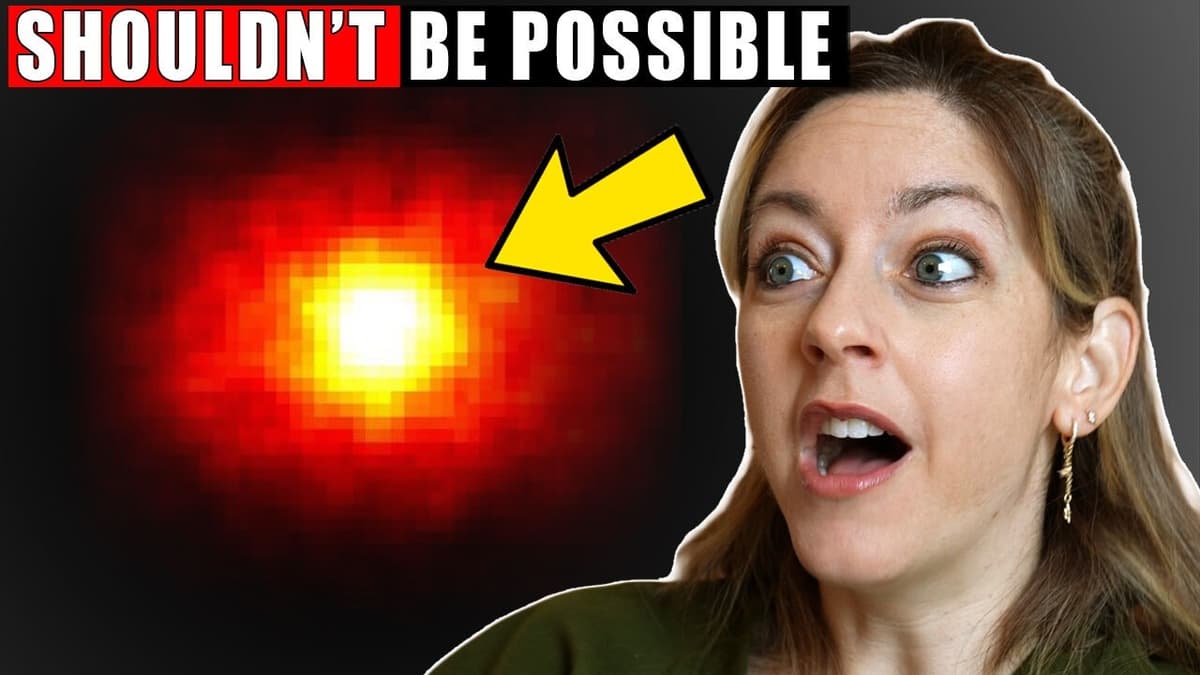
My First Science Video in 3 Years
The video marks the creator’s return to physics after three years, using a striking image of the Sun assembled from solar neutrinos detected deep underground. It explains how neutrinos—tiny, nearly massless particles—stream through the Earth unimpeded, allowing a detector in...