

Alleged Hidden Cloud Breaches Reveal IBM, AT&T Security Failures
Hidden Cloud Breaches Alleged at IBM, AT&T The allegations now facing International Business Machines Corp and AT&T Inc did not surface overnight. They arrived wrapped inside a False Claims Act complaint that had been sitting under seal since 2020, finally unsealed this week after the US government chose not to intervene. The suit, filed by a former vice president of threat intelligence, paints a picture of long-running security failures, repeated intrusions, and what the complaint describes as deliberate downplaying of breach severity before major federal contracting decisions. The scale of the network at issue underscores the severity of the allegations. IBM’s cloud computing infrastructure serves as a backbone environment across government agencies, including military customers. AT&T operates the Core Network that supports it. Allegations that both companies faced intrusions they could not fully trace point toward systemic exposure. The complaint describes foreign and unidentified hackers repeatedly breaching the Core Network, sometimes without the companies being able to determine who accessed what, or whether any data had been exfiltrated or altered. Chinese government-backed groups, including APT 10, are explicitly referenced. An IBM spokesperson responded that the complaint was filed six years ago and reaffirmed that the company believed its actions followed the letter of the law. AT&T declined to comment. The whistleblower claims to have witnessed numerous incidents while serving in senior cybersecurity roles between 2017 and 2019, alleging pressure to soften internal reporting. According to the suit, internal investigations uncovered more than 50,000 potential APT 10 hits between 2013 and 2016 and later found nearly 400 compromised accounts across almost 200 systems in 18 countries. These findings allegedly collided with weak logging practices that prevented deeper forensic work. If accurate, the situation echoes warnings from long-standing federal guidance. For example, the NIST discussion on incident reporting in NIST SP 800-150 highlights how inadequate logs allow adversaries to persist for years. Questions about transparency have surfaced before for both companies in different contexts. IBM agreed in 2020 to pay $900,000 to resolve US Defense Department claims that it had not properly secured systems tied to earlier hacking activity. Separately, AT&T has long been under a different kind of whistleblower spotlight stemming from a former technician's disclosures that AT&T operated a splitter facility giving the NSA access to backbone traffic, a case that resurfaced in public analysis from the Electronic Frontier Foundation in 2025. These examples form a pattern of how sensitive infrastructure has historically been handled. https://t.co/Z5o56NhCa5

Claude Opus 4.8 Boosts Enterprise AI Speed and Reasoning
Anthropic released Claude Opus 4.8 with higher reasoning quality, enhanced speed, and stronger performance across enterprise agent workflows. https://t.co/FAbhc19SbN

CAR‑T Therapy Shows Promise for Autoimmune Diseases
CAR T therapy, originally developed to fight blood cancers, is now being tested as a potential way to “reset” the immune system in autoimmune diseases like MS, lupus, Graves’ disease and stiff person syndrome. Early results are promising, but risks remain,...

Regulated Firms Should Prioritize AI Safety over Model Hype
Many companies are moving quickly to adopt AI. That makes sense. The productivity upside is real, especially for organizations trying to summarize documents, support customers, analyze information, improve internal workflows, or help employees work through large volumes of data. But for...

Questioning Automation Myths Amid Unexplained GDP Surge
Tough to understand how people can predict robots doing everything and no one working yet GDP growing exponentially.
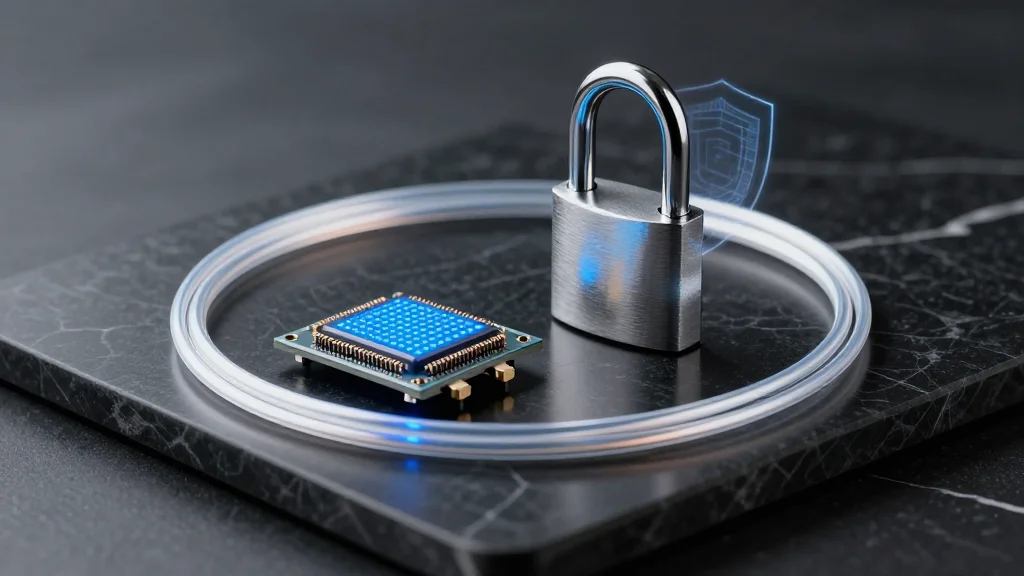
Act Now: Post‑Quantum Encryption Needed for Regulated Firms
Y2Q sounds like something from the future. For many businesses, that makes it easy to postpone. That may be the wrong instinct. The concern behind Y2Q is straightforward: future quantum computers could eventually weaken or break widely used public key encryption methods...

Self‑Destructing Plastic Degrades Completely in Two Weeks
Plastic pollution doesn’t seem to be getting better. But what if we could engineer plastics to get rid of themselves? A team of scientists in China recently demonstrated this somewhat comically idealistic solution, reporting their findings in a recent paper published in...

Neglected Credentials Give Attackers a Ready-Made Backdoor
Employees reuse passwords. Former employees may still have access to systems. Shared mailboxes may have weaker protections than individual accounts. Vendors may have old logins. Cloud applications may be added without full visibility from IT. Over time, the identity layer...

Nissan and BMW Squashed Early EV Advantage Despite Expertise
Both Nissan in 2009 and BMW in 2011, had early leads in EVs and also had the knowledge to build world-class sports cars. And both, screwed up the lead, royally. https://t.co/zY39EMW5E7

Global Focus on Ukraine Eclipses Iran's Arab Attacks
Shocking to me to see the world rally around Ukraine when attacked but ignoring the attacks by Iran on the Arab world. Why?

Dunkin Coupons Surge as Starbucks Price Backlash Fuels Shift
After the $9 Starbucks Coffee controversy, customers have discovered the power of a new coupon redeemable at Dunkin.

T‑Mobile Pairs 5G with Starlink for Enterprise Redundancy
T-Mobile has taken another step into the enterprise market with its launch of SuperBroadband on April 28, a business-focused connectivity service that pairs the carrier's 5G network with SpaceX's Starlink satellite system. The concept is straightforward, yet the execution aims...
AI Integration Frees Agents to Build True Loyalty
“The fix isn’t fewer agents, it’s AI that acts across systems - so the humans who remain can do the work that actually builds loyalty. ”

Courts Must Decide AI Liability: Companies or Developers
Who is liable when artificial intelligence makes mistakes? At issue in the Mobley case is whether courts will impute legal responsibility to AI systems for decisions they take on behalf of companies, or whether liability will sit with the companies —...

After 5 Years, I Discovered Tesla Model Y’s Hidden Undertrunk
5+ years of driving a Tesla Model Y to just now, accidentally, find a new undertrunk. https://t.co/wn40DCRsud