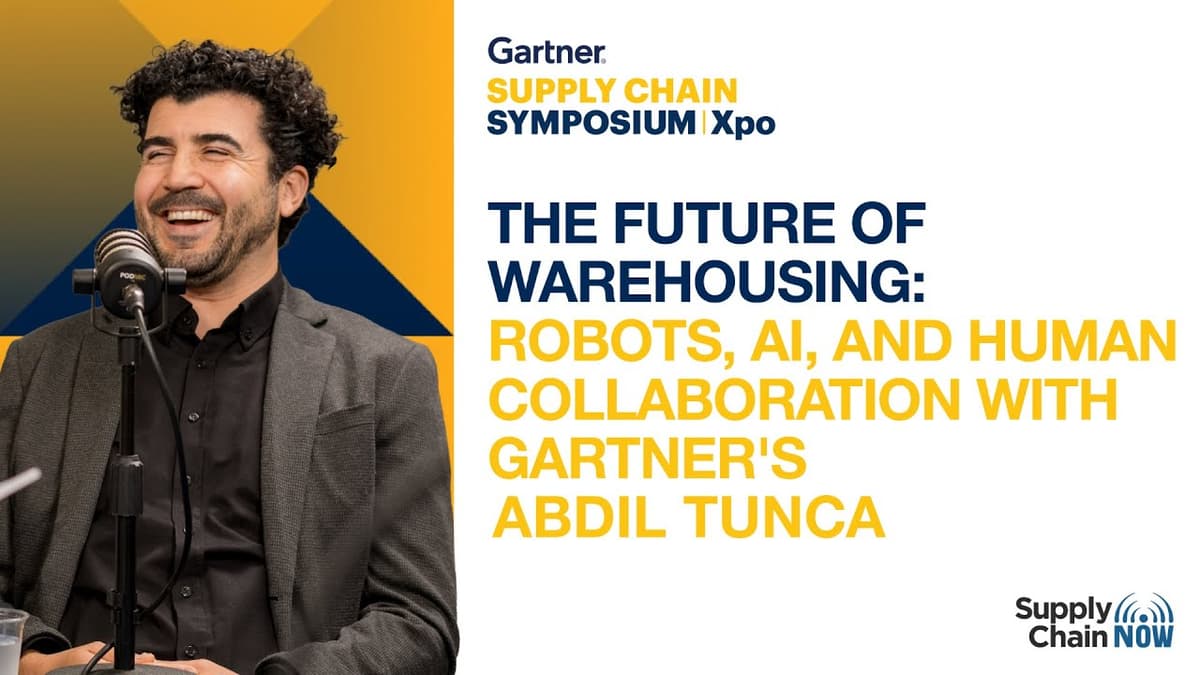
The Future of Warehousing: Robots, AI, and Human Collaboration with Gartner's Abdil Tunca
Supply chain leaders gathered at Gartner’s Orlando symposium to explore how robots, AI, and human collaboration will reshape warehousing. Senior principal analyst Abdul Tunca, a former Kroger practitioner, explained that while humanoid robots promise flexibility, they remain hampered by hardware complexity, high defect rates, costly components, and immature supply chains, making them less viable than simpler automation for most tasks today. Key data points underscore the challenge: companies automate primarily to cut labor costs and address shortages, yet the cost per robot still exceeds that of proven polyfunctional systems. Polyfunctional robots, optimized for specific workflows such as picking, sorting, and inspection, outperform humanoids on standardized tasks, while the latter are better suited for exception handling. Tunca highlighted a 94% deployment or planning rate for intra‑logistics smart robotics within two years, and cited a retailer’s robotic arm that delicately bags oranges as a tangible example of advancing dexterity. Tunca also warned that the supply chain for humanoids relies on specialized, low‑volume components, limiting scalability. He likened mass production of humanoids to turning a concept car into a Toyota Corolla—still a distant goal. However, as AI perception, battery technology, and infrastructure evolve, especially in brownfield warehouses built for humans, humanoids may become cost‑effective for retrofitting existing sites. The broader implication is a shift toward robot‑centric, or “human‑optional,” warehouses by 2030, where humans transition from manual picking to supervising and handling exceptions. Success will depend on strategic ROI frameworks—what Gartner calls “sweating the assets”—to ensure that robot fleets deliver measurable value without simply adding complexity.
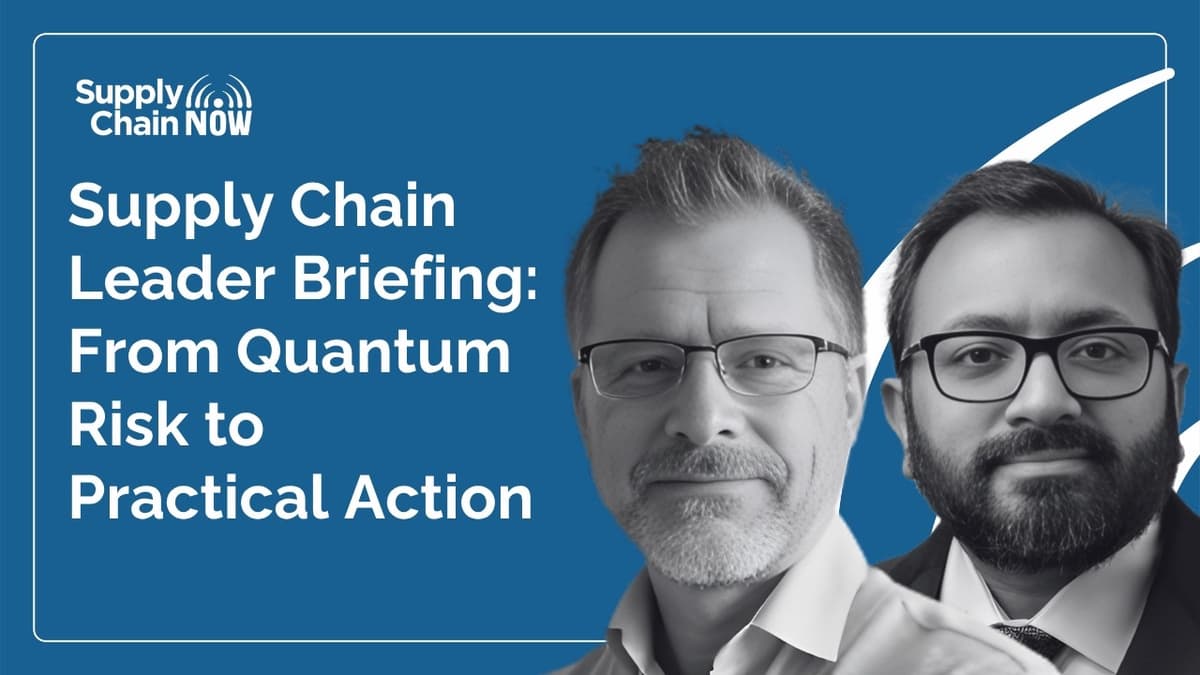
Supply Chain Leader Briefing: From Quantum Risk to Practical Action
The briefing centered on quantum computing’s looming impact on supply‑chain security, featuring Apex Analytics executives discussing their white paper “The Quantum Paradox.” They warned that quantum threats are already materializing through a “harvest now, decrypt later” model, where encrypted supplier...
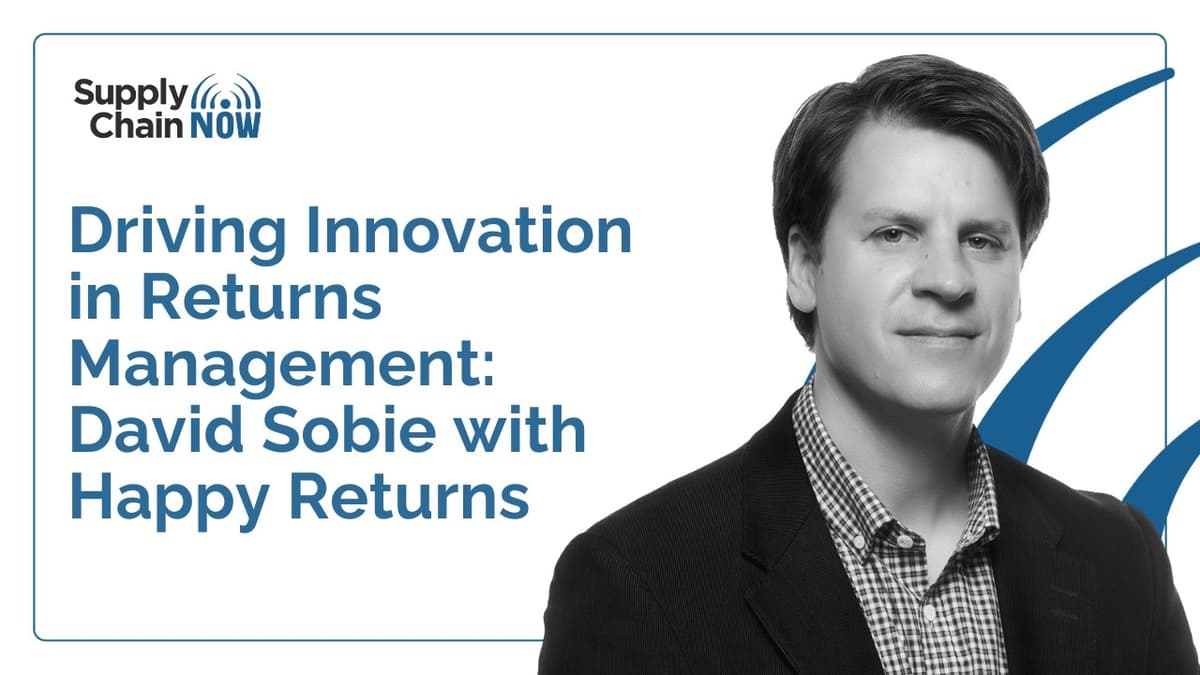
Driving Innovation in Returns Management: David Sobie with Happy Returns
The Supply Chain Now episode features David Sobie, co‑founder and CEO of Happy Returns, discussing how the company reshapes reverse logistics by offering a seamless “buy online, return in store” experience. Sobie traces the idea back to his time at...
How Supply Chain Leaders Can Thrive Through Constant Disruption
At Modex 2026, Scott Luden and Gee Katon explored how supply‑chain leaders can not just survive but thrive amid relentless, unpredictable disruptions. The conversation highlighted that today’s biggest challenge is not the disruptions themselves but the uncertainty they create, prompting...
The Infrastructure Gap: Why Direct Procurement Is at a Breaking Point
The webcast centered on the widening infrastructure gap in direct procurement, warning that traditional back‑office approaches are reaching a breaking point. Koopa Software’s Mark Shineker referenced the State of Direct Procurement 2026 report, which surveyed 133 senior leaders and revealed...
How AI and Adaptability Are Reshaping Resilient Supply Chains with Ronny Horvath & Benjamin Reich
In this episode, Accenture’s Benjamin Reich and Ronny Horvath discuss how artificial intelligence and adaptable strategies are redefining resilient supply chains. They explain that logistics is moving beyond a cost‑center mindset toward a strategic capability powered by AI‑driven control towers,...
A View From the Top of the Deal Table: AI, Supply Chain, and the Next Wave of Value
The livestream featured Ben Gordon, founder of Cambridge Capital and former head of BGSA Holdings, discussing the current state of supply chain finance, technology and consolidation. Gordon highlighted that the four‑year freight recession has finally ended, with rates rebounding sharply...
From Manual Operations to Automated Growth: Designing Future-Ready Warehouses
The panel at MODEX 2026, featuring Forflow’s Christian Liberote and Florian Salomon, examined how artificial intelligence is reshaping warehouse operations. They stressed that AI is an enhancer, not a replacement, and that robust master‑data and well‑defined processes are prerequisites for...
Why Supply Chain Transformation Starts with People
The panel at Modex 2026 explored why people, not just technology, are the catalyst for supply chain transformation. Host Scott Luden brought together Carvana’s regional logistics director Camille Blake, Deote Consulting’s technology fellow Wanda Riddick Johnson, and founder of the...
Analysis of the Q1 2026 U.S. Bank Freight Payment Index
The Supply Chain Now panel dissected the U.S. Bank Freight Payment Index for the first quarter of 2026, highlighting a rare supply‑side recovery in the freight market. While overall shipment volumes remained largely unchanged, the index showed a 12.9% quarter‑over‑quarter...
Logistics Cluster: Delivering Aid in Crisis Zones
The video introduces the World Food Programme’s Logistics Cluster, a UN‑mandated coordination platform that activates during large‑scale emergencies to ensure humanitarian aid moves without logistical bottlenecks. Co‑hosts from Vector Global Logistics interview Noam Pensietti, the project and communications officer, and...
Why the Theory of Constraints Is More Relevant Than Ever Before
Supply Chain Now hosted a conversation with Rammy Goldrat, CEO of the Goldrat Group, to explore why the Theory of Constraints (TOC) is more relevant than ever. The episode opened with a discussion of deteriorating forecast accuracy and the need...
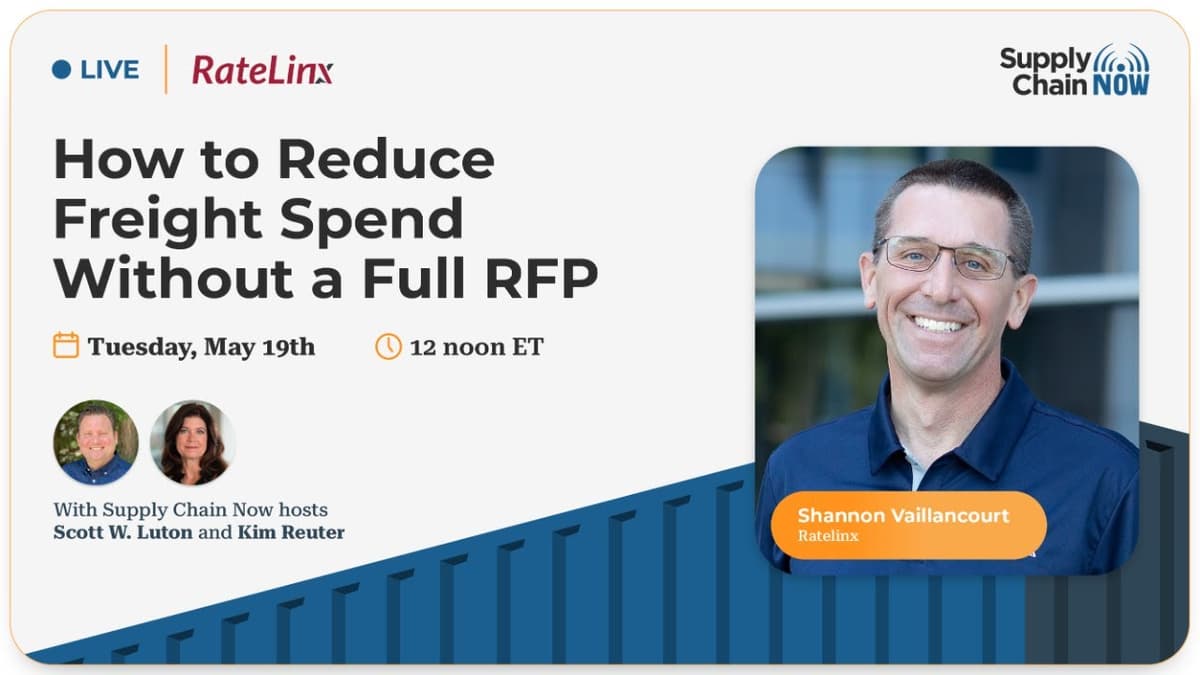
How to Reduce Freight Spend Without a Full RFP
The livestream focused on cutting freight spend without launching a traditional, months‑long RFP. Hosts Scott Luton and Kim Reer, joined by Rate Links CEO Shannon Valancort, outlined how shippers can uncover hidden costs, improve carrier mix, and realize rapid savings...
The Secret Sauce: Tips for Leaders that Want to Scale AI Effectively
The episode of Supply Chain Now explores how leaders can scale AI effectively, emphasizing that the biggest hurdle is not the technology itself but getting people to adopt it in ways that truly change operations. Guests stress that AI tools must...
People & Performance Focused Leadership: Rodrigo Alponti with STADA Group
The Supply Chain Now episode spotlights Rodrigo Alpanti, senior vice‑president of global supply chain at Germany‑based STADA Group, discussing his people‑centric leadership philosophy in the pharmaceutical sector. Alpanti traces his career from fast‑moving consumer goods, through the integration of Gillette...