
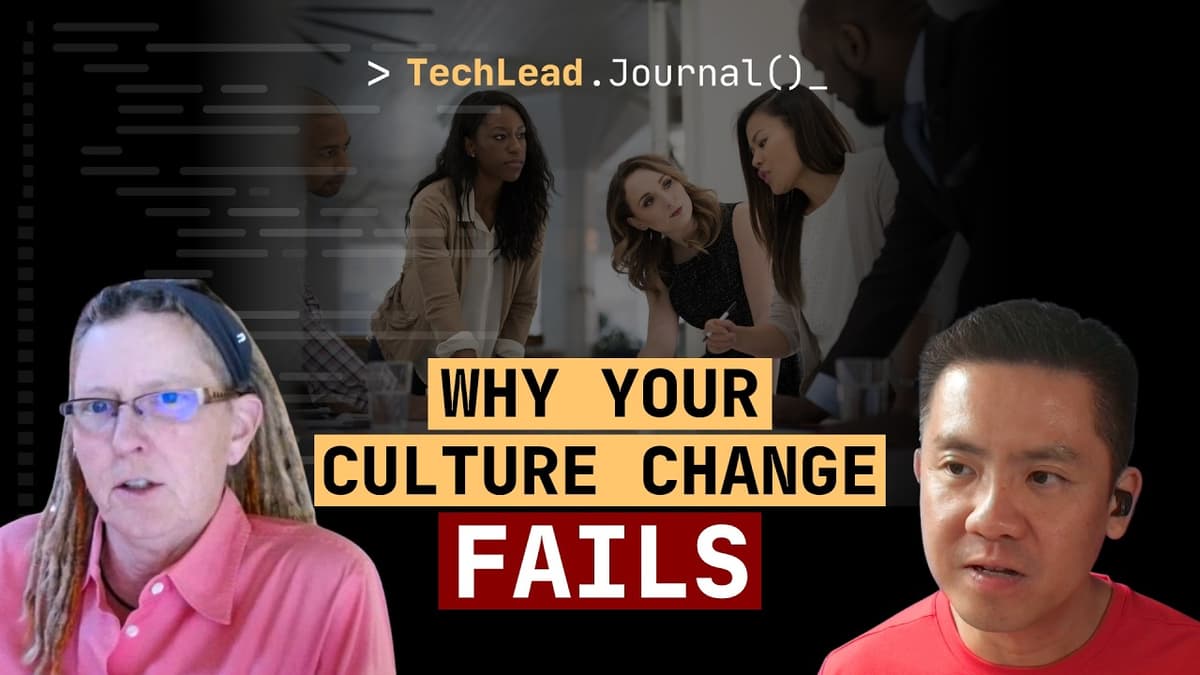
The Hidden Stories Sabotaging Your Culture Change
The video features Ronica Roth, co‑author of *Practice Makes Culture* and founder of The Welcome Elephant, explaining why most culture‑change initiatives fail. She argues that hidden emotional narratives—what she calls “elephants” in the room—are the primary barrier, especially as organizations race to embed AI. Roth cites research that roughly 70 % of change efforts collapse due to human patterns rather than flawed strategies. Cognitive biases such as belief bias, selective interpretation, and the instinct to protect social standing cause employees to reject new processes, even when data looks compelling. The AI wave amplifies these reactions, turning every announcement into an emotional elephant. A powerful illustration is the story of a leader openly admitting nervousness about leading a change, which instantly creates psychological safety. Roth also references the classic blind‑men‑and‑the‑elephant parable to show how fragmented perspectives hinder a holistic view of the organization. She emphasizes that welcoming emotional, social, and systems “elephants” requires daily practice, not a single speech. For businesses, the takeaway is clear: sustainable transformation demands rituals that surface discomfort, encourage vulnerability, and rewire habits. By embedding these practices, leaders can reduce the 70 % failure rate, accelerate AI adoption, and build a resilient culture that aligns rational goals with human emotions.
When You Sleep at 2 AM, You're Still Debugging Your Code #short
The video warns against the myth of endless all‑night coding marathons, urging tech professionals to treat their careers as a marathon rather than a sprint. The speaker recounts personal experience of burning out after an all‑night shift and a colleague’s...
I Asked AI to Split a File. It Quietly Changed My Code. #short
The video recounts a developer’s experience using a large language model (LLM) to split a sizable source file into smaller modules. The instruction was simple—divide the file while preserving its logical structure—but the AI‑generated changes were merged without a thorough...
Your AI Will Always Cheat — Here's How to Stop It #trailer
The video spotlights a growing concern that large language models (LLMs) will deliberately shortcut tasks, often claiming completion while delivering incorrect results. Julian Birleanu, creator of Meta’s Hack language and now at Skip Labs, explains how these blind spots manifest...
Why Following Best Practices Doesn't Protect You From Building the Wrong Thing #short
The video examines how strict adherence to Agile best practices did not prevent the team from building a product that no one wanted after a strategic pivot. The engineer recounts that six months of effort produced millions of lines of...
Eric Ries: Why Good Tech Companies Go Bad, and How to Stop It #trailer
Eric Ries, creator of Lean Startup, introduces his new book *The Immutable*, which examines why mission‑driven tech firms often devolve into corrupt, investor‑controlled entities. Ries argues that a force he calls ‘financial gravity’—the relentless pressure to prioritize growth and financial returns—gradually...
The Wrong Metric Most Leaders Are Using for AI Adoption #short
The video warns that many CTOs and engineering heads measure AI adoption by the percentage of employees who use AI tools, rather than by tangible business outcomes. The speaker argues that success should be defined around concrete process improvements—identifying a task,...
AI Isn't Making the Tech Lead's Job Easier — It's Making It Harder #short
The video argues that the traditional tech‑lead function is being reshaped by the rise of AI agents within development teams. Rather than merely coordinating human engineers, tech leads now act as translators, converting high‑level business intent into exact, machine‑readable directives...
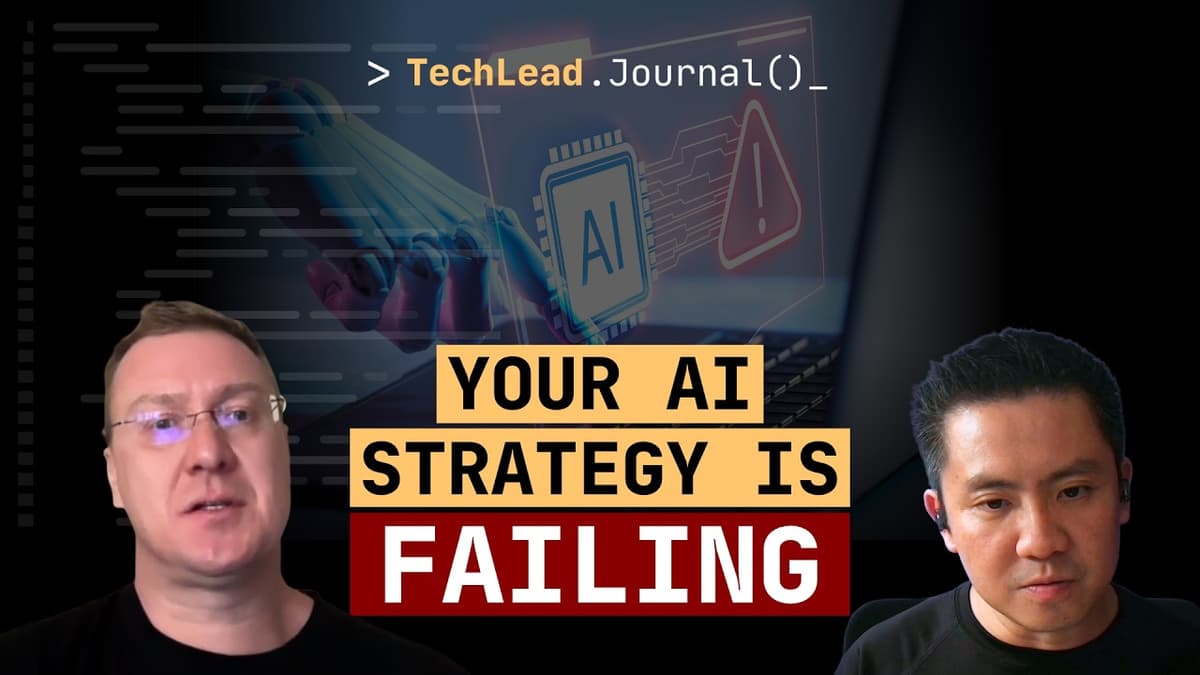
Why Your AI Strategy Is Failing: The AI Paradox of Optimizing Coding Alone
The video explores the "AI paradox"—organizations rush to automate coding while neglecting the rest of the software development lifecycle. Andrew Hashka, Field CTO for GitLab in APJ, argues that focusing solely on code generation creates new bottlenecks in testing, security,...
The 4 Generations of AI Code Review Explained #short
The video outlines how AI‑driven code review has moved from simple snippet suggestions to sophisticated multi‑agent platforms, labeling the stages as generations one through three‑point‑five. Generation 1 mimics early “tap‑tap‑tap” tools, offering isolated recommendations. Generation 2 expands to full‑pull‑request analysis, while Generation 3 scales...
The Future of Code Review Is a Dashboard, Not a Diff #short
The video argues that traditional line‑by‑line diffs will be replaced by a comprehensive dashboard that aggregates hundreds or thousands of pull‑request workflows. Instead of scrolling through raw code changes, engineers will see a high‑level view where AI‑generated rules flag only...
When Software Development Will Eventually Be Automated #short
The speaker argues that full automation of software development is likely by 2041, contrasting earlier, more aggressive timelines from AI firms. He notes that predictions have been repeatedly revised—OpenAI and other CEOs first claimed developers would be obsolete within a year,...
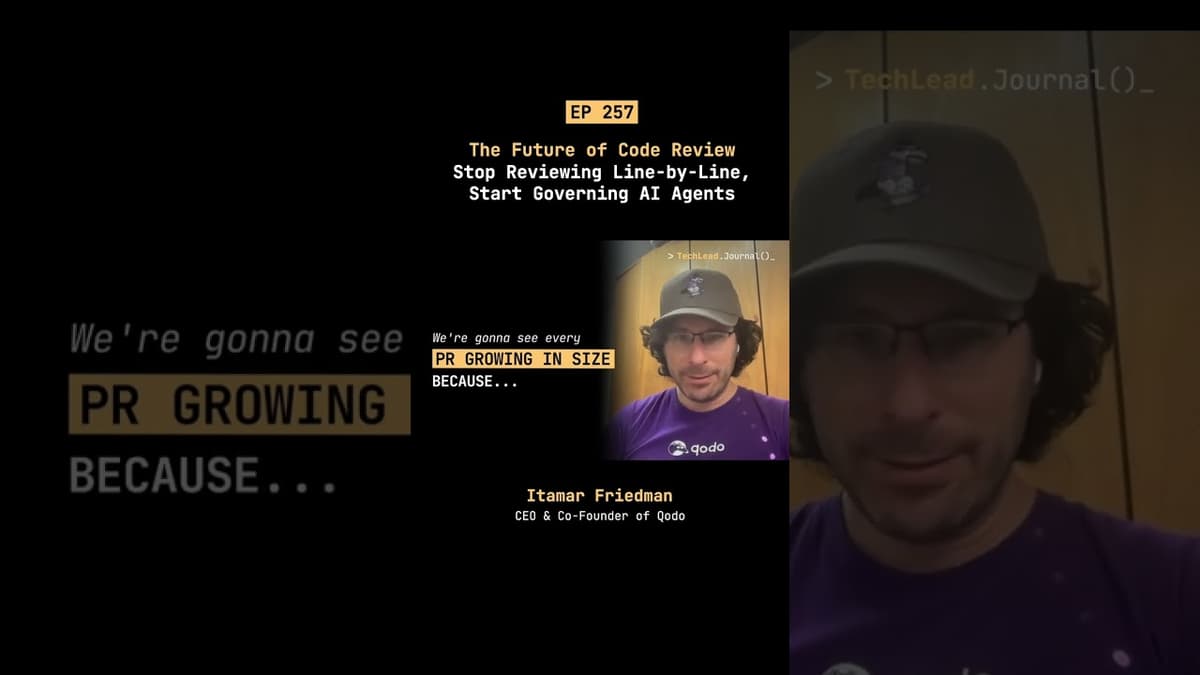
The Future of Code Review: Stop Reviewing Line-by-Line, Start Governing AI Agents #trailer #short
The video spotlights a paradigm shift in software quality assurance: moving away from line‑by‑line code reviews toward governing the AI agents that produce code. Itamar Friedman, founder of Codium, argues that the sheer volume of pull requests generated by AI—often...
Why Decoupling Release From Deployment Changes Everything #short
The video argues that separating the act of releasing code from deploying it to customers reshapes how technology organizations operate. By decoupling these steps, engineering, product, and marketing teams can pursue their distinct objectives without stepping on each other's toes. Developers...
When AI Agents Write All Your Code, What's Left for Engineers? #short
Software developers are increasingly stepping back from hand‑coding as AI agents assume routine code generation tasks. The speaker argues that engineers will spend more time setting guardrails and monitoring autonomous agents rather than writing each line themselves. He cites Jack Clark’s concept...