
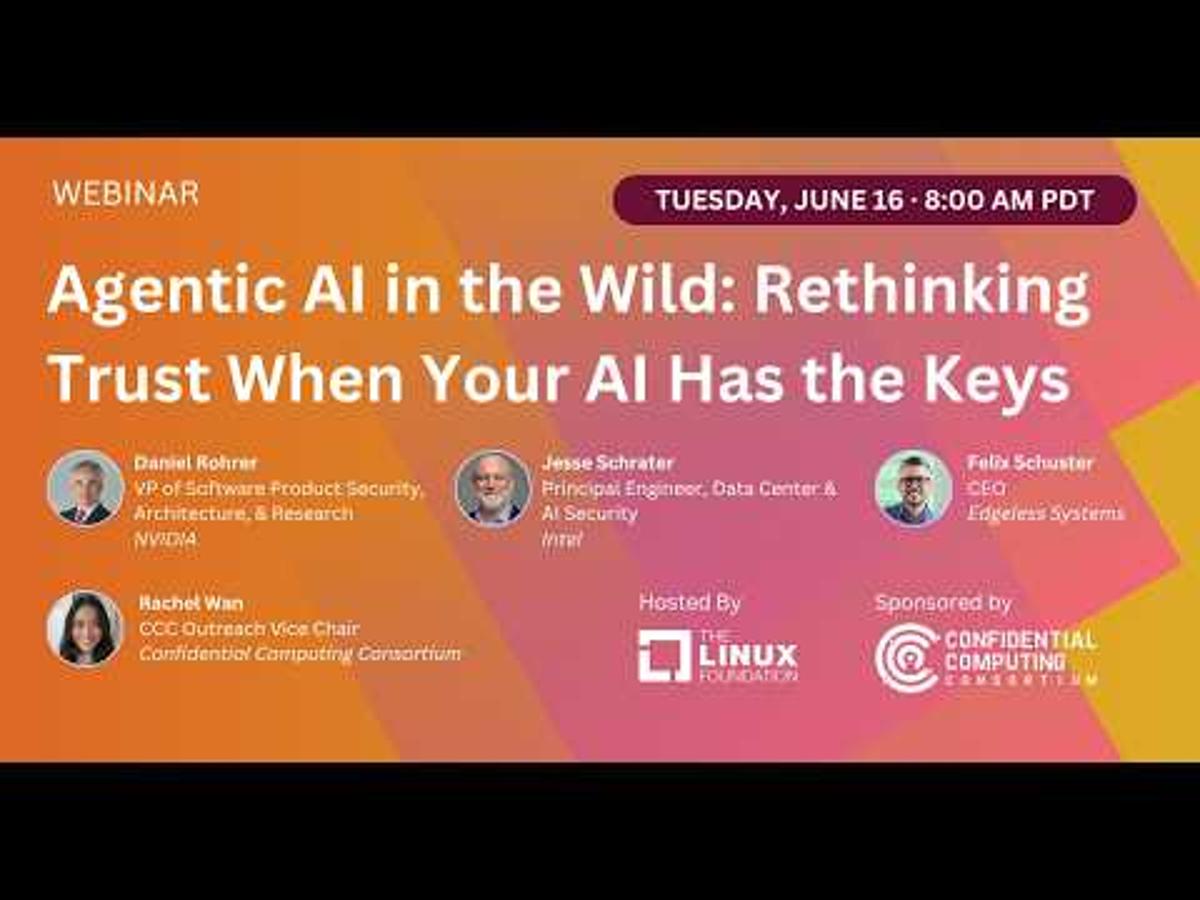
LF Live Webinar: Agentic AI in the Wild: Rethinking Trust When Your AI Has the Keys
The webinar examined the emerging security challenges of agentic AI—autonomous systems that act without human oversight—and why traditional perimeter‑based defenses no longer suffice. Panelists from Nvidia, Intel and Agile Systems argued that confidential computing, which protects data while it is being processed, must become a core component of enterprise security architectures. Key insights included the inadequacy of encrypt‑at‑rest alone, the emergence of new attack surfaces such as prompt injection, and the need to treat data as executable code that requires continuous verification. Jesse highlighted that once data is decrypted for use, it is exposed in memory, while Daniel emphasized attestation, signed containers, and verifiable workloads as mechanisms to maintain trust over time. Phix underscored the risk of inference providers seeing raw data and suggested on‑prem, encrypted remote execution, or hardware‑enforced confidential AI as mitigation paths. The discussion also stressed that trust must be negotiated across the entire stack—from silicon‑level hardware roots to cloud hypervisors and model providers. Building a chain of provenance through hardware‑based attestation and policy‑driven decisions enables organizations to meet data‑location and regulatory requirements while still leveraging powerful autonomous agents. For enterprises, the implication is clear: security strategies must evolve to incorporate confidential computing primitives, continuous evidence generation, and ecosystem‑wide standards. Without this shift, the promise of agentic AI—greater productivity and real‑time decision making—remains constrained by compliance risk and potential data breaches.

How Jupyter AI Brings Agentic Workflows Into Notebooks | Lahari Chowtorri, Amazon
The video introduces Jupyter AI, an extension that embeds conversational AI agents directly into the JupyterLab environment, allowing data scientists to interact with large language models without leaving their notebooks. Lior Turetsky, Amazon’s technical program manager for open‑source AI, explains...
Fuzzing Zephyr Apps - Struggles of Dynamic Analysis on Embedded Applications - Jayashree Srinivasan
The video presents Jayashree Srinivasan’s deep dive into fuzzing Zephyr‑based embedded applications, outlining why dynamic analysis is essential for safety‑critical IoT devices. She explains core concepts of fuzzing—randomized input injection, coverage collection, crash detection—and contrasts it with static analysis, noting lower...
OpenTelemetry Is the Kubernetes of Observability | Chris Aniszczyk, CNCF
The video announces OpenTelemetry’s graduation from the CNCF, marking its transition to a mature, vendor‑neutral project with long‑term sustainability guarantees. Chris Aniszczyk recounts how OpenTracing and OpenCensus, once competing efforts, were merged in a small Linux Foundation meeting to form...
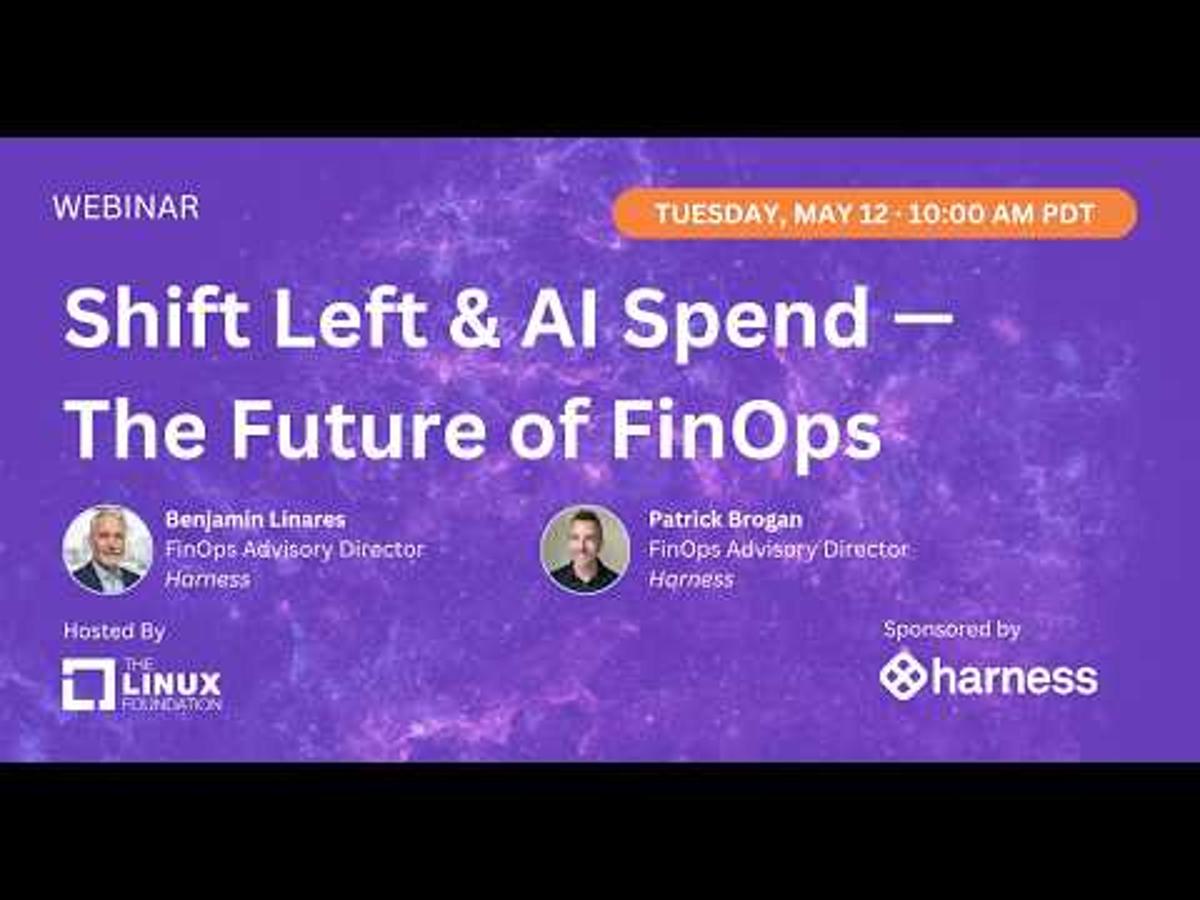
LF Live Webinar: Shift Left & AI Spend — The Future of FinOps
The Linux Foundation webinar tackled the accelerating rise of AI expenditures and why existing FinOps frameworks, built for predictable VMs and reserved instances, are failing to keep pace. Speakers Patrick Broen and Ben Narben highlighted that AI workloads appear as...
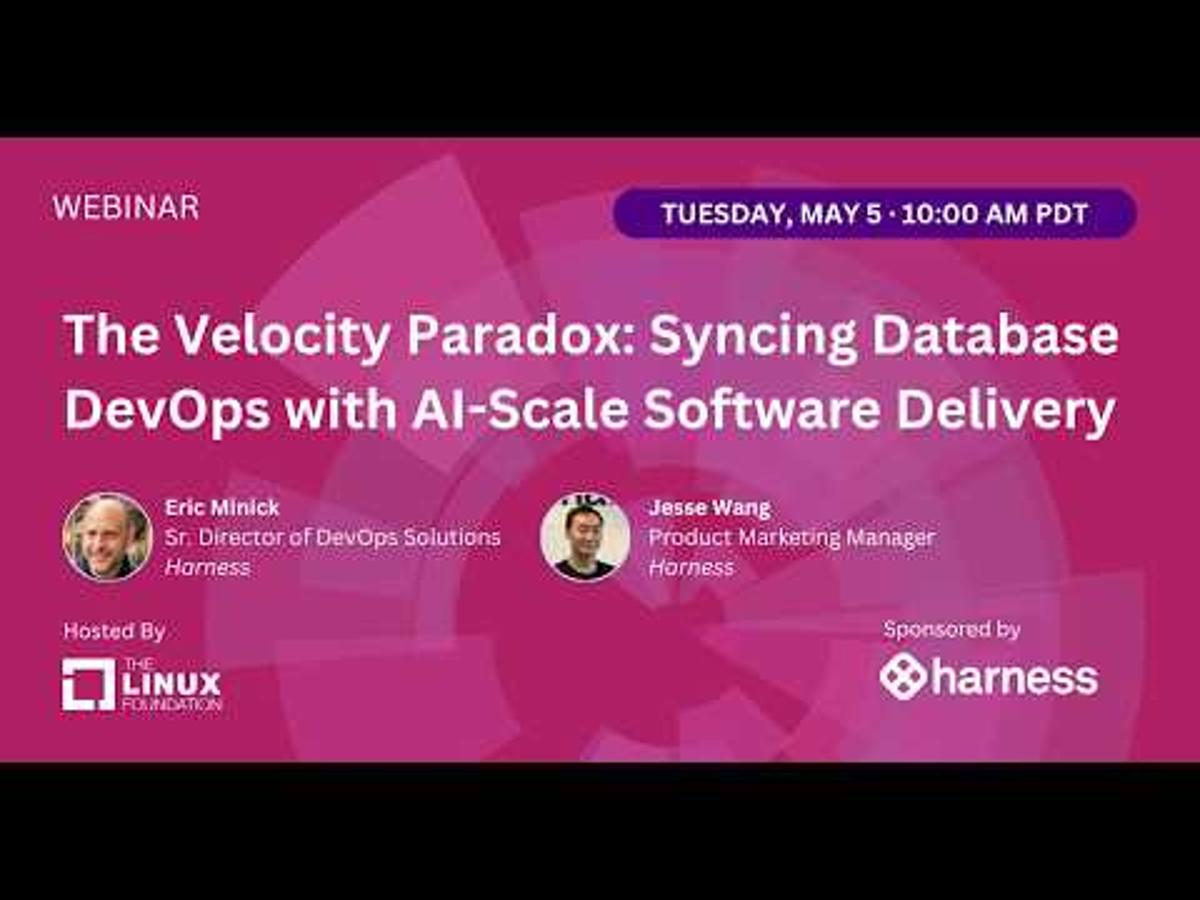
LF Live Webinar: The Velocity Paradox: Syncing Database DevOps with AI-Scale Software Delivery
The LF Live webinar tackled the "velocity paradox": AI tools dramatically speed up code creation, yet delivery pipelines are buckling under quality, security and reliability issues. Eric and Jesse highlighted that while developers can now generate code faster, the downstream...
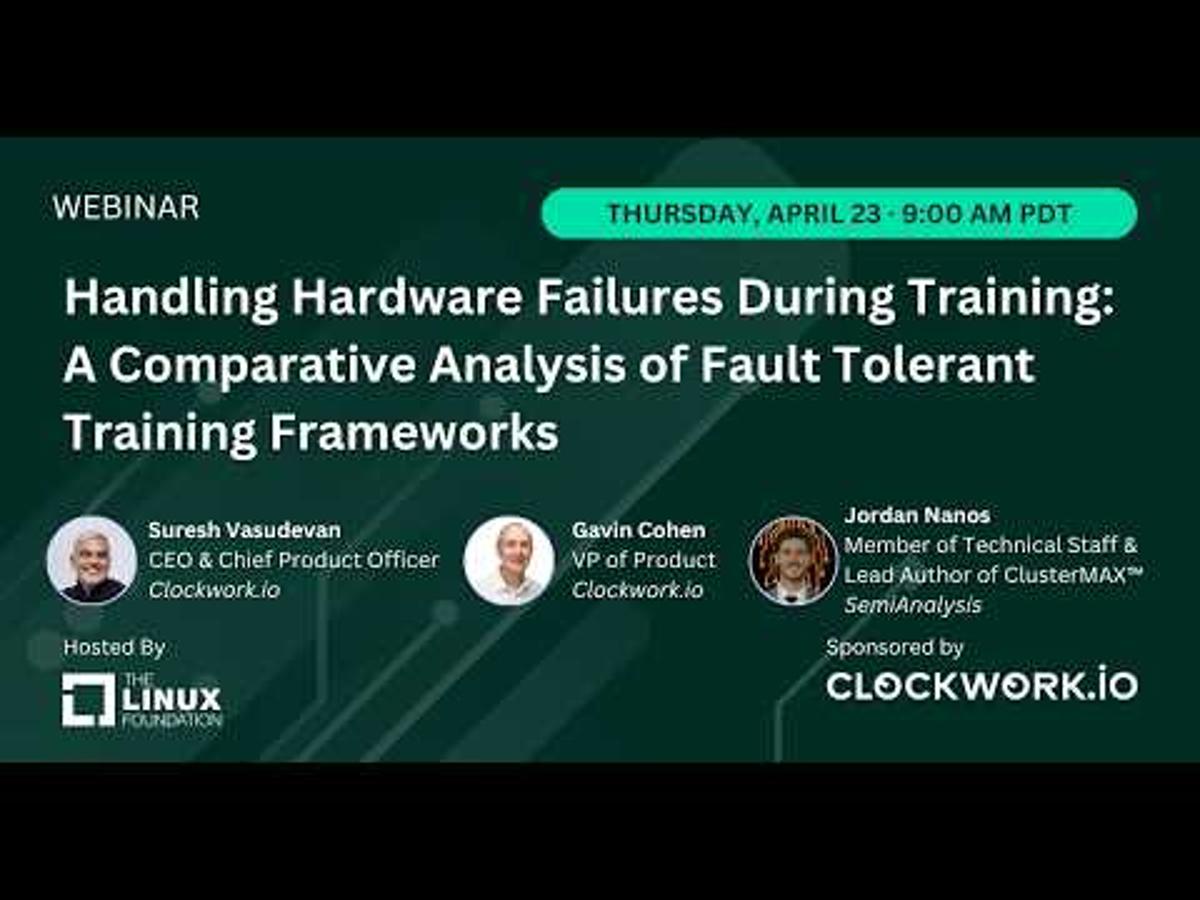
LF Live Webinar: Handling Hardware Failures During Training
The webinar addressed the growing challenge of hardware failures in massive GPU clusters used for AI model training. Suresh Vasadan highlighted that top‑tier software firms experience roughly 20% of their GPU nodes offline at any time, and modern systems reserve...
AI Code Floods Open Source: How Kusari Inspector Filters Malicious PRs | CRob & Michael Lieberman
The video announces Kusari Inspector, a new free tool for CNCF and Open SSF projects, designed to tame the flood of AI‑generated pull requests that are overwhelming open‑source maintainers. Michael Lieberman explains that AI bots now submit code at scale, often...

AI Agents Fail in Production. Here's Why State Management Matters | Mark Fussell, Dapr
The video announces the general availability of Dapr Agent 1.0, a CNCF‑graduated project that extends Dapr’s durable workflow engine to run AI agents in production on Kubernetes. Mark Fussell explains that the core problem for production‑grade agents is state management, failure recovery...

AI Workloads Are Breaking Kubernetes, Here's How KubeVirt Fixes It | Ryan Hallisey, NVIDIA
The interview with Ryan Hallisey, KubeVirt maintainer at NVIDIA, centered on how AI and machine‑learning workloads are straining traditional Kubernetes clusters and how KubeVirt’s virtualization add‑on can alleviate those pressures. By running virtual machines inside containers, KubeVirt creates a single...

From Batch to AI-Native: How Volcano 1.14 Unifies Training, Inference & Agent Workloads
Volcano 1.14 marks a shift from a batch‑only scheduler to an AI‑native platform that can orchestrate training, inference and agent workloads on a single Kubernetes cluster. The release introduces a multi‑scheduler architecture, pairing a traditional batch scheduler with a dedicated...

Keynote: LF Energy: An Innovative Ecosystem Powering the Future of Energy Through Ope... C. Villemer
The keynote highlighted LF Energy’s role as a neutral, open‑source ecosystem designed to modernize the world’s aging power grids. As utilities confront massive electrification, distributed renewables, and escalating cyber‑security threats, traditional vendor‑driven models are proving too slow and inflexible. LF...

LF Live Webinar: Context Engineering for Self-Healing AI SRE
The LF Live webinar featured Assaf Saf Salvich, AI Engineering Group Manager at Commodore, outlining the company’s journey toward self‑healing AI‑driven Site Reliability Engineering (SRE). He described how Commodore has amassed close to two million real‑world Kubernetes incidents, initially attempting to...

AI Runs on Open Source & Real Humans: Why You Need Linux & Cloud Native Skills to Power AI at...
AI adoption is accelerating, but high‑performing models depend on open‑source foundations such as Linux, Kubernetes, and cloud‑native infrastructure. Without this stack, AI systems struggle to scale, deploy reliably, and move beyond experimental phases. The video highlights a growing talent gap:...
Why Half of All Kubernetes Clusters Are About to Become Vulnerable | Kat Cosgrove & Tabitha Sable
The Kubernetes Steering Committee announced that the Ingress NGINX controller – a core ingress solution for roughly half of cloud‑native deployments – will be officially retired at the end of March, six weeks from the announcement. After that date the...