
How To Create Self-Image So Powerful The Reality Has To Obey You
In this Mindset Mentor episode, host Rob explains why feeling stuck isn’t a flaw but a clash of internal mental parts. He breaks down the Internal Family Systems model, describing protectors, exiles, and the core Self, and shows how misaligned self‑image fuels self‑sabotage. Listeners learn a simple journaling technique to map these parts and rebuild a coherent self‑image. The episode ends with actionable steps to align the mind, turning intention into lasting behavior change.

9 Habits That Build Quiet Wealth (No Luck, No Stress)
The video outlines nine disciplined habits designed to create “quiet wealth” – a state where investments generate enough income to cover living expenses, freeing individuals from the constant need to earn more. Key principles include redefining money as a means to...
The Best Advice I Can Give You... @Robdialjr #relationships #love #growth #mindset
The video centers on a stark piece of advice—"everything is your fault"—framing each individual as the CEO of their own life, responsible for every outcome. The speaker recounts a mentor’s probing dialogue: if a business succeeds, the CEO is credited; if...
Old Patterns Can’t Build a New Life...👉 @Robdialjr #mindsetminute #motivation
Rob Dial Jr.'s short video tackles the neuroscience of self‑talk, arguing that the majority of our internal dialogue is negative and stale, and that breaking this pattern is essential for personal transformation. He cites research indicating roughly 80 % of thoughts are...
Say THIS when You Feel Anxious… @Robdialjr #anxietytips #mindsetshift #psychology #confidence
The video introduces anxiety reappraisal, urging viewers to label nervous energy as excitement by repeatedly saying “I’m excited.” It explains that fear and excitement share identical physiological signatures. It cites scientific findings that the brain assigns meaning to these signals; labeling...
You Need a Strong Why... @Robdialjr #mindset #positivity #inspiration
In the short clip, motivational speaker Rob Dial Jr. argues that chasing fleeting motivation is a losing strategy; instead, lasting drive stems from a clear, compelling purpose. He likens motivation to a brief spark and drive to a solid log that...
Communicate With Confidence - How to Speak with Clarity, Power, and Impact
The video centers on building communication confidence through four foundational pillars: non‑verbal cues, vocal tonality, concision, and active listening. The presenter draws on personal experience—from shy adolescence to forced stage‑time at age nineteen—to illustrate how deliberate practice can transform an...
How to Change Your Personality to Make Yourself More Confident
The video challenges the common belief that personality is immutable, arguing that confidence can be cultivated by deliberately reshaping one’s behavioral patterns. Drawing on identity psychology, behavioral science, and neuroscience, the presenter outlines five deep concepts that explain how personality...
Force Your Brain to Think Like a Genius
The video argues that genius is not innate luck but a trainable skill, positioning thinking as a muscle that can be exercised through deliberate mental workouts. It outlines five concrete “mental reps”: scheduled distraction‑free thinking time; hand‑writing to clarify and structure...
If You Get Anxiety Try This Out 👉 @Robdialjr #mindset #inspiration #positivity #adviceoftheday
The video introduces a simple mental‑reframing trick for anxiety, urging viewers to label nervous energy as excitement. It explains that the body’s physiological response to fear and excitement is indistinguishable, so the brain’s interpretation drives the outcome. Research shows heart rate,...

You’re Not Lazy — Your Brain Has Been Rewired
The video argues that what we label "laziness" is actually an energy deficit caused by living out of alignment with our personal purpose, not a character flaw. It distinguishes "good" exhaustion—fulfillment after meaningful work or exercise—from "bad" exhaustion that leaves us...
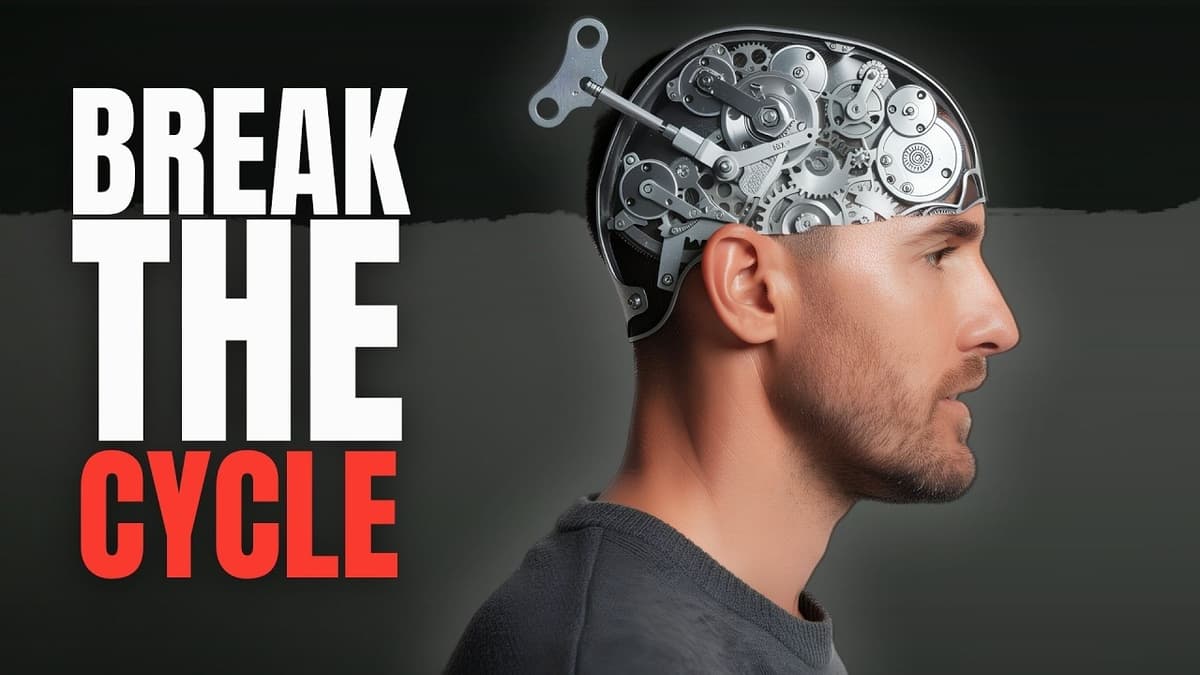
The Power of Positive Thinking | A Story That Will Change Your Mindset
The video argues that positive thinking functions like a mental workout, reshaping the brain through neuroplasticity. By repeatedly activating optimistic neural pathways, individuals can strengthen the prefrontal cortex, improve emotional regulation, and diminish activity in the fear‑center amygdala, mirroring the...

If You Overthink Everything, You Need to Watch This Immediately
The video explains that chronic overthinking is not a character flaw but a learned protection mechanism that develops when a child grows up in an unpredictable, emotionally volatile environment. The brain adopts hyper‑vigilance to anticipate danger, turning uncertainty into a...
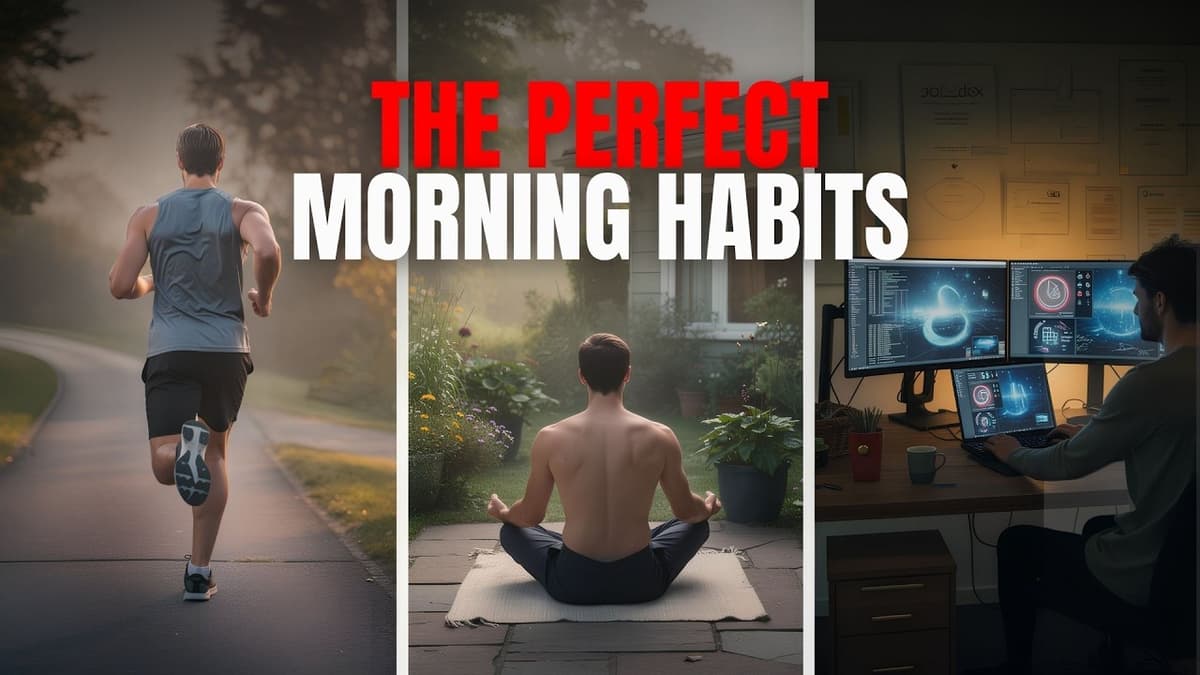
The Perfect Morning Habits (Backed by Science)
The video argues that the first hour after waking is a neuroplastic window that determines motivation, stress, and cognitive performance for the next 12‑16 hours, and proposes eight science‑backed habits to “program” the brain. It starts with delaying dopamine spikes by...

Everything I Learned From Being Around The Top 0.01%
The video distills the habits of the world’s top 0.01% earners into five unconventional principles, arguing that conventional education and social conditioning leave most people stuck in mediocrity. The speaker emphasizes that elite performers treat time as their most valuable...

You’re a 1 in 400 Quadrillion Miracle ❤️ 👉 @Robdialjr #motivation #mindset #positivity #grattitude
Rob Dial promotes his Mindset University live call, urging high‑performers to create clarity rather than wait for it. The free session promises to uncover personal blind spots and accelerate participants toward their next level of achievement. Viewers are directed to...
Your Brain Links with Other Brains 👉 @Robdialjr #mindset #positivity #adviceoftheday #positivity
Rob Dial announced a free Mindset University call aimed at high‑performers who want to create clarity and uncover blind spots. The invitation includes a direct link to register and a broader call to action for his coaching platform, coachwithrob.com. Dial...

Brain Tricks That Make You Happier in 15 Seconds
The Mindset Mentor episode argues that desire, not lack, blocks happiness. It defines happiness as a mental state achieved by releasing wants rather than acquiring external successes. The host explains that happiness is a learnable skill, emphasizing presence, gratitude, and...