
Weaponize Tokenmaxing: MassMutual’s ROI Engine
The podcast episode spotlights MassMutual’s CIO of AI, Sears Merritt, detailing how the insurer is weaponizing token‑maxing and AI‑driven development within a heavily regulated legacy environment. By leveraging a rapid‑prototype approach—AI engineers reconstructed code and UI in just seven days—the firm created a modern web app that feeds into its broader ROI engine. Key insights include a reported 30% uplift in developer productivity, a dramatic reduction in contact‑center call‑resolution time from ten minutes to one, and a strategic shift to unlimited token‑based licensing to hedge against unpredictable AI spend. The team also instituted a trust‑score rubric, allowing users to weigh model quality against latency, ultimately favoring higher‑cost, higher‑quality LLMs when the user experience justified the expense. Merritt emphasized the importance of outcome‑driven AI adoption, noting that developers are encouraged to consume token‑heavy workflows to surface true value, while granular analytics now track usage patterns, enabling cost‑optimizing routing and prompt selection. He highlighted the hybrid strategy of mixing deterministic tools for mission‑critical tasks with reasoning‑heavy LLMs for lower‑risk processes, anticipating future standards and open‑source interoperability. The implications are clear: disciplined AI governance, combined with flexible licensing and data‑driven optimization, can deliver measurable efficiency gains without sacrificing user experience. MassMutual’s approach offers a blueprint for other enterprises seeking to balance rapid AI innovation with cost control and regulatory compliance.
🧠 Stop Building Social Graphs. Use TASTE.
The video introduces Pinterest’s “taste graph,” a preference‑based recommendation engine that replaces traditional social graphs. It argues that while a social graph maps relationships, the taste graph maps what people actually like, even before they articulate it. The taste graph aggregates...
Building a 30% Better AI: The Taste Graph Moat
Pinterest’s CTO Matt Madreal explains how the visual discovery platform has built a 30% more accurate, 90% cheaper AI stack by fine‑tuning open‑source foundations. The company leverages a custom "Pin‑CLIP" embedding layer that unifies image and text metadata, enabling semantic...
☁️ DITCH Public Cloud Menus
The video explains how the company differentiates itself by operating a private cloud that spans the entire AI stack—from bare‑metal GPU farms in its own data centers to the AI‑powered user experiences—eschewing the public‑cloud hyperscalers that most large‑scale ML shops...
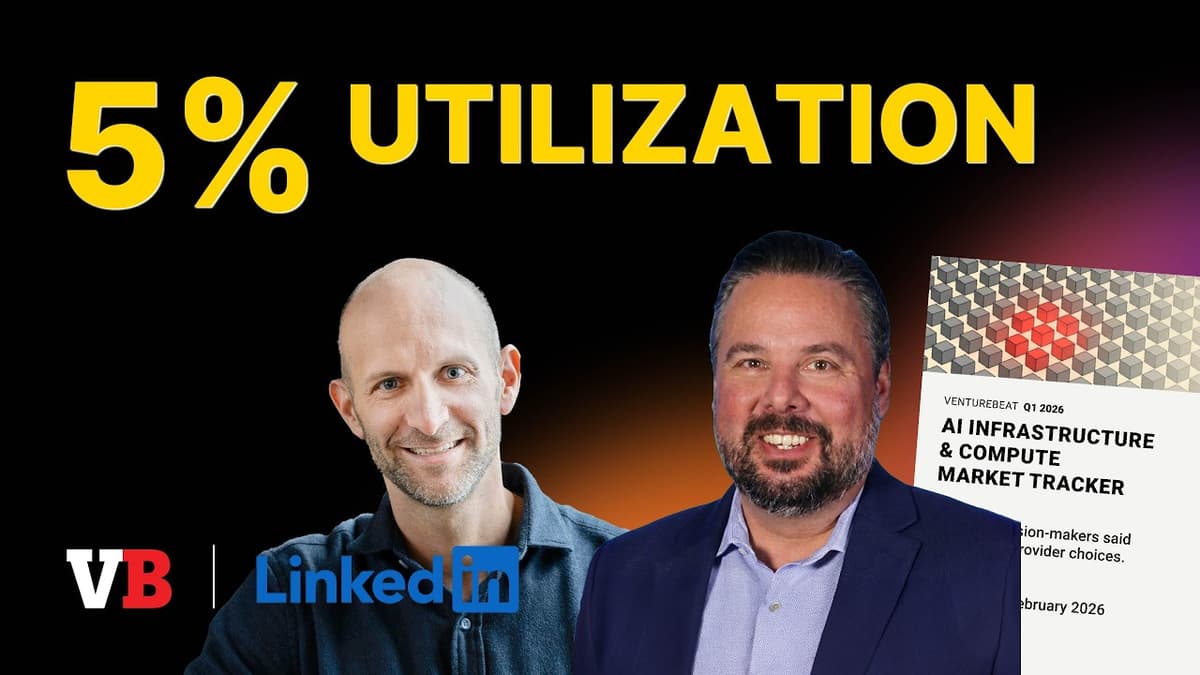
GPU Hoarding Is Over. The $401B Reality Check
The podcast “Beyond the Pilot” examines how enterprise AI is moving out of the panic‑driven GPU hoarding phase and into a disciplined, cost‑focused era. Companies that once over‑provisioned GPUs as insurance are now confronting under‑utilization and tightening budgets. VentureBeat’s Q1 data...
From AutoGPT to Claude Code: Trusting Deep Agent Loops
The video revisits AutoGPT's 2023 hype, noting its limited reliability and the cautious stance it induced among early adopters. It argues that recent models—Claude Code, OpenClaw—embed deep agent loops that have matured, enabling autonomous decision‑making across a broad spectrum of tasks...

Why Advanced Agent Reasoning Is Killing Complex RAG Pipelines
The video argues that breakthroughs in autonomous agent reasoning are rendering traditional, complex Retrieval‑Augmented Generation (RAG) pipelines increasingly unnecessary. Modern agents can orchestrate very basic retrieval primitives—such as cloud‑based grep commands or simple file scans—and still achieve high‑quality results. Because the...
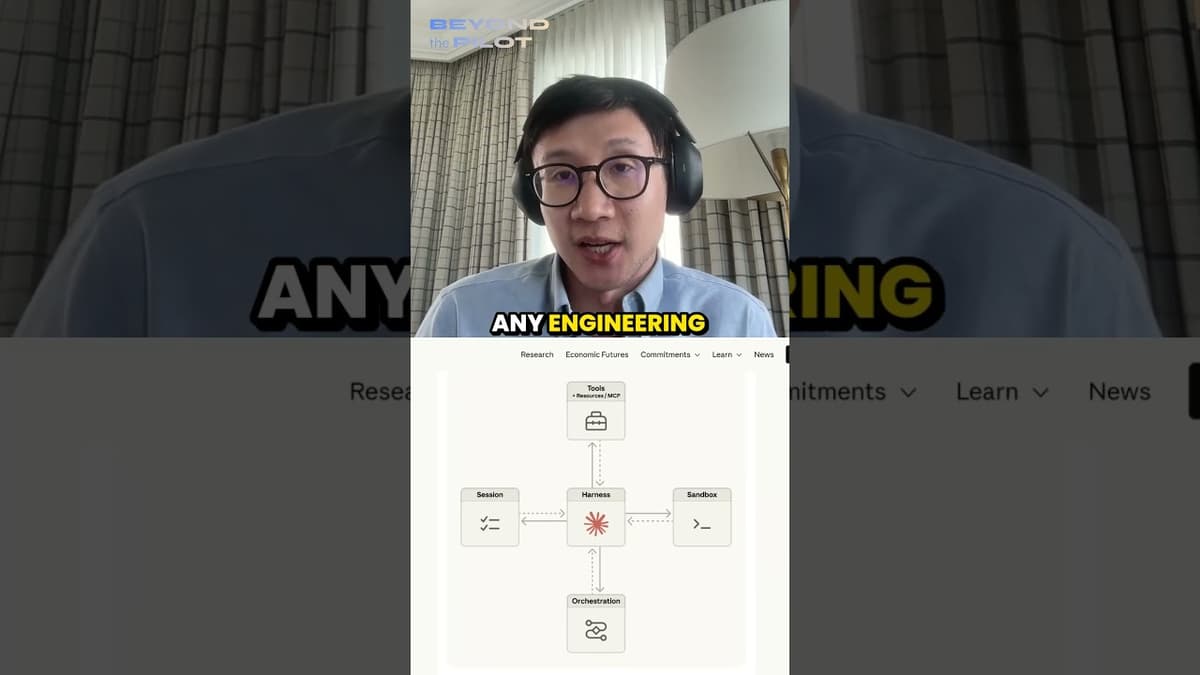
Architecting a Modular AI Stack: Harnesses, Sandboxes, and MCP
The video outlines a modular AI stack architecture centered on three core components: the harness for external contacts and actions, a sandbox for secure code execution, and an MCP layer that enables skill integration. It emphasizes the role of session...
How AI Agents Are Automating Unstructured Document Work
The video outlines how artificial‑intelligence agents are poised to take over the bulk of knowledge‑work that today relies on humans reading, editing, and generating unstructured documents. The speaker frames this shift as the core mission of their company: to build...

Why Agents Can Connect But Not Think Together
The video argues that while modern AI agents can be linked together, they still cannot “think” as a cohesive unit. Current architectures allow agents to exchange messages—via workflows or supervisor‑sub‑agent models—but each agent operates with its own objective function, resulting in...

The Non-Deterministic Computing Shift
The video outlines a fundamental paradigm shift in computing, moving away from the long‑standing deterministic model—where identical inputs always produce identical outputs—toward a non‑deterministic framework driven by generative AI and agentic systems. In deterministic computing, the “garbage in, garbage out” rule...
Moving Beyond Data: Connecting Cognition
The video introduces a shift from traditional data‑centric networking toward a "cognition layer," where MCP and A2A provide the syntactic foundation for communication between intelligent agents. While the classic seven‑layer OSI model has proven effective for moving bits, it does...
The Protocol Stack AI Is Missing
The video spotlights a critical gap in today’s multi‑agent AI stacks: while agents can now connect, they lack the protocols for shared intent, context, and collective cognition. Vjoy Pande of Outshift by Cisco argues that existing A2A, MCP and similar...

Deploying AI Agents for Automated Financial Reconciliation
The video introduces AI‑driven agents designed to automate the full cycle of financial reconciliation, from closing books to handling payroll. These agents automatically categorize transactions, generate journal entries, run payroll, and issue invoice reminders, effectively eliminating manual data‑entry bottlenecks. The presenter emphasizes...

Why Chatbots Are a Premature Enterprise AI Abstraction
The video contends that chatbots represent a premature abstraction for enterprise AI, arguing that businesses are moving beyond simple conversational interfaces toward action‑driven agents that can execute tasks directly. It traces the evolution from early, static chat bots to hybrid AI‑human...