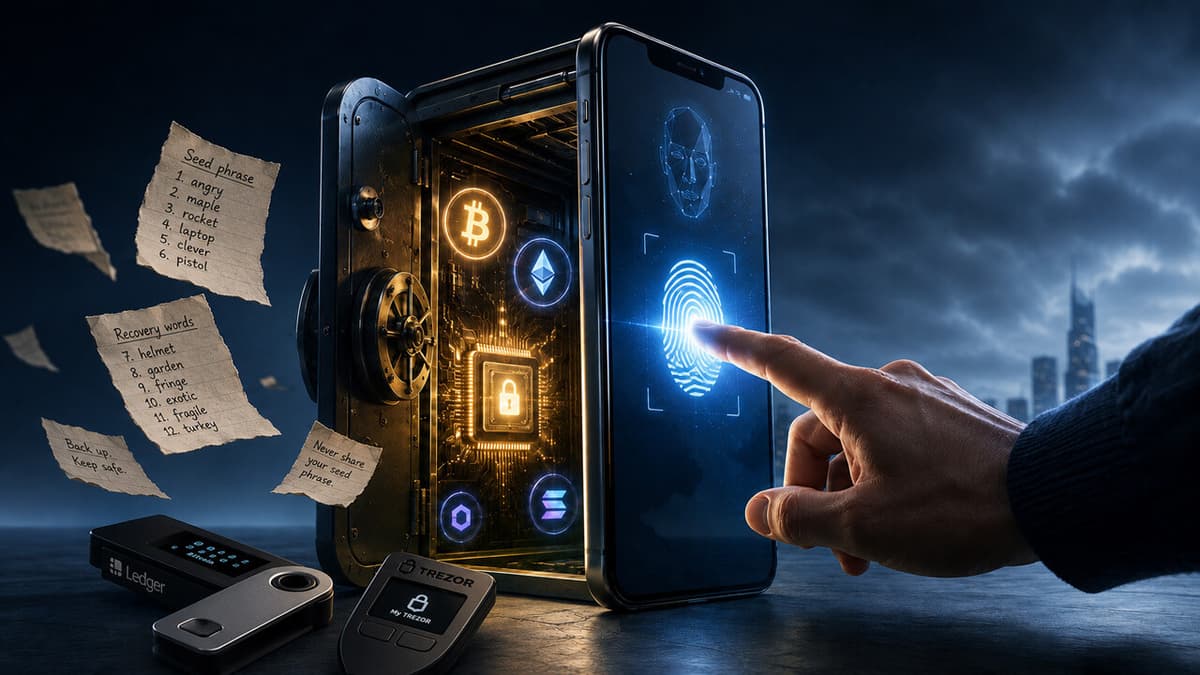
Cardano’s Charles Hoskinson Says the Future of Crypto Wallets Will Be Inside iPhones and Androids
Companies Mentioned
Why It Matters
Embedding cryptographic keys in ubiquitous mobile hardware could remove the biggest friction point for retail crypto adoption, while reshaping the power dynamics of wallet security toward platform providers.
Key Takeaways
- •Secure enclaves in phones outperform Ledger/Trezor chips
- •5 billion active passkeys show consumer readiness for device‑bound keys
- •Coinbase’s smart wallet enables seedless onboarding via Apple/Google passkeys
- •Phone‑based wallets reduce friction but still vulnerable to compromised apps
- •Adoption could hit 70‑85% of new retail users by 2028
Pulse Analysis
Charles Hoskinson’s claim that future crypto wallets will live inside iPhones and Android devices taps into a broader security evolution. Modern smartphones embed dedicated secure elements—Apple’s Secure Enclave, Android’s StrongBox, and Samsung’s Knox—that isolate cryptographic operations from the main OS. These modules can generate and store private keys that never leave the chip, offering tamper‑resistant protection that rivals, and in many cases exceeds, the secure elements found in popular hardware wallets like Ledger and Trezor. The rapid consumer uptake of passkeys—now 5 billion active worldwide—demonstrates a growing trust in device‑bound, biometric‑secured credentials, laying a solid foundation for crypto key management to follow the same path.
The practical implications are already visible. Coinbase’s smart wallet leverages Apple and Google passkeys to onboard users without a recovery phrase, turning the phone’s biometric lock into the sole user interface for signing transactions. This seedless approach dramatically lowers onboarding friction, a long‑standing barrier for mainstream adoption. However, while the private key may be non‑exportable, a compromised app or operating system can still coerce the hardware to sign malicious transactions. Consequently, wallet designers are focusing on intent‑verification UX, spend caps, and delegated permissions to mitigate this risk. The convergence of account abstraction (EIP‑4337) and programmable wallets further enables fine‑grained controls that keep the user’s approval front‑and‑center.
Looking ahead, the trajectory hinges on how well the industry can balance convenience with security. If phone‑centric wallets deliver clear, user‑friendly approval flows and robust delegation limits, analysts project they could capture 70‑85% of new retail users by 2028, making seedless onboarding the norm. Conversely, high‑profile exploits that exploit compromised mobile apps could stall adoption at 20‑35%. The shift also concentrates influence in the hands of platform owners—Apple, Google, Samsung—making OS APIs and enclave policies critical components of the crypto security stack. Stakeholders must therefore navigate a new ecosystem where custody is technically non‑custodial but increasingly dependent on the security posture of mobile operating systems.
Cardano’s Charles Hoskinson says the future of crypto wallets will be inside iPhones and Androids
Comments
Want to join the conversation?
Loading comments...