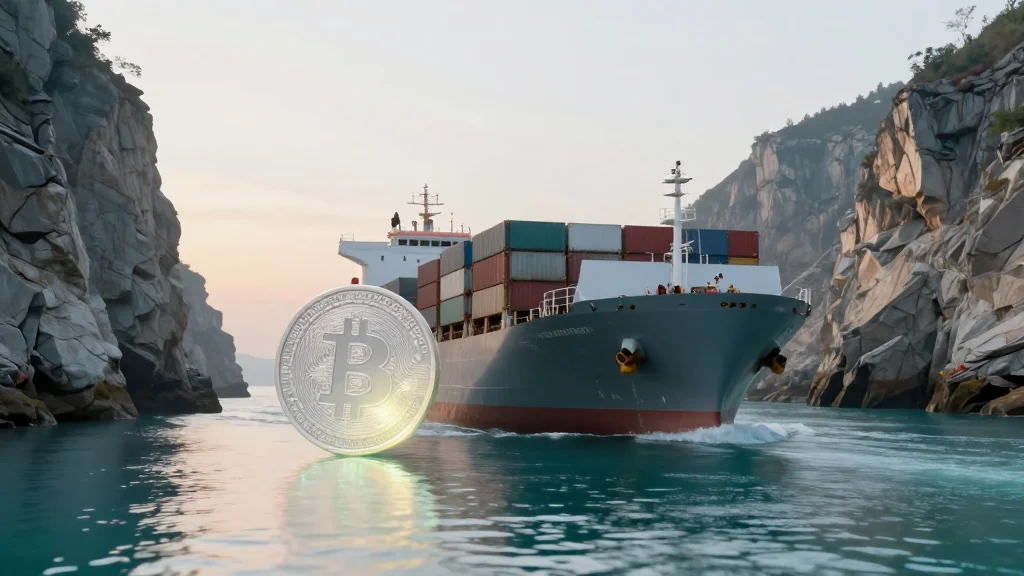
Iran Launches $2 Million Crypto‑Priced Toll Regime in Strait of Hormuz

Why It Matters
The introduction of a crypto‑priced toll in one of the world’s most vital chokepoints illustrates how digital assets can be weaponized for state revenue under sanctions. If successful, Iran could demonstrate a viable model for other isolated economies to monetize strategic assets without relying on the traditional banking system. Moreover, the blend of bitcoin and stablecoins highlights the divergent roles these tokens play: bitcoin as a store of value and propaganda tool, stablecoins as a functional medium of exchange for day‑to‑day operations. For the broader crypto ecosystem, the Hormuz experiment raises regulatory questions about the use of public blockchains for sovereign fee collection. It may accelerate calls for enhanced blockchain analytics, cross‑border cooperation, and clearer guidance on the legality of transacting with sanctioned entities using digital currencies.
Key Takeaways
- •Iran’s Persian Gulf Strait Authority began charging up to $2 million per vessel for Hormuz transits, payable in bitcoin or stablecoins.
- •The “Hormuz Safe” bitcoin‑priced maritime insurance program is projected to generate $10 billion annually.
- •U.S. Treasury sanctioned the PGSA on May 27, warning against facilitating any toll payments.
- •Payments can also be made via Chinese yuan through Kunlun Bank’s cross‑border interbank system.
- •The regime’s dual‑track crypto strategy aims to bypass sanctions and test the durability of digital‑currency‑based state revenue.
Pulse Analysis
Iran’s foray into crypto‑based toll collection is a calculated gamble that leverages both the ideological appeal of bitcoin and the pragmatic stability of stablecoins. By anchoring a sovereign revenue stream to decentralized assets, Tehran sidesteps the traditional SWIFT network, which has been the primary target of U.S. sanctions. The move also forces regulators to confront a new frontier: how to monitor and enforce sanctions on transactions that occur on public ledgers, where anonymity can be partially mitigated but never fully eliminated.
Historically, states have used physical chokepoints—like the Suez Canal—to extract rent from global trade. The digital twist here is that the rent is now denominated in assets that can be transferred instantly across borders, potentially eroding the effectiveness of financial embargoes. If shipping firms begin to accept the crypto tolls as a cost of doing business, it could legitimize the use of digital currencies in high‑value, high‑risk logistics, prompting other sanctioned regimes to adopt similar models.
However, the volatility of bitcoin poses a risk to Iran’s fiscal planning. A sudden price dip could halve expected revenues, while a surge could inflate them beyond budgetary expectations, complicating macroeconomic management. Stablecoins mitigate this risk but introduce dependency on custodial infrastructures that may be vulnerable to regulatory crackdowns. The U.S. response—swift sanctions and public warnings—signals that Washington is prepared to extend its enforcement toolkit into the blockchain realm, likely increasing funding for blockchain analytics and international cooperation. The outcome of Iran’s experiment will be a bellwether for how digital assets intersect with geopolitics and whether they can truly serve as a sovereign alternative to the traditional banking system.
Iran Launches $2 Million Crypto‑Priced Toll Regime in Strait of Hormuz
Comments
Want to join the conversation?
Loading comments...