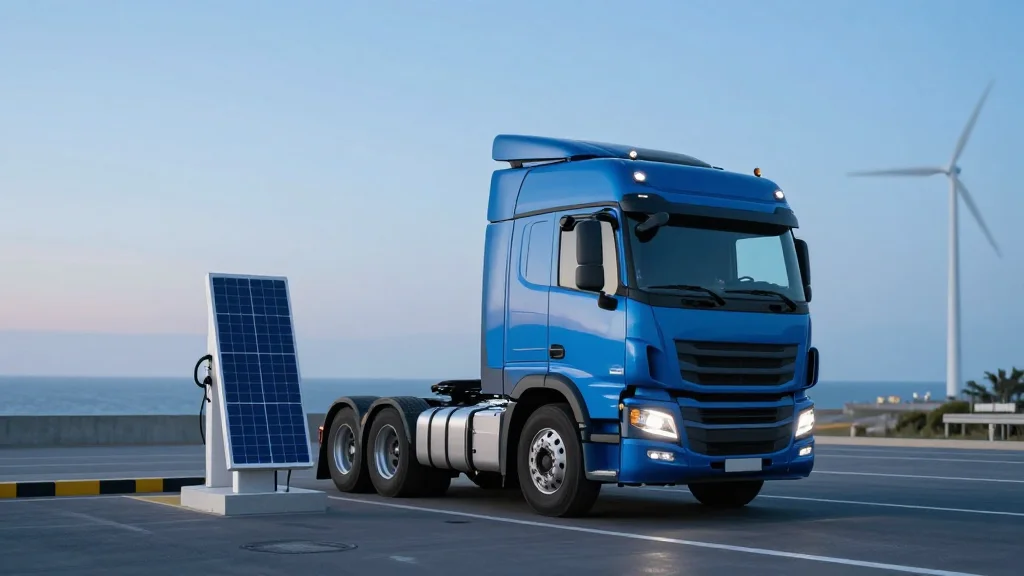
Australian East‑Coast Corridors See Surge in Battery‑Electric Truck Deployments

Companies Mentioned
Why It Matters
The rapid deployment of battery‑electric trucks along Australia’s east‑coast corridors marks a turning point for the nation’s freight sector, traditionally reliant on diesel. For CTOs, the projects illustrate how off‑grid renewable energy can power heavy‑duty vehicles, reducing dependence on the national grid and mitigating the risk of power shortages in remote routes. The shift also aligns with tightening emissions regulations and corporate sustainability targets, compelling logistics firms to adopt scalable, low‑carbon technologies. Beyond emissions, the initiatives unlock new business models. Off‑grid solar‑charged hubs and battery‑swap stations create opportunities for energy‑as‑a‑service offerings, VPP participation, and ancillary revenue streams from grid services. As more operators adopt electric trucks, the demand for integrated hardware, software, and data analytics will surge, reshaping the CTO landscape across transportation, energy, and supply‑chain tech sectors.
Key Takeaways
- •Centurion’s $36 M off‑grid EV hub now powers 30 eActros 300 trucks with 4.4 MW solar and 10.3 MWh storage.
- •ARENA contributed $15.8 M to the Centurion project, enabling 15 dual‑port chargers.
- •Janus Electric has converted ~30 heavy trucks and secured >100 binding orders, with nine battery‑swap stations operational.
- •Electrifying 20% of Australia’s 128,000 articulated trucks each year could save 10 billion litres of diesel annually.
- •East‑coast freight corridors, handling the majority of inter‑city cargo, are the primary focus for upcoming EV charging expansions.
Pulse Analysis
The convergence of off‑grid renewable charging and battery‑swap logistics signals a maturing Australian EV freight ecosystem. Historically, heavy‑duty electrification lagged due to sparse charging infrastructure and the high upfront cost of electric powertrains. Centurion’s model demonstrates that pairing solar generation with on‑site storage can deliver reliable power without overburdening the grid, a blueprint that other operators can replicate along the east‑coast’s extensive highway network. This approach also mitigates one of the chief CTO concerns—grid reliability—by localising energy supply.
Janus Electric’s aggressive order pipeline underscores a market shift from pilot projects to commercial scale. By aligning truck electrification with the natural engine‑replacement cycle, Janus reduces the perceived risk for fleet managers, turning a capital expense into a predictable, phased investment. The company’s emphasis on battery‑swap stations further addresses range anxiety and downtime, two barriers that have historically slowed adoption.
Policy incentives will be the next catalyst. The upcoming Solar Sharer Offer and potential state‑level subsidies for large‑capacity batteries could lower the total cost of ownership for electric trucks, making them financially competitive with diesel. As CTOs integrate these technologies, they will also need to manage new data streams—from charger utilization to battery health—creating demand for advanced fleet‑management platforms. In the next 12‑18 months, the success of these pilots will likely dictate whether Australia’s freight sector can achieve a meaningful emissions reduction trajectory, setting a benchmark for other geographies with similar logistical challenges.
Australian East‑Coast Corridors See Surge in Battery‑Electric Truck Deployments
Comments
Want to join the conversation?
Loading comments...