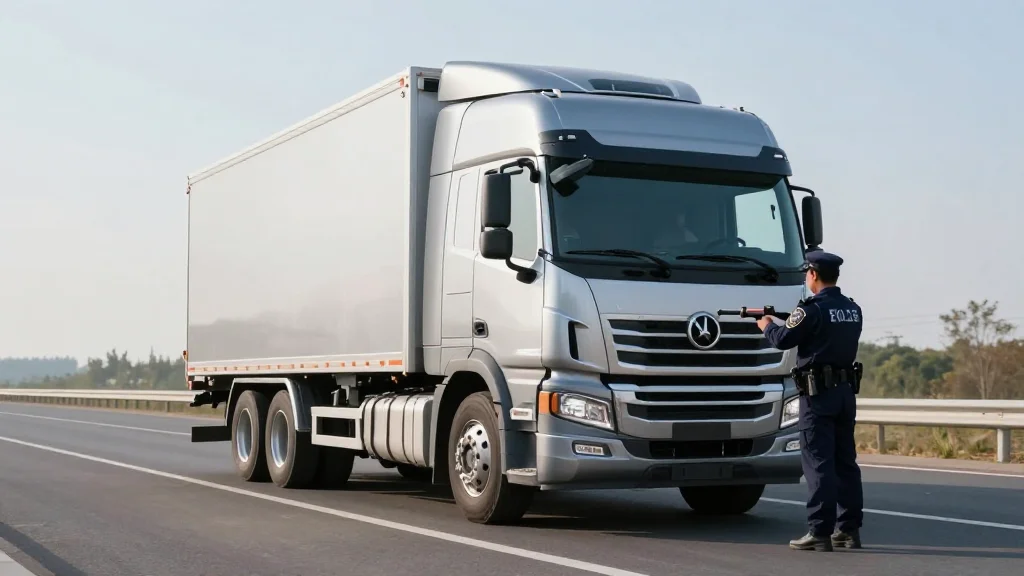
California DMV Gives Police Power to Ticket Driverless Cars and Opens Freight Ops

Why It Matters
The new DMV rules force autonomous‑vehicle makers to treat compliance as a software‑defined function, embedding reporting, geofencing and emergency‑response capabilities directly into vehicle code. This raises development costs and may slow deployment, but it also creates a clearer legal framework that could encourage broader public acceptance and insurance coverage. By extending the regime to heavy‑duty trucks, California is signaling that autonomous freight will be subject to the same safety scrutiny as passenger services, potentially setting a national benchmark for AV regulation. For CTOs and engineering leaders, the regulations translate into concrete technical mandates: real‑time telemetry pipelines, secure over‑the‑air update verification, and human‑in‑the‑loop control interfaces must be built, tested and documented. The shift also reshapes the competitive landscape, rewarding firms that can rapidly integrate compliance tooling while penalizing those that rely on legacy, less‑transparent architectures.
Key Takeaways
- •California DMV approved rules letting police issue moving‑violation citations to autonomous vehicles, effective July 1.
- •Manufacturers must respond to first‑responder calls within 30 seconds and move AVs out of geofenced emergency zones within two minutes.
- •Testing thresholds: 50,000 miles for light‑duty AVs, 500,000 miles for heavy‑duty trucks before commercial permits are granted.
- •Heavy‑duty driverless trucks over 10,001 lb are now permitted on California roads, opening a new freight market.
- •Legislative follow‑ups include AB 2193, SB 1315 and SB 1246, which could tighten citation authority and remote‑operator licensing.
Pulse Analysis
California’s regulatory pivot reflects a broader industry maturation. Early AV pilots operated under a regulatory vacuum that allowed rapid iteration but left enforcement gaps. By assigning liability to the software owner, the state forces a shift from "vehicle as a black box" to "software as a regulated service," mirroring trends in fintech and health‑tech where compliance is baked into the code. This will likely accelerate the emergence of specialized compliance platforms, a nascent market where firms like Vantiv and Nuro could partner with AV OEMs to provide audit‑ready telemetry and automated citation handling.
The freight component adds another layer of complexity. Heavy‑duty autonomous trucks have longer testing cycles and higher safety stakes, meaning manufacturers must scale their validation pipelines dramatically. Companies that can leverage simulation at scale and integrate continuous‑learning safety models will gain a competitive edge, while those reliant on incremental field testing may find themselves bottlenecked by the 500,000‑mile requirement. Moreover, the ability of law‑enforcement to geofence AVs during emergencies could influence route‑optimization algorithms, pushing developers to prioritize dynamic re‑routing and real‑time risk assessment.
In the short term, we can expect a scramble among CTOs to retrofit existing fleets with the mandated communication links and emergency‑response hotlines. Longer‑term, the rules could catalyze a standardization push across the industry, as manufacturers seek to avoid a patchwork of state‑specific compliance solutions. If California’s model proves effective—reducing incidents where driverless cars block emergency services while maintaining a steady flow of autonomous trips—it may become the template for other states, shaping the national regulatory architecture for autonomous mobility for years to come.
California DMV Gives Police Power to Ticket Driverless Cars and Opens Freight Ops
Comments
Want to join the conversation?
Loading comments...