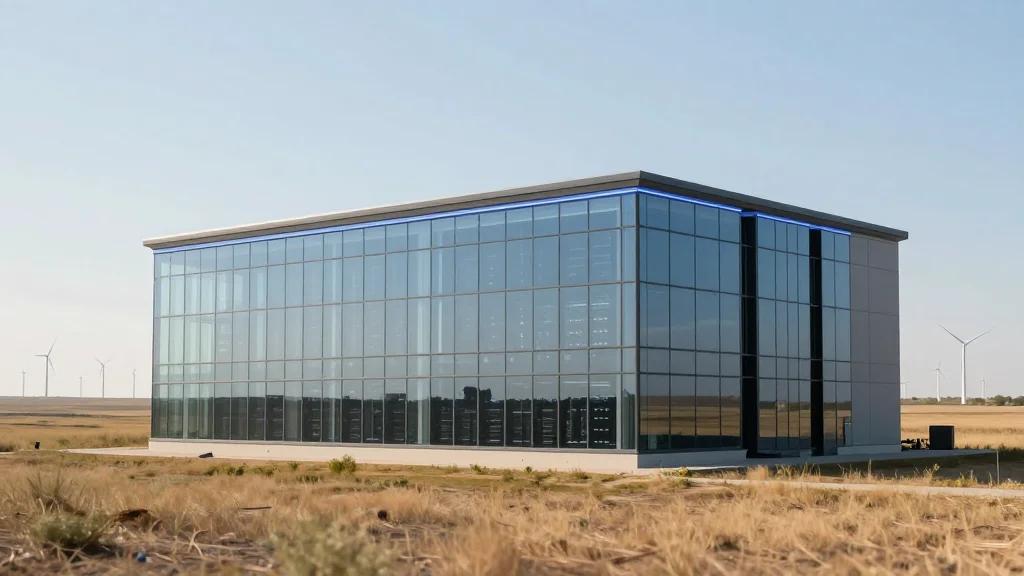
Crusoe Starts Building 900 MW AI Factory in Abilene for Microsoft

Companies Mentioned
Why It Matters
The Abilene AI factory illustrates how edge‑focused providers are reshaping the supply chain for high‑performance compute. By co‑locating power generation with AI hardware, Crusoe addresses two persistent bottlenecks—grid reliability and cooling efficiency—while delivering the low‑latency performance that emerging AI applications demand. For CTOs, the project offers a template for building resilient, geographically distributed AI clusters that can be scaled quickly without waiting for traditional data‑center buildouts. Moreover, the partnership signals a strategic pivot toward domestic AI capacity, reducing dependence on overseas power‑intensive facilities. As U.S. policy increasingly emphasizes AI sovereignty, projects like Crusoe’s may become a benchmark for future public‑private initiatives aimed at securing the nation’s compute backbone.
Key Takeaways
- •Crusoe begins construction of a 900 MW AI campus in Abilene, Texas for Microsoft
- •Total site capacity will reach 2.1 GW once both buildings are complete
- •First building slated for operational status by mid‑2027
- •Project expected to generate thousands of construction jobs and hundreds of permanent positions
- •On‑site power plant provides grid resilience and supports ultra‑high‑density compute
Pulse Analysis
Crusoe’s Abilene rollout arrives at a moment when the AI compute market is fragmenting. Traditional hyperscale providers have long relied on massive, centralized facilities, but the surge in model size and the need for low‑latency inference are driving a shift toward edge‑centric architectures. By embedding a 900 MW power plant within the campus, Crusoe not only mitigates grid‑related risk but also creates a cost‑predictable energy envelope—a critical factor as AI training budgets balloon.
From a competitive standpoint, the move forces larger cloud operators to reconsider their own infrastructure strategies. Microsoft’s willingness to partner with a neocloud specialist suggests that even the biggest players recognize the limits of a one‑size‑fits‑all model. If Crusoe can deliver on its promised timelines and performance metrics, it could catalyze a wave of similar modular deployments, especially in regions where power reliability is a concern.
Strategically, the project dovetails with U.S. policy initiatives aimed at bolstering domestic AI capabilities. The on‑site generation model aligns with sustainability goals by enabling tighter control over energy sources and cooling efficiency. For CTOs evaluating future AI workloads, the Abilene campus offers a proof point that high‑density, low‑latency compute can be built quickly, locally, and with a built‑in resilience layer—attributes that may become decisive in the next generation of AI‑driven products.
Crusoe Starts Building 900 MW AI Factory in Abilene for Microsoft
Comments
Want to join the conversation?
Loading comments...