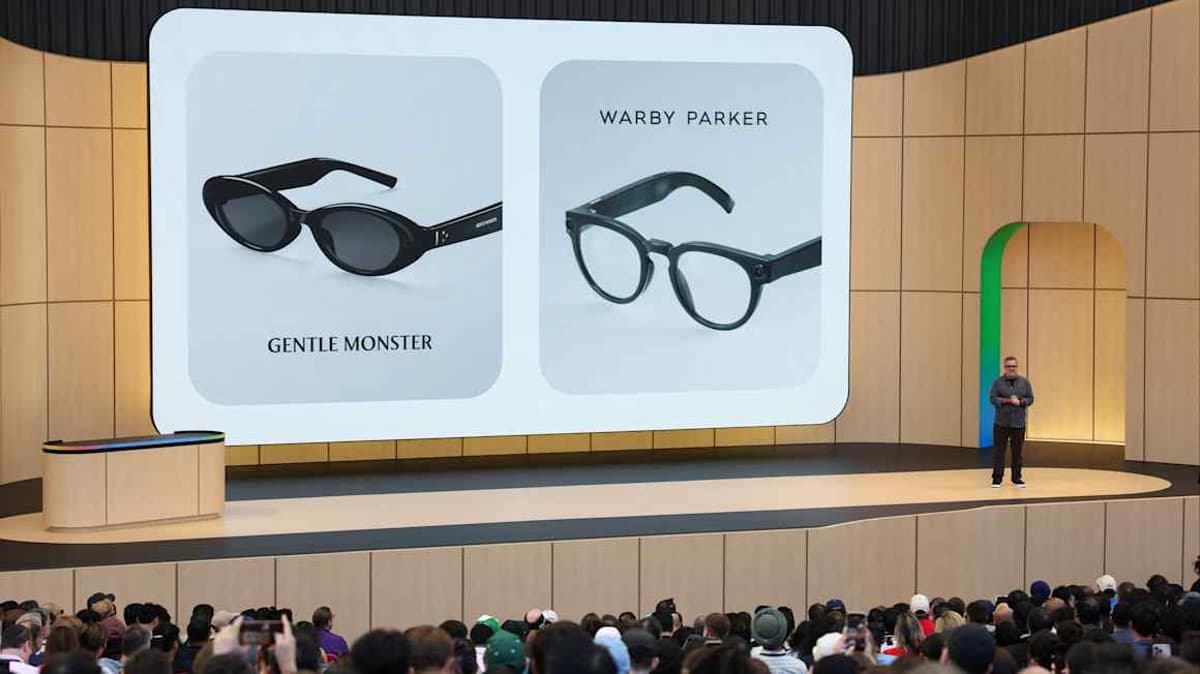
Google to Release Smart Glasses and Add AI ‘Agents’ to Search Engine
Why It Matters
The hardware launch expands Google’s ecosystem beyond software, while AI agents deepen user reliance on Search, potentially reshaping advertising and data monetisation.
Key Takeaways
- •Google smart glasses debut in 2025
- •Glasses embed Bard‑powered AI assistant
- •Search agents handle multi‑step queries
- •Competes directly with Apple Vision Pro
- •Could boost ad revenue via personalized AR
Pulse Analysis
The consumer‑grade smart glasses mark Google’s most ambitious foray into augmented reality since its early Glass experiments. By leveraging its massive AI research pipeline, the device promises real‑time language translation, contextual information overlays, and seamless integration with Google services. Analysts see the timing as crucial: Apple’s Vision Pro has set a premium benchmark, while Meta’s Quest line dominates the lower‑cost segment. Google’s approach—combining a modest price point with deep AI capabilities—could attract both enterprise users and early adopters seeking productivity‑focused wearables.
Google’s new AI agents in Search represent a shift from keyword‑based results to task‑oriented assistance. Built on the same large language models that power Bard, these agents can interpret multi‑step queries, retrieve data from across Google’s ecosystem, and even execute actions like booking flights or drafting emails. This functionality blurs the line between search and conversational AI, encouraging users to rely on Google for end‑to‑end workflows rather than hopping between apps. For advertisers, the richer interaction context opens avenues for hyper‑personalised ad placements and performance‑based pricing models.
Strategically, the simultaneous hardware and software push signals Google’s intent to lock users into a unified AI‑first experience. By offering a device that natively runs its agents, Google can collect richer interaction data, refine its models, and differentiate its ad inventory. Competitors such as Microsoft’s Mesh and Meta’s Horizon are racing to build comparable ecosystems, but Google’s advantage lies in its dominant search market share and vast data resources. If adoption gains traction, the move could reshape the competitive landscape of immersive computing and reinforce Google’s position as a central AI platform for both consumers and enterprises.
Google to release smart glasses and add AI ‘agents’ to search engine
Comments
Want to join the conversation?
Loading comments...