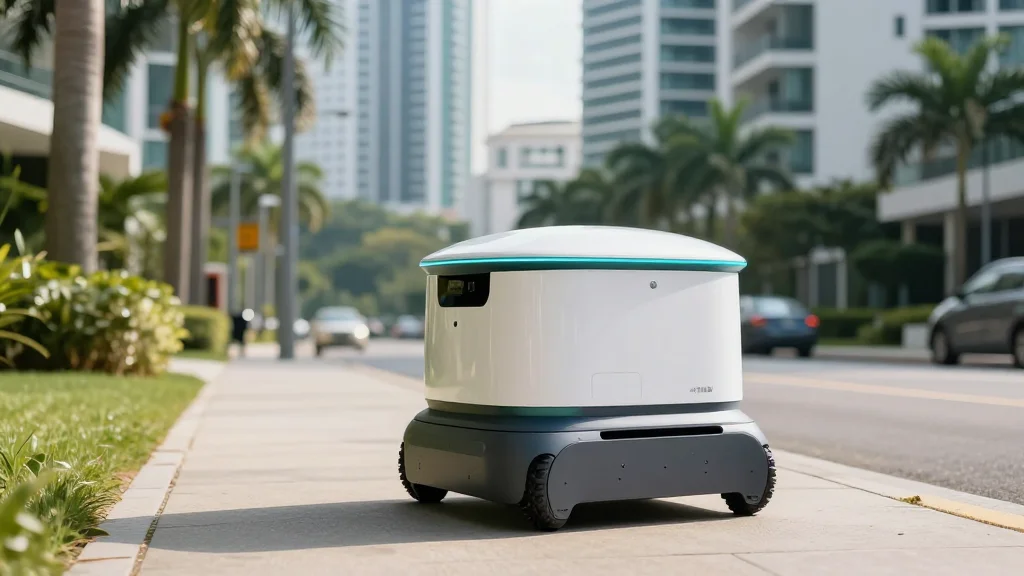
Grab CTO Unveils ‘1+n’ Robot Strategy as Carri Begins Punggol Deliveries

Why It Matters
The rollout of Carri and the public‑facing “1+n” robot strategy signal a shift in how Southeast Asian super‑apps approach physical AI. By blending proprietary and third‑party hardware, Grab can iterate faster, reduce R&D spend, and create a testing ground that may set industry standards for robot‑assisted delivery and autonomous driving. For CTOs across the region, the approach offers a blueprint for balancing control with openness in emerging technology stacks. Moreover, the move underscores the growing convergence of digital platforms and tangible logistics. As Grab expands its robot fleet, the company could unlock new revenue streams beyond ride‑hailing and food delivery, reshaping the economics of on‑demand services in markets where labor costs and traffic congestion are persistent challenges.
Key Takeaways
- •Carri robot to start deliveries in Singapore’s Punggol district
- •Grab’s CTO Suthen Paradatheth outlines a “1+n” strategy mixing proprietary and competitor robots
- •Strategy aims to accelerate learning and reduce capital spend on physical AI
- •Punggol pilot will feed data into Grab’s broader autonomous‑driving roadmap
- •Potential expansion to Jakarta and Manila by early 2027
Pulse Analysis
Grab’s decision to openly incorporate third‑party robots reflects a pragmatic response to the high cost and rapid obsolescence inherent in physical AI development. Historically, tech firms that attempted to monopolize hardware—think early smartphone manufacturers—found themselves outpaced by ecosystems that embraced external innovation. By institutionalising the “+n” element, Grab can benchmark emerging platforms against Carri, quickly retire underperforming designs, and adopt best‑in‑class solutions without rebuilding from scratch.
From a competitive standpoint, the strategy may force rivals to reconsider closed‑loop development models. Gojek, for example, has invested heavily in its own autonomous‑vehicle prototypes but has been less vocal about external collaborations. If Grab can demonstrate faster iteration cycles and lower per‑unit costs, it could attract hardware partners seeking market access, thereby creating a network effect that amplifies Grab’s bargaining power.
Looking forward, the success of Carri in Punggol will be a litmus test for consumer acceptance of robot‑delivered goods in dense urban environments. Should the pilot achieve high reliability and cost efficiency, Grab could leverage the data to accelerate its autonomous ride‑hailing ambitions, potentially leap‑frogging traditional vehicle fleets. For CTOs, the key takeaway is the strategic value of hybrid hardware ecosystems: they enable rapid scaling, diversify risk, and keep engineering teams engaged with the latest innovations, all of which are essential in the fast‑moving Southeast Asian tech landscape.
Grab CTO Unveils ‘1+n’ Robot Strategy as Carri Begins Punggol Deliveries
Comments
Want to join the conversation?
Loading comments...