Grab CTO Unveils Physical AI Push as SpaceX Files $1.75 Trillion IPO

Companies Mentioned
Why It Matters
The simultaneous announcements from Grab and SpaceX illustrate a tectonic shift in how CTOs prioritize physical AI. For Grab, the challenge is to deliver affordable, robot‑enabled services across emerging markets where device capabilities and network bandwidth are limited. Success could set a template for other Southeast Asian firms seeking to blend low‑cost hardware with high‑impact AI. SpaceX’s filing, by contrast, signals that the next wave of public markets may be dominated by companies that treat satellites, data centers, and AI as a single, integrated stack. The valuation target of $1.75 trillion raises the bar for what investors consider a viable return on massive capital outlays, forcing CTOs worldwide to justify large‑scale AI spend with clear revenue pathways. For CTOs, the two stories converge on a common theme: the need to balance rapid innovation in robotics and autonomous systems with disciplined cost management and regulatory navigation. Whether scaling a robot delivery fleet in Singapore or launching a constellation of AI‑enabled satellites, the strategic decisions made today will shape the competitive landscape for the next decade.
Key Takeaways
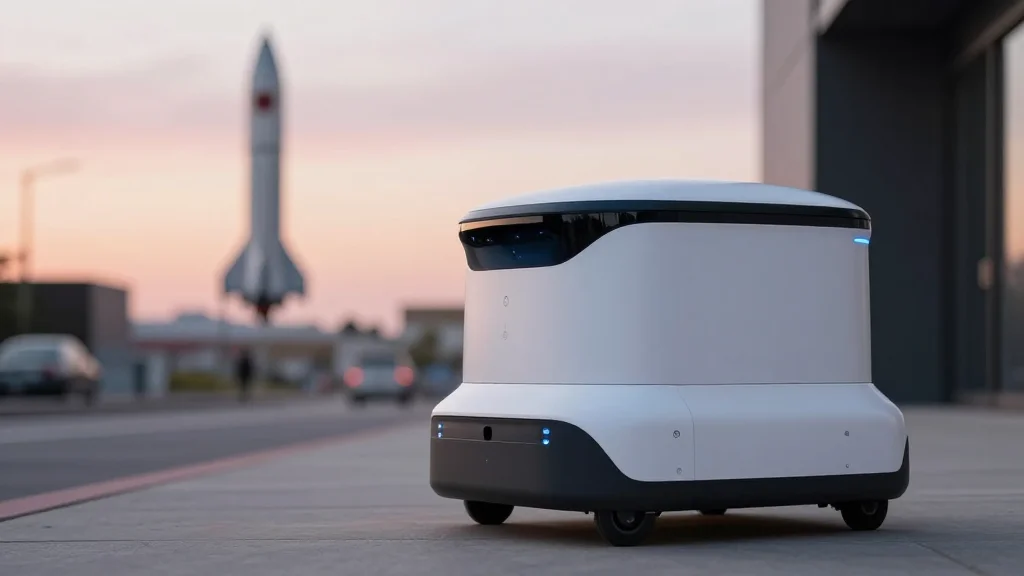
- •Grab’s delivery robot Carri begins service in Singapore’s Punggol district.
- •Grab CTO Suthen Paradatheth emphasizes a "1+n" strategy mixing own and competitor robots.
- •Grab embeds over 1,000 AI models across its super‑app, including a 90% accurate translation engine.
- •SpaceX filed an IPO seeking a $1.75 trillion valuation, the largest ever contemplated.
- •SpaceX’s filing shows >$20 billion in recent capex, with AI projects consuming the largest share.
Pulse Analysis
The dual announcements underscore a bifurcation in CTO playbooks. In emerging markets, the CTO’s mandate is increasingly about frugality: engineering for low‑end devices, optimizing data pipelines for spotty connectivity, and leveraging modular robot platforms that can be swapped with third‑party hardware. Grab’s "1+n" approach reflects a pragmatic mindset—avoid vendor lock‑in, accelerate learning, and keep the engineering team agile. This could inspire a wave of hybrid robot fleets across the region, where startups and incumbents share hardware ecosystems to reduce R&D duplication.
Conversely, SpaceX’s IPO filing reveals a CTO agenda driven by scale and vertical integration. By bundling satellite broadband, AI compute, and space logistics, SpaceX is positioning itself as the backbone of a future data economy. The massive valuation target forces other hardware‑centric firms to rethink capital efficiency: can they justify billions in spend without a clear path to recurring revenue? The filing’s explicit mention of AI risk modes also hints at a new regulatory frontier where CTOs must embed compliance into model development pipelines from day one.
Looking forward, the CTO community will watch how Grab’s robot delivery pilots translate into measurable cost savings and user adoption rates. At the same time, SpaceX’s IPO progress will be a litmus test for investor appetite for capital‑intensive, AI‑heavy infrastructure plays. Both cases will likely influence boardroom debates on budget allocation, talent recruitment, and the balance between hardware innovation and software scalability.
Grab CTO Unveils Physical AI Push as SpaceX Files $1.75 Trillion IPO
Comments
Want to join the conversation?
Loading comments...