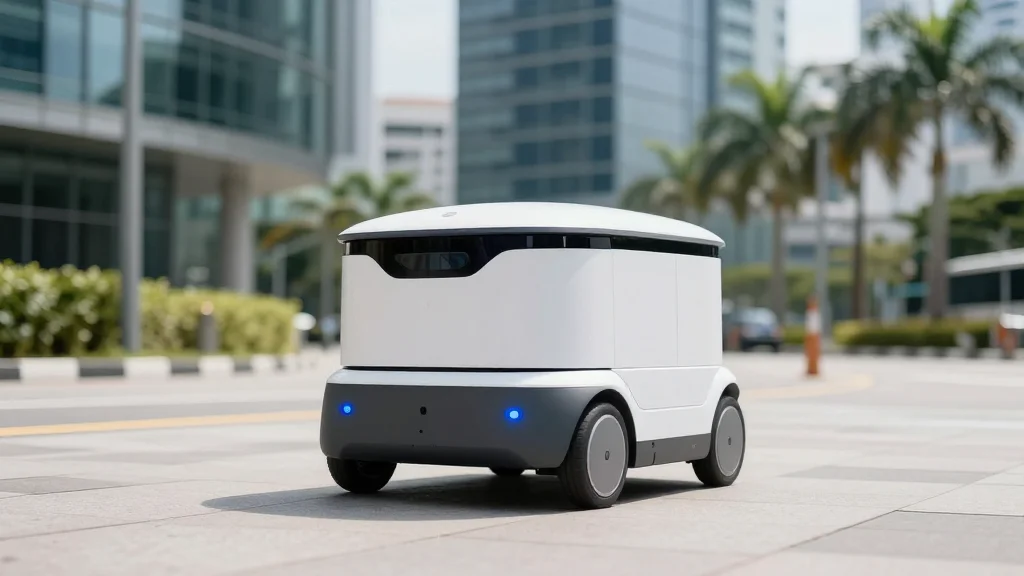
Grab Pilots Autonomous Delivery Robots in Singapore’s Punggol Digital District


Why It Matters
The Grab robot pilot signals a shift from software‑only AI solutions to embodied AI that interacts with the physical world. By tackling last‑mile delivery—a cost‑intensive segment for e‑commerce and food‑service firms—Grab aims to lower operational expenses and improve service coverage in dense urban environments. The initiative also serves as a live laboratory for Singapore’s regulatory experimentations, testing how active‑mobility exemptions and safety standards can coexist with public‑space usage. If the trial proves scalable, it could catalyze a wave of autonomous logistics services across Southeast Asia, where traffic congestion and high delivery costs are chronic challenges. Moreover, the collaboration among incumbents (Grab, DHL) and specialist robotics firms (QuikBot, Unitree) showcases a model for cross‑industry partnership that other markets may emulate.
Key Takeaways
- •Grab joins seven partners to pilot autonomous delivery robots in Singapore’s Punggol Digital District.
- •Large‑scale trials slated to start by the end of 2026, focusing on food, parcel delivery, cleaning and security patrolling.
- •Robots operate under a precinct‑level exemption from the Active Mobility Act, allowing use of public pathways without individual permits.
- •IMDA, JTC and SIT provide an integrated data platform and safety test scenarios for the robot fleet.
- •Pilot aims to demonstrate scalability, safety and regulatory frameworks for embodied AI in urban logistics.
Pulse Analysis
Grab’s entry into autonomous delivery marks a strategic diversification beyond its core ride‑hailing and food‑delivery services. Historically, Grab has leveraged its extensive driver network to dominate Southeast Asian logistics, but driver‑centric models face rising labor costs and regulatory scrutiny. By investing in embodied AI, Grab is hedging against these pressures and positioning itself as a technology‑first logistics provider.
The PDD test‑bed offers a controlled environment where multiple stakeholders can iterate on hardware, software and policy simultaneously. This collaborative approach reduces the time‑to‑market for new robot services compared to isolated pilots, and it generates a shared data pool that can accelerate AI model training. However, the fragmented ecosystem also risks creating competing standards that could impede interoperability once robots move beyond the district.
From a market perspective, successful deployment could erode the competitive advantage of traditional delivery firms that rely on human couriers. Companies like Foodpanda and Deliveroo may be forced to accelerate their own robotics programs or partner with specialist firms. Conversely, the pilot could open new revenue streams for Grab through robot‑as‑a‑service offerings, licensing its navigation stack to third‑party operators. The broader implication for CTOs is clear: the next wave of logistics innovation will be hardware‑centric, demanding expertise in robotics, AI safety, and regulatory compliance alongside traditional software development.
Overall, Grab’s robot pilot is a litmus test for the viability of large‑scale embodied AI in dense urban settings. Its outcomes will likely inform policy decisions, investment flows, and competitive dynamics across the region’s logistics landscape for years to come.
Grab pilots autonomous delivery robots in Singapore’s Punggol Digital District
Comments
Want to join the conversation?
Loading comments...