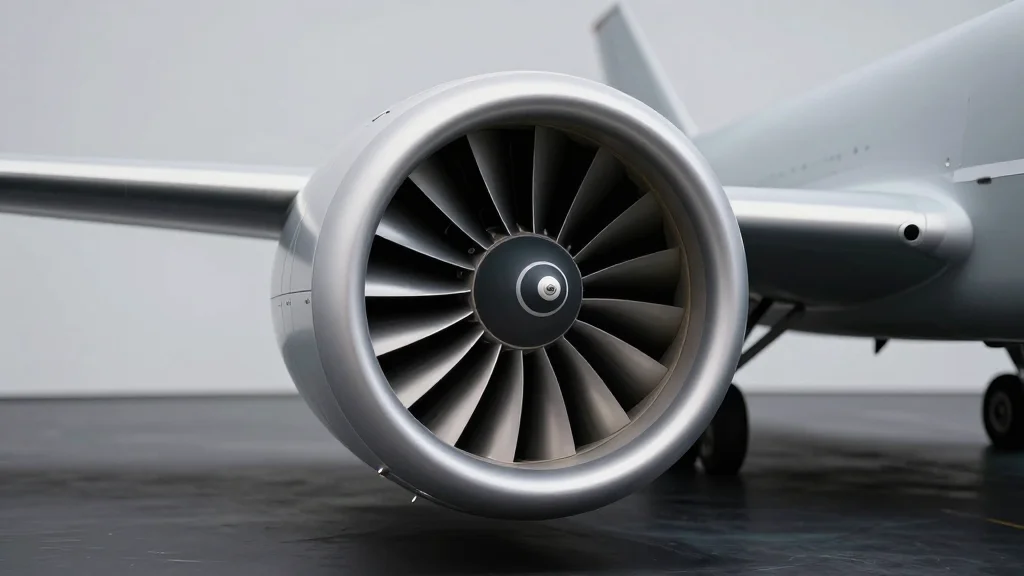
Hanwha Aerospace Starts Korea’s First Dual‑Use Turbofan Engine Project with KASA

Companies Mentioned
Why It Matters
The engine project marks South Korea’s first attempt to domestically produce a turbofan that serves both civilian and military platforms, breaking a reliance on foreign suppliers for high‑performance propulsion. By integrating a high‑output starter‑generator, the design directly addresses the power‑density challenge that has limited the capabilities of current UAVs, enabling more sophisticated sensor suites and AI processing on board. Beyond technical gains, the initiative signals a strategic shift toward full‑stack defense autonomy. A home‑grown engine reduces export‑control constraints, opens new markets for Korean aerospace firms, and strengthens the country’s bargaining position in multinational defense procurement. The dual‑use nature also promises spill‑over benefits for the civil aviation sector, potentially lowering operating costs for regional jets and business aircraft that can adopt the same powerplant.
Key Takeaways
- •Hanwha Aerospace and KASA launch Korea's first dual‑use turbofan project, targeting a 4,500‑lb class engine by 2029.
- •Engine will feature a shaft‑mounted starter‑generator capable of delivering up to 100 kW of electricity.
- •Project involves Korea Aerospace Research Institute, universities and smaller tech firms, with a matching‑fund investment from the government.
- •Analysts cite the move as a bid to overcome the propulsion bottleneck in UAV development and compete with US, China, Israel and Turkey.
- •More than 3,000 collaborative combat aircraft are projected globally by the 2040s, creating a sizable market for dual‑use engines.
Pulse Analysis
Hanwha’s turbofan initiative arrives at a moment when the UAV propulsion market is still fragmented and dominated by a handful of legacy engine manufacturers. By committing to a dual‑use architecture, Hanwha is hedging against the volatility of defense budgets while tapping into the growing demand for high‑power, lightweight engines in civil aviation. The 100 kW generator capability is particularly forward‑looking; as AI workloads migrate onto the airframe, power‑dense engines become a decisive competitive factor.
Historically, South Korea has excelled in avionics, sensors and missile technology, but propulsion has remained a foreign‑sourced domain. This project could close that gap, allowing Korean firms to offer end‑to‑end solutions—a prerequisite for securing large‑scale export contracts, especially from nations wary of supply‑chain dependencies. The government’s matching‑fund model mirrors similar programs in Japan and Europe, where state backing accelerates technology maturation and de‑risking for private partners.
Looking ahead, the success of the 4,500‑lb engine will likely dictate the feasibility of the larger 5,500‑lb and 10,000‑lb classes outlined in the UAV propulsion portfolio. If Hanwha meets its 2029 timeline, it could position South Korea as a credible alternative to Pratt & Whitney or Safran for next‑generation loyal‑wingman platforms, reshaping the competitive dynamics of the global UAV market and potentially spurring a new wave of Korean aerospace exports.
Hanwha Aerospace Starts Korea’s First Dual‑Use Turbofan Engine Project with KASA
Comments
Want to join the conversation?
Loading comments...