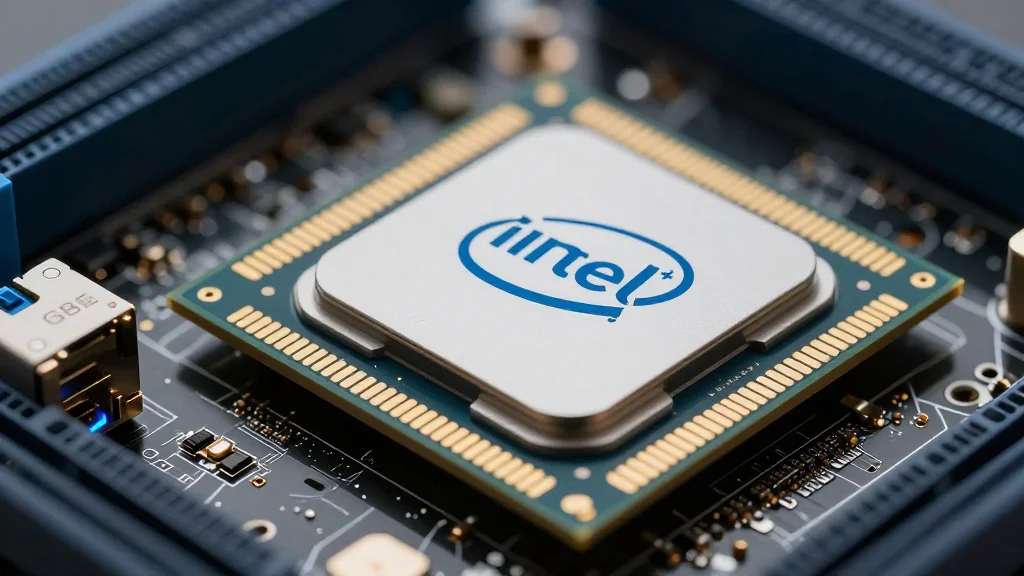
Intel Launches Xeon 6+ with 288 E‑cores, Targeting Agentic AI Workloads

Companies Mentioned
Why It Matters
The Xeon 6+ launch redefines the CPU’s value proposition in AI data centers by emphasizing orchestration, concurrency and data‑movement efficiency over raw compute throughput. By coupling a high‑core‑count processor with a power‑efficient 200 GbE adapter, Intel offers a tightly integrated stack that could lower total cost of ownership for agentic AI workloads, which are expected to dominate next‑generation AI services such as autonomous agents and continuous‑learning systems. If Intel’s performance‑per‑watt gains hold up in real‑world deployments, the chip could accelerate the shift toward CPU‑centric AI infrastructure, prompting cloud providers to reconsider the balance between GPU accelerators and CPU‑driven orchestration layers. The move also pressures competitors to deliver comparable networking integration and security features, potentially spurring a new wave of hardware co‑design focused on end‑to‑end AI pipelines.
Key Takeaways
- •Xeon 6+ offers up to 288 efficient cores and 576 MB L3 cache on Intel 18A.
- •Thermal envelope is 450 W, only 36 % higher than the prior 144‑core generation.
- •Performance‑per‑watt improvement claimed at 1.55× versus Xeon 6780E.
- •Ethernet E835 adapter delivers up to 200 GbE with 47 % lower power than NVIDIA ConnectX‑6 DX.
- •Intel positions the CPU‑networking combo as the control plane for agentic AI workloads.
Pulse Analysis
Intel’s Xeon 6+ represents a strategic pivot from the industry’s GPU‑first narrative toward a more balanced AI stack where the CPU regains prominence as the orchestration hub. By leveraging its 18A process and Foveros Direct 3D stacking, Intel not only showcases a manufacturing milestone but also creates a modular tile architecture that can be tuned for specific workload mixes. This flexibility could be decisive for hyperscalers that need to blend high‑throughput inference with continuous, stateful agentic tasks.
The integration of a low‑power, high‑bandwidth Ethernet adapter directly addresses one of the biggest pain points in AI clusters: data‑movement latency and energy cost. As AI models become more interactive and require frequent synchronization across nodes, the ability to move data efficiently becomes as critical as raw compute. Intel’s emphasis on zero‑trust attestation and SPDM 1.2 further aligns the platform with emerging security mandates for AI, potentially giving it an edge in regulated industries.
Looking ahead, the Xeon 6+ could set a template for an annual cadence of CPU improvements, as hinted by the upcoming Diamond Rapids roadmap. If Intel can sustain the claimed performance‑per‑watt gains while delivering competitive pricing, it may force a re‑evaluation of AI infrastructure spend, nudging customers to allocate a larger share of budgets to CPU‑centric solutions. The real test will be in large‑scale deployments where the promised efficiencies translate into measurable cost savings and latency reductions.
Intel launches Xeon 6+ with 288 E‑cores, targeting agentic AI workloads
Comments
Want to join the conversation?
Loading comments...