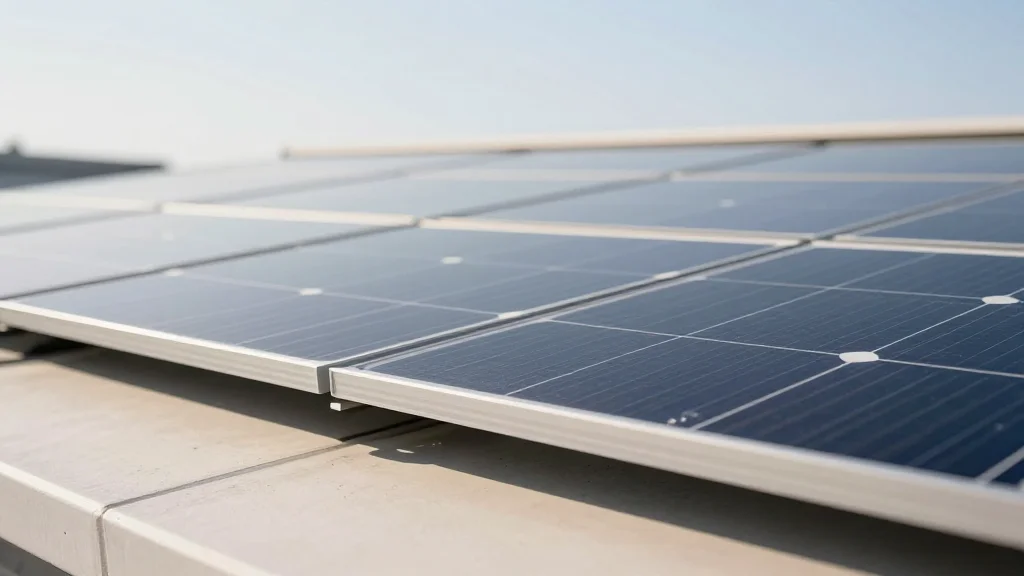
LONGi’s EcoLife Modules Break 25% Efficiency Barrier, Redefining PV Benchmarks

Why It Matters
The 25% efficiency achievement redefines what is technically feasible for silicon‑based PV modules, giving CTOs a tangible lever to reduce capital expenditures and accelerate sustainability targets. By delivering more power per square meter, the EcoLife series eases constraints on rooftop installations, enabling higher penetration of solar energy in densely built environments. The breakthrough also validates the HIBC back‑contact approach, prompting competitors to invest in similar architectures, which could spur a wave of innovation across the entire photovoltaic supply chain. For enterprises managing large‑scale renewable portfolios, the higher module efficiency translates into lower balance‑of‑system costs, reduced land use, and improved return on investment. As governments tighten renewable‑energy mandates, the ability to meet generation targets with fewer panels becomes a strategic advantage, positioning companies that adopt LONGi’s technology at the forefront of the green transition.
Key Takeaways
- •LONGi EcoLife modules achieve 25% mass‑production efficiency, topping Taiyang News' April 2026 ranking
- •HIBC cell technology certified at 27.81% efficiency by ISFH in April 2025
- •Modules deliver up to 510 W power, 250 W/m² power density, and 70% lower shading loss vs TOPCon
- •LONGi secured a 2 GW supply agreement with Energy 3000 for high‑efficiency PV modules
- •EcoLife series won the German Excellence Award 2026 in the Energy & Environment category
Pulse Analysis
The EcoLife breakthrough illustrates a pivotal shift from incremental efficiency improvements to a new class of high‑performance silicon modules. Historically, silicon PV efficiencies plateaued around 22% for mass‑produced panels, with most gains coming from incremental material and process tweaks. LONGi’s HIBC architecture, by merging heterojunction passivation with a back‑contact layout, sidesteps the trade‑offs that limited previous designs, delivering a step change that rivals emerging tandem technologies.
From a market dynamics perspective, the announcement is likely to compress the competitive landscape. Established players such as Trina Solar and JinkoSolar have invested heavily in TOPCon and heterojunction technologies, but the demonstrated scalability of HIBC may force a strategic pivot. Investors will watch for capital allocation shifts toward back‑contact R&D, while supply‑chain partners—silicon wafer producers, metallization firms, and module assemblers—must adapt to new process requirements.
Looking forward, the real test will be how quickly the industry can translate laboratory efficiencies into reliable, cost‑effective products at scale. If LONGi can maintain yield rates and keep module costs competitive, the 25% benchmark could become the new baseline for residential and commercial PV, accelerating the decarbonization of the built environment. CTOs should begin mapping integration pathways now, assessing inverter compatibility, warranty structures, and potential retrofits for existing installations to capitalize on the efficiency gains.
LONGi’s EcoLife Modules Break 25% Efficiency Barrier, Redefining PV Benchmarks
Comments
Want to join the conversation?
Loading comments...