Longshot Space Unveils ‘Potato Gun’ Launcher to Slash Satellite Deployment Costs

Companies Mentioned

Why It Matters
Longshot’s launch system could reshape how CTOs and engineering teams plan satellite missions. By reducing launch fees, organizations can allocate more budget to payload development, data analytics, and downstream services, accelerating innovation cycles. The technology also introduces a new risk profile: lower‑cost launches may encourage more frequent, iterative testing of hardware, fostering rapid prototyping in space. If the kinetic‑gas approach proves viable, it could pressure incumbent launch providers to revisit pricing models and explore hybrid propulsion concepts. The broader ecosystem—including ground‑segment operators, satellite manufacturers, and regulatory bodies—will need to adapt to a potential influx of smaller, more frequent launches, prompting updates to spectrum allocation, debris mitigation policies, and launch‑site logistics.
Key Takeaways
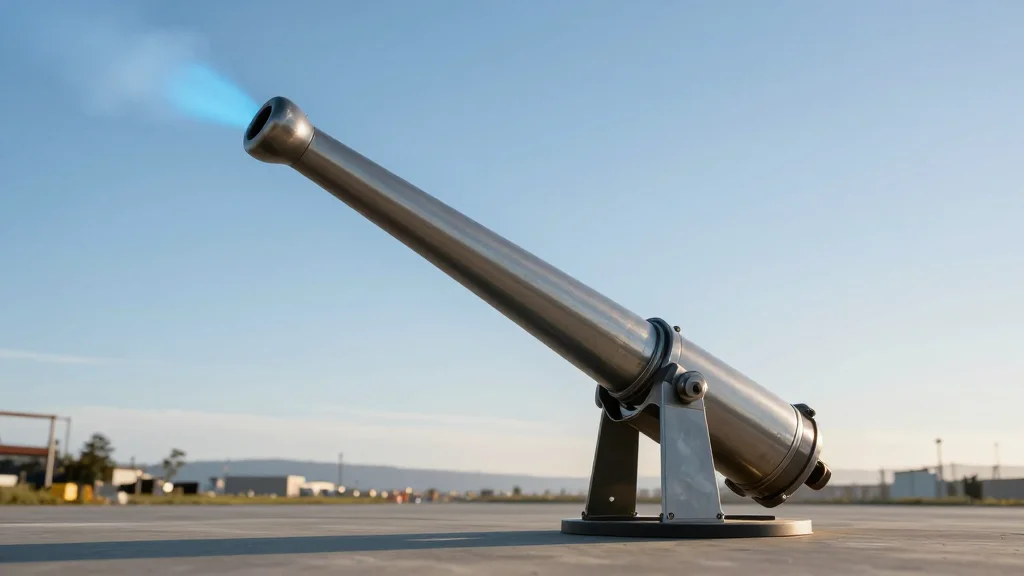
- •Longshot’s 40‑foot pipe cannon uses compressed nitrogen for tests, hydrogen for operational launches.
- •Prototype testing slated for a former Navy weapons building in Alameda, California.
- •Company has secured a desert launch site in Tonopah, Nevada, with additional locations under study.
- •Workforce of 20‑30 engineers; $10,000 relocation bonus offered to attract Alameda talent.
- •Goal: cut launch costs dramatically, enabling low‑cost satellite deployment for a broader market.
Pulse Analysis
Longshot’s kinetic‑gas launch concept arrives at a moment when the satellite market is fragmented between high‑volume, high‑cost launch providers and a growing demand for ultra‑low‑cost access. Historically, launch economics have been dominated by the rocket equation, where propellant mass drives cost. By sidestepping combustion, Longshot challenges that paradigm, offering a technology that could democratize access for niche payloads. The trade‑off is clear: lower thrust and limited payload mass versus dramatically reduced per‑kilogram cost. For CTOs overseeing satellite programs, this creates a new decision matrix—balancing mission requirements against a potentially cheaper, albeit less capable, launch option.
The competitive landscape may see incumbents like Rocket Lab and Astra accelerate development of small‑sat launchers to protect market share. Moreover, the regulatory environment could shift as agencies confront a new class of low‑energy launch vehicles, prompting revisions to safety standards and licensing processes. If Longshot can demonstrate reliable orbital insertion, it could trigger a wave of similar low‑cost propulsion experiments, spurring a sub‑segment of “cannon‑based” launch services.
Looking ahead, the key to Longshot’s success will be scalability and repeatability. A single successful test will generate buzz, but commercial viability hinges on consistent performance, payload integration standards, and a clear path to FAA certification. CTOs will watch closely for data on launch cadence, cost per launch, and payload limits, as these metrics will dictate whether the technology moves from a novelty to a core component of the space‑access toolbox.
Longshot Space Unveils ‘Potato Gun’ Launcher to Slash Satellite Deployment Costs
Comments
Want to join the conversation?
Loading comments...