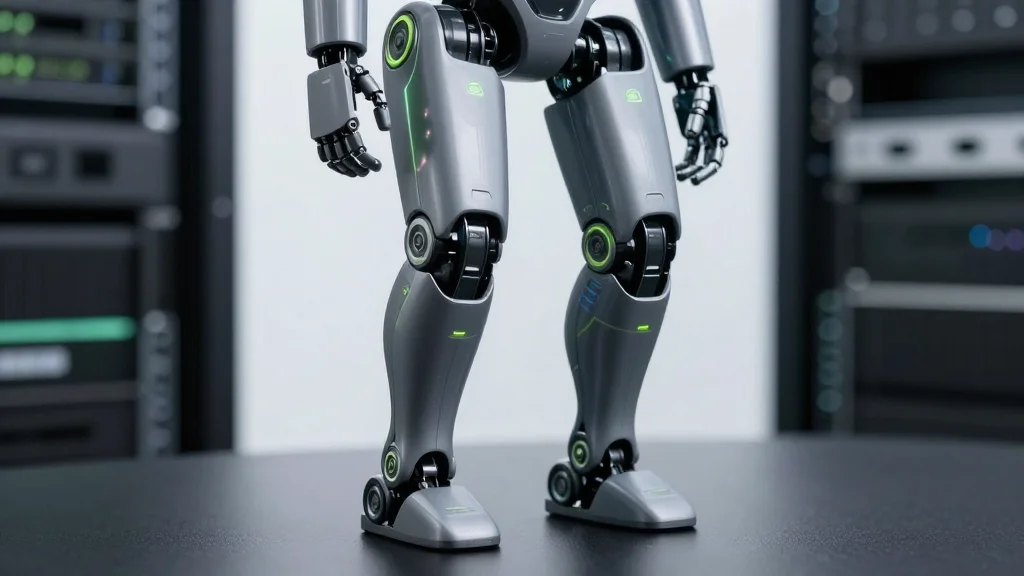
Nvidia Launches Secure H2 Plus Humanoid Robot Platform Amid Geopolitical Scrutiny

Companies Mentioned
Why It Matters
The H2 Plus platform marks the first time a major chipmaker has bundled enterprise‑grade cybersecurity directly into a humanoid robot, a response to growing fears that AI‑enabled hardware could become a vector for espionage. By offering a unified, secure stack, Nvidia not only accelerates research timelines but also creates a new revenue stream that ties universities, labs and future manufacturers to its GPU and software ecosystem. The move could reshape procurement decisions across the robotics supply chain, especially as U.S. policy tightens around Chinese technology partners. For CTOs, the announcement underscores a shift from isolated hardware purchases to integrated, lifecycle‑managed solutions. Security, compliance, and vendor lock‑in will become central criteria when evaluating robotics platforms, prompting tech leaders to reconsider risk assessments and budgeting for physical AI deployments.
Key Takeaways
- •Nvidia introduced the H2 Plus humanoid robot, a 6‑foot, 150‑lb platform built with Unitree chassis and Sharpa hands.
- •The robot runs on Nvidia’s Jetson AGX Thor T5000 with Blackwell GPU architecture and includes secure‑boot and confidential‑computing features.
- •Early adopters include Stanford, UC San Diego, the Allen Institute for AI and ETH Zurich.
- •U.S. lawmakers are considering bans on federally funded research that uses Unitree robots, heightening geopolitical risk.
- •Nvidia plans to expand secure robotics partnerships to the U.S., Europe and South Korea.
Pulse Analysis
Nvidia’s entry into humanoid robotics is less about hardware sales and more about cementing its position as the de‑facto compute and security layer for physical AI. Historically, robotics vendors have competed on mechanical specifications; Nvidia flips that script by making the software and data pipeline the differentiator. This mirrors the company’s earlier strategy with the Isaac Sim ecosystem, where the value proposition shifted from raw GPU horsepower to an end‑to‑end development environment. By embedding data‑center security into the robot’s silicon, Nvidia pre‑empts the regulatory backlash that has hamstrung other Chinese‑linked robotics firms, offering a compliance‑first alternative that aligns with U.S. export controls.
The market impact could be profound. A standardized, secure platform lowers the barrier to entry for universities and startups, potentially accelerating the pace of innovation in sectors like manufacturing, logistics and healthcare. However, the dependency on Nvidia’s proprietary compute stack may create a new form of vendor lock‑in, compelling CTOs to weigh short‑term research gains against long‑term strategic flexibility. As geopolitical tensions persist, firms that can demonstrate a clear, auditable security chain—like Nvidia’s H2 Plus—will likely capture a disproportionate share of public and private research funding.
In the next 12‑18 months, the success of H2 Plus will be measured by adoption rates beyond the announced early‑adopter cohort and by Nvidia’s ability to scale secure updates across a distributed robot fleet. If the company can deliver on its promise of a unified lifecycle while navigating the legislative landscape, it could redefine the economics of humanoid robotics and set a new benchmark for secure AI hardware.
Nvidia launches secure H2 Plus humanoid robot platform amid geopolitical scrutiny
Comments
Want to join the conversation?
Loading comments...