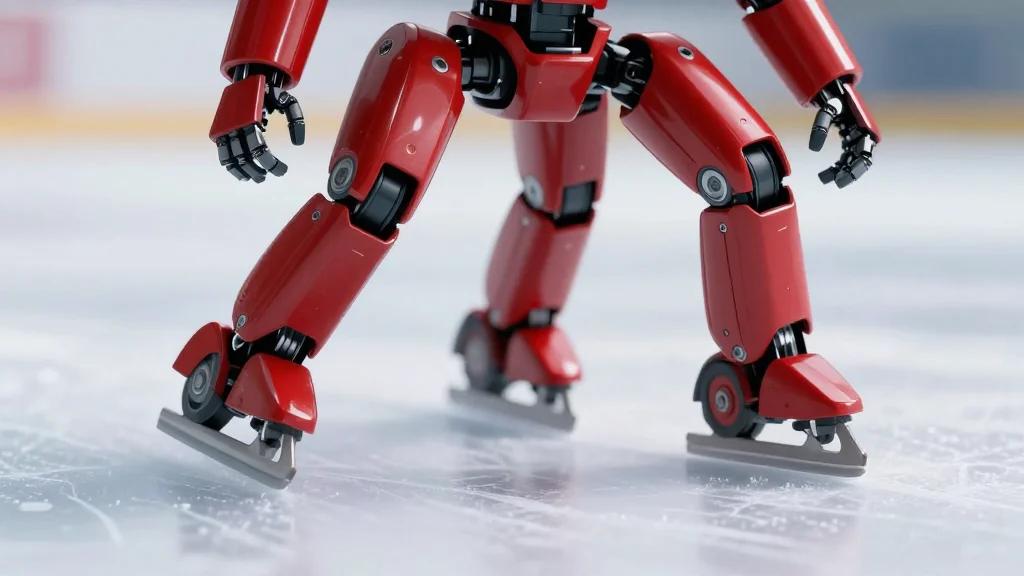
Robots Race on Ice in San Jose, Highlighting Autonomous Mobility Advances

Companies Mentioned
Why It Matters
The San Jose ice‑skating showdown demonstrates that autonomous mobility technologies are no longer confined to labs; they are being tested in public, high‑visibility arenas where performance, safety, and user engagement intersect. For CTOs, the event provides a tangible benchmark of what modern control systems, sensor integration, and rapid actuation can achieve, offering a preview of capabilities that could soon be required in logistics, manufacturing, and consumer robotics. Moreover, the event’s inclusive format—welcoming hobbyists, students, and seasoned engineers—highlights a democratizing trend in robotics development. As components become cheaper and software frameworks more open, CTOs can leverage a broader talent pool and accelerate innovation cycles, reducing time‑to‑market for autonomous solutions.
Key Takeaways
- •A 250‑lb, six‑foot red robot won the ice‑skating race, completing a victory lap before the runner‑up finished
- •SVISA CEO Sarah Feldman emphasized the event’s role in inspiring STEM learning among toddlers to seasoned engineers
- •Creator Nick Donaldson highlighted a speed upgrade over previous iterations, noting remaining stability challenges
- •The competition featured diverse bots, from a Dalek replica to pet‑shaped open‑source robots by Petoi
- •Event underscores advances in real‑time control, sensor fusion, and modular hardware for autonomous mobility
Pulse Analysis
The Robots on Ice event is more than a novelty; it is a live laboratory where the convergence of hardware engineering, AI‑driven control, and rapid prototyping is on full display. Historically, robotics breakthroughs have been announced at conferences or in controlled test environments, but public competitions force teams to contend with unpredictable variables—glare, temperature fluctuations, and audience interference—mirroring real‑world deployment scenarios. This pressure cooker accelerates the maturation of algorithms that can handle slip detection and dynamic re‑balancing, capabilities that are directly transferable to autonomous vehicles operating on icy roads or warehouse robots navigating slick floors.
From a market perspective, the event signals a shift toward modular, plug‑and‑play robotics platforms. Donaldson’s fourth‑generation robot, built on a platform originally commissioned by Intel, shows how enterprise‑grade hardware can be repurposed for hobbyist and research use, blurring the line between commercial and experimental domains. CTOs should watch for emerging standards in actuator interfaces and sensor suites that enable such cross‑sector reuse, as they promise to lower development costs and shorten product cycles.
Looking forward, the growing visibility of events like Robots on Ice will likely attract venture capital and corporate R&D investment, spurring a new wave of startups focused on niche autonomous applications—ice‑racing bots may evolve into precision‑agriculture sprayers or emergency‑response drones that must operate in low‑traction environments. CTOs who embed flexible, AI‑centric architectures now will be better equipped to integrate these emerging solutions, turning a weekend ice‑skating race into a strategic advantage for future product portfolios.
Robots Race on Ice in San Jose, Highlighting Autonomous Mobility Advances
Comments
Want to join the conversation?
Loading comments...