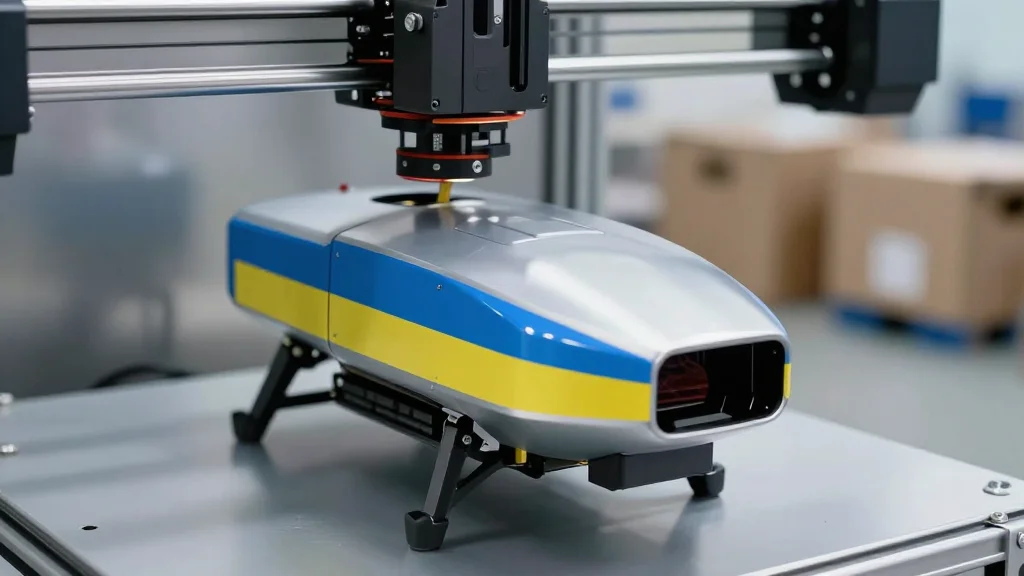
Skycutter’s 3D‑Printed Drones Fuel Ukraine’s Low‑Cost Defense Push

Companies Mentioned
Why It Matters
Skycutter’s 3D‑printing operation illustrates how agile manufacturing can bypass traditional defence procurement cycles, delivering weapons at a fraction of the cost and time of legacy platforms. For CTOs overseeing defence technology, the case signals a shift toward software‑defined hardware, where design updates can be pushed through digital files rather than retooling factories. The broader European push for defence sovereignty amplifies the strategic importance of such capabilities. If domestic firms can reliably produce consumable drones, the continent reduces its exposure to external supply‑chain shocks and gains leverage in NATO discussions about burden‑sharing and technology transfer.
Key Takeaways
- •Skycutter prints drone fuselages on a row of 3D printers in the East Midlands.
- •Hundreds of thousands of drone components are produced each month for Ukrainian factories.
- •EU has committed €800 billion ($860 billion) to defence spending over four years.
- •Gen Sir Roly Walker calls for 20% survivable, 40% attritable, 40% consumable equipment mix.
- •Skycutter aims to double output and deliver 5,000 fully assembled drones by autumn.
Pulse Analysis
The Skycutter story is a micro‑cosm of a larger transformation in defence engineering. Historically, military hardware has been dominated by long‑lead‑time programs run by state‑backed giants. The advent of affordable additive manufacturing erodes that model, allowing small, nimble firms to iterate designs in weeks and respond to battlefield data in near‑real time. For CTOs, this means that the traditional gatekeepers of procurement – large integrators and legacy supply chains – must now compete with boutique innovators who can deliver a functional system at a fraction of the cost.
Europe’s €800 billion defence budget, while massive on paper, is fragmented across national programs that often duplicate effort. Skycutter’s partnership with Ukrainian factories demonstrates a template for cross‑border collaboration that sidesteps bureaucratic bottlenecks. If the EU can codify standards for 3D‑printed components and certify them for combat use, a pan‑European network of micro‑factories could emerge, dramatically increasing resilience against supply‑chain disruptions caused by geopolitical tensions.
Looking ahead, the key risk is scaling quality control without sacrificing speed. As more nations adopt consumable drone concepts, the line between affordable attritable systems and uncontrolled proliferation blurs. CTOs will need to embed robust digital twins, AI‑driven inspection, and secure data pipelines to ensure that rapid production does not compromise safety or strategic stability. Skycutter’s upcoming pilot with the Ukrainian Ministry of Defence will be a litmus test for whether the promise of agile, sovereign defence manufacturing can be realized at scale.
Skycutter’s 3D‑Printed Drones Fuel Ukraine’s Low‑Cost Defense Push
Comments
Want to join the conversation?
Loading comments...