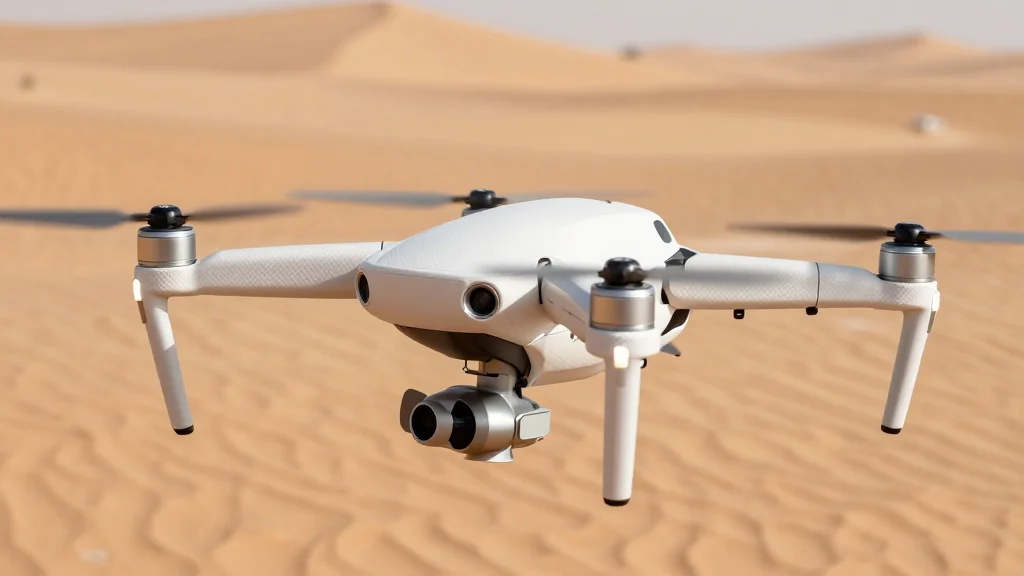
Space42, Sindan Team Up to Test Autonomous Systems with Satellite Connectivity

Companies Mentioned
Why It Matters
The Space42‑Sindan alliance illustrates how emerging economies are leveraging home‑grown expertise to close the gap with traditional aerospace powerhouses. By marrying satellite communications with additive‑manufactured autonomous platforms, the partnership could lower entry barriers for a new class of space‑enabled services, from precision agriculture to secure logistics. For CTOs, the collaboration offers a blueprint for integrating cross‑domain technologies—AI, satellite links, and advanced manufacturing—into a single, scalable solution. Moreover, the initiative reinforces the UAE’s strategic shift toward a knowledge‑based industrial ecosystem. Successful validation could attract further private‑sector investment, stimulate local supply chains, and accelerate the nation’s ambition to become a regional hub for space‑tech innovation. The outcomes will likely influence procurement decisions of governments and enterprises seeking resilient, low‑latency connectivity in remote or contested environments.
Key Takeaways
- •Space42 and Sindan sign MoU to test satellite‑connected autonomous systems, announced at Make it in the Emirates 2026
- •Sulaiman Al Ali (Space42 CCO) and Heyuan Huang (Sindan CEO) highlight diversification of deployment and real‑world integration
- •Partnership aligns with UAE's Operation 300bn ($82 bn) industrial growth plan and National Space Strategy 2030
- •Test flights slated for H2 2026 with a technical validation report expected by early 2027
- •Collaboration could accelerate commercial services in defence, maritime surveillance, and remote connectivity
Pulse Analysis
The Space42‑Sindan MoU is more than a bilateral R&D effort; it signals a maturation of the UAE’s end‑to‑end space value chain. Historically, the region has relied on foreign satellite operators and hardware imports. By integrating satellite communications directly onto domestically manufactured autonomous platforms, the partnership reduces dependency on external suppliers and shortens the innovation loop. This vertical integration mirrors trends in the U.S. and Europe, where firms like SpaceX and Blue Origin are bundling launch, satellite, and ground‑segment capabilities.
From a market perspective, the ability to field autonomous systems with secure, low‑latency links opens new revenue streams in sectors that have been slow to adopt space tech due to cost and complexity. Defence customers, for instance, could benefit from real‑time situational awareness without relying on terrestrial networks vulnerable to disruption. Similarly, maritime operators could use autonomous drones for inspection and cargo monitoring, leveraging the satellite backbone for continuous data flow. The partnership’s success could catalyze a wave of similar collaborations across the Gulf, prompting incumbents to reassess their own integration strategies.
Looking ahead, the key risk lies in translating test‑bed results into scalable, cost‑effective products. CTOs will need to address challenges around certification, spectrum allocation, and cybersecurity of the integrated stack. If Space42 and Sindan can demonstrate a repeatable, secure architecture, they will not only fulfill national strategic goals but also position the UAE as a credible exporter of turnkey autonomous‑satellite solutions, reshaping the competitive dynamics of the global space‑tech market.
Space42, Sindan Team Up to Test Autonomous Systems with Satellite Connectivity
Comments
Want to join the conversation?
Loading comments...