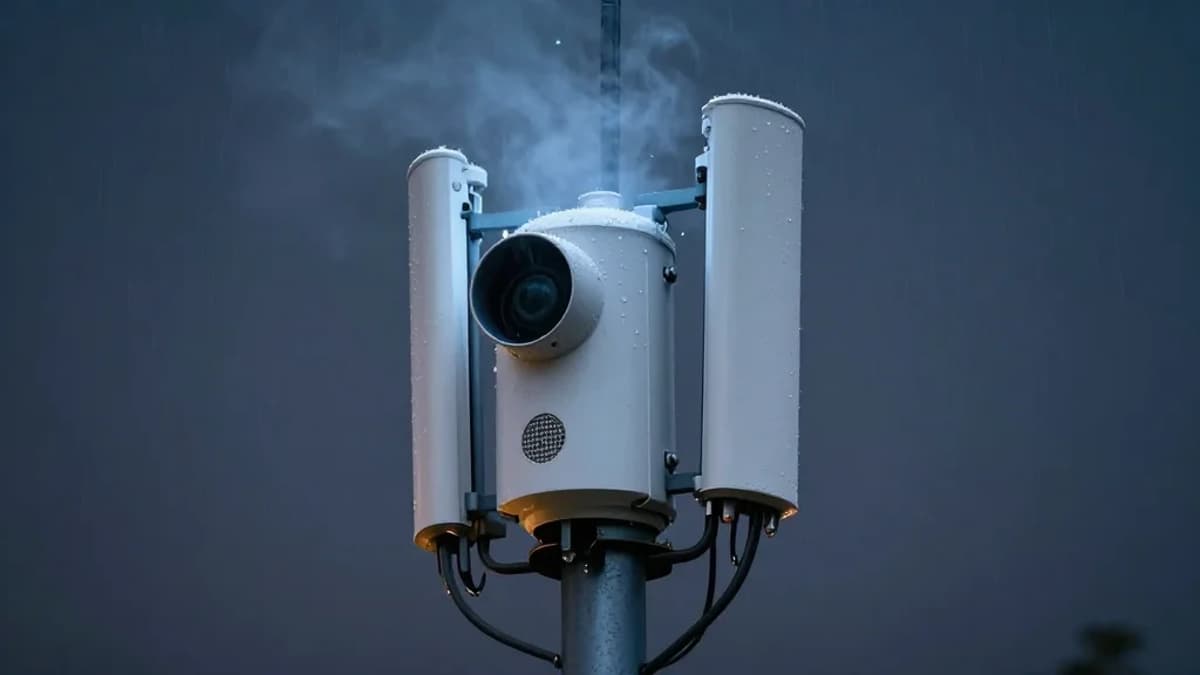
Vodafone Turns Its Network Into a Europe-Wide “Virtual Weather Station”
•February 23, 2026
0
Why It Matters
NWaaS gives Vodafone a tangible, data‑driven differentiator in a commoditised connectivity market, while offering governments and businesses cost‑effective environmental intelligence for resilience and compliance.
Key Takeaways
- •Microwave links detect rain, fog, humidity via signal changes
- •NWaaS expands across Europe, adding air‑quality sensors
- •Turns existing telecom assets into revenue‑generating data services
- •Supports flood forecasting, wildfire detection, smart‑city resilience
- •Success hinges on data accuracy, latency, service‑level guarantees
Pulse Analysis
The emergence of Network‑as‑a‑Sensor reflects a broader telco shift from pure connectivity to platform‑based services. Vodafone leverages its dense microwave backhaul, already essential for 5G traffic, to capture atmospheric attenuation signatures. By converting signal loss into granular precipitation maps, the operator fills gaps left by traditional radars, especially in rural or topographically complex regions. This capability aligns with the growing demand for hyper‑local weather data, a niche previously dominated by costly, dedicated sensor networks.
Beyond rainfall, Vodafone’s plan to mount air‑quality monitors on existing masts creates a continent‑wide, low‑cost monitoring grid. When integrated with the company’s IoT management platform, the data can feed directly into municipal dashboards, utility asset‑management tools, and insurance risk models. Partnerships with the European Space Agency, the Met Office and the Centre for Ecology & Hydrology further validate the service’s scientific credibility and accelerate adoption in public‑sector resilience projects.
The commercial success of NWaaS hinges on turning raw sensor outputs into reliable, contract‑grade products. Enterprises and governments will require clear service‑level agreements covering accuracy, latency, and data continuity during network upgrades. If Vodafone can package these guarantees alongside seamless integration APIs, it not only opens a new revenue stream but also positions the carrier as a trusted data‑services partner in the smart‑city ecosystem. This strategic move could set a precedent for other operators seeking to monetize existing assets while supporting climate‑adaptation initiatives.
Vodafone turns its network into a Europe-wide “virtual weather station”
0
Comments
Want to join the conversation?
Loading comments...