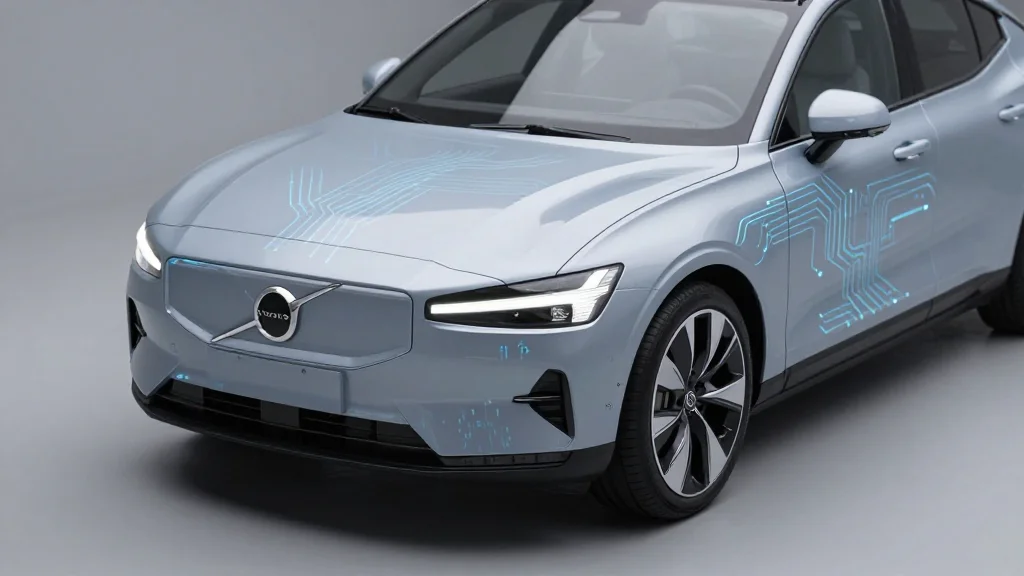
Volvo CTO Anders Bell Details Software‑First Strategy for EVs

Companies Mentioned
Why It Matters
Volvo's software‑first reorganization illustrates how legacy automakers are catching up with pure‑play EV companies that have built their products around code. By centralizing software development, Volvo can accelerate feature rollout, improve vehicle security, and reduce time‑to‑market, all of which are critical metrics for CTOs tasked with delivering next‑generation mobility solutions. The move also pressures competitors to rethink their own engineering silos, potentially reshaping supplier ecosystems and talent pipelines across the automotive sector. For CTOs, the Volvo case study provides a concrete blueprint for aligning hardware and software teams, adopting modern development practices, and leveraging over‑the‑air capabilities to extend vehicle lifecycles. As regulations tighten around emissions and cybersecurity, a software‑centric strategy becomes a strategic differentiator rather than a nice‑to‑have add‑on.
Key Takeaways
- •Volvo consolidates ~1,200 software engineers into a single global unit
- •New unified platform targets a 30% reduction in feature development cycle time
- •Adopts 800‑volt architecture for faster DC charging across EV lineup
- •Over‑the‑air updates to be rolled out for EX90 by early 2025
- •Developer portal to open later this year for third‑party app integration
Pulse Analysis
Volvo's pivot to a software‑first architecture is a textbook example of how traditional OEMs can leverage modern engineering practices to stay relevant in an EV‑dominated market. Historically, automakers have treated software as a peripheral function, often bundled with hardware teams that lacked the agility of tech firms. By creating a dedicated, centrally managed software organization, Volvo not only streamlines internal processes but also positions itself to compete on the same velocity metrics that define the success of companies like Tesla.
The strategic emphasis on an 800‑volt platform is also noteworthy. While many manufacturers are still on 400‑volt systems, the higher voltage enables faster charging and better energy efficiency—key selling points for fleet customers and premium buyers alike. This hardware decision dovetails with the software strategy: a more capable electrical architecture gives developers a richer set of data and control signals to build advanced driver‑assist and infotainment features.
From a market perspective, Volvo's move may accelerate the convergence of automotive and consumer tech talent pools. CTOs will increasingly need to recruit engineers fluent in cloud services, AI, and cybersecurity, rather than solely focusing on mechanical or electrical expertise. The upcoming developer portal could further democratize innovation, allowing startups to plug directly into Volvo's vehicle ecosystem. If successful, this could create a new revenue stream through app sales and subscription services, echoing the business models of smartphone platforms.
In the broader competitive landscape, Volvo's software‑first stance forces rivals to reassess their own development structures. Companies that continue to operate in fragmented silos risk longer development cycles and slower response to regulatory changes. As the industry heads toward higher levels of autonomy and connectivity, the ability to push rapid, secure software updates will become a decisive factor in brand perception and market share. Volvo's roadmap—full platform rollout by 2026 and early over‑the‑air updates—sets a clear timeline that other OEMs will likely benchmark against.
Overall, Volvo's reorganization is less about a single product launch and more about establishing a sustainable, scalable engine for future innovation. For CTOs, the lesson is clear: aligning software and hardware under a unified vision is no longer optional; it is a prerequisite for competing in the next decade of automotive technology.
Volvo CTO Anders Bell Details Software‑First Strategy for EVs
Comments
Want to join the conversation?
Loading comments...