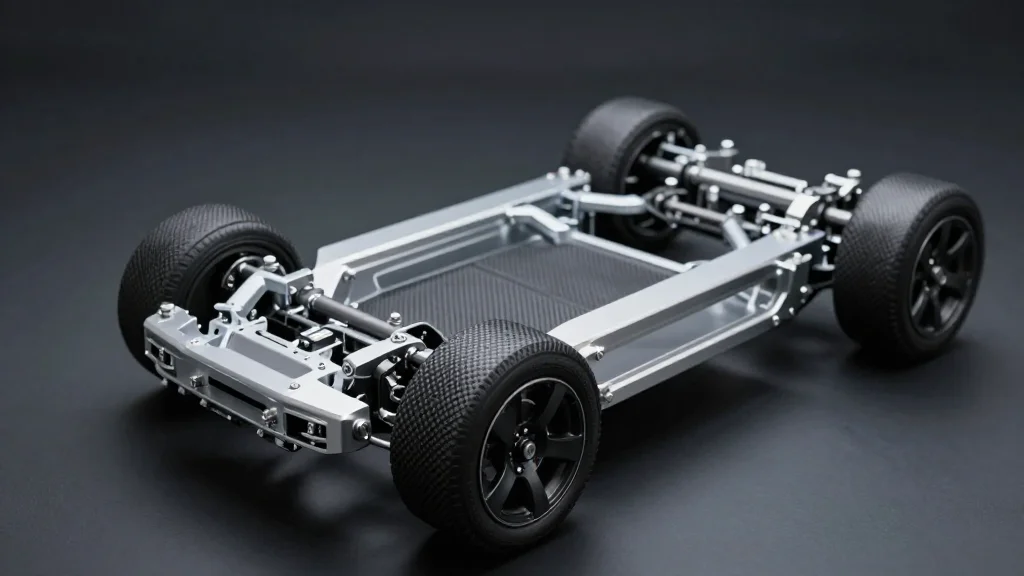
Xiaomi Launches Architecture Department for EVs, Reporting Directly to Lei Jun

Companies Mentioned
Why It Matters
The creation of a first‑level Architecture Department gives Xiaomi a structural advantage in an industry where platform decisions lock in revenue for years. By centralizing long‑term technical planning, the company can better anticipate disruptive trends such as ultra‑fast charging and solid‑state batteries, reducing the risk of costly redesigns. For CTOs across the sector, Xiaomi’s move highlights the growing importance of dedicated architecture groups that sit at the intersection of engineering, supply‑chain, and strategic planning. If successful, Xiaomi’s model could prompt other automakers—especially those still treating architecture as a subsidiary function—to rethink their organizational charts. The shift may accelerate the industry’s overall pace of innovation, as more firms invest in deep‑time research rather than short‑term feature add‑ons.
Key Takeaways
- •Xiaomi establishes a first‑level Architecture Department for its EV division, reporting directly to CEO Lei Jun.
- •The unit will coordinate platform strategy, powertrain R&D, and supplier integration for next‑gen vehicles.
- •Xiaomi’s SU7 sales have exceeded 258,000 units; YU7 delivered over 40,000 units in three months.
- •SU7 Ultra starts at 529,900 yuan (≈ $74,200); Nio ET9 starts at 760,000 yuan (≈ $106,400).
- •Analysts expect Xiaomi to achieve quarterly automotive profitability for the first time this year.
Pulse Analysis
Xiaomi’s decision to elevate architecture to a primary department reflects a broader industry trend where platform longevity outweighs the speed of incremental feature updates. Historically, automakers have struggled to balance the long development cycles of powertrain technology with market pressure for rapid model refreshes. By institutionalizing a dedicated architecture team, Xiaomi can allocate resources to high‑risk, high‑reward research—such as 800 kW fast‑charging and solid‑state batteries—without the distraction of day‑to‑day product tweaks.
The move also signals a strategic response to the commoditization of vehicle interiors and infotainment. As many competitors chase cost reductions through screen upgrades and seat redesigns, Xiaomi is betting that a differentiated technical foundation will create a defensible moat. This approach aligns with the company’s broader philosophy of integrating hardware, software, and services, leveraging its ecosystem strengths to deliver a seamless user experience that extends beyond the vehicle cabin.
Looking ahead, the Architecture Department’s success will hinge on its ability to translate long‑term concepts into manufacturable platforms within a realistic timeframe. If Xiaomi can deliver a new generation of EVs that combine ultra‑fast charging, higher energy density, and advanced driver‑assist features, it could force rivals to reallocate budget toward similar architecture functions, reshaping the competitive dynamics of the global EV market.
Xiaomi Launches Architecture Department for EVs, Reporting Directly to Lei Jun
Comments
Want to join the conversation?
Loading comments...