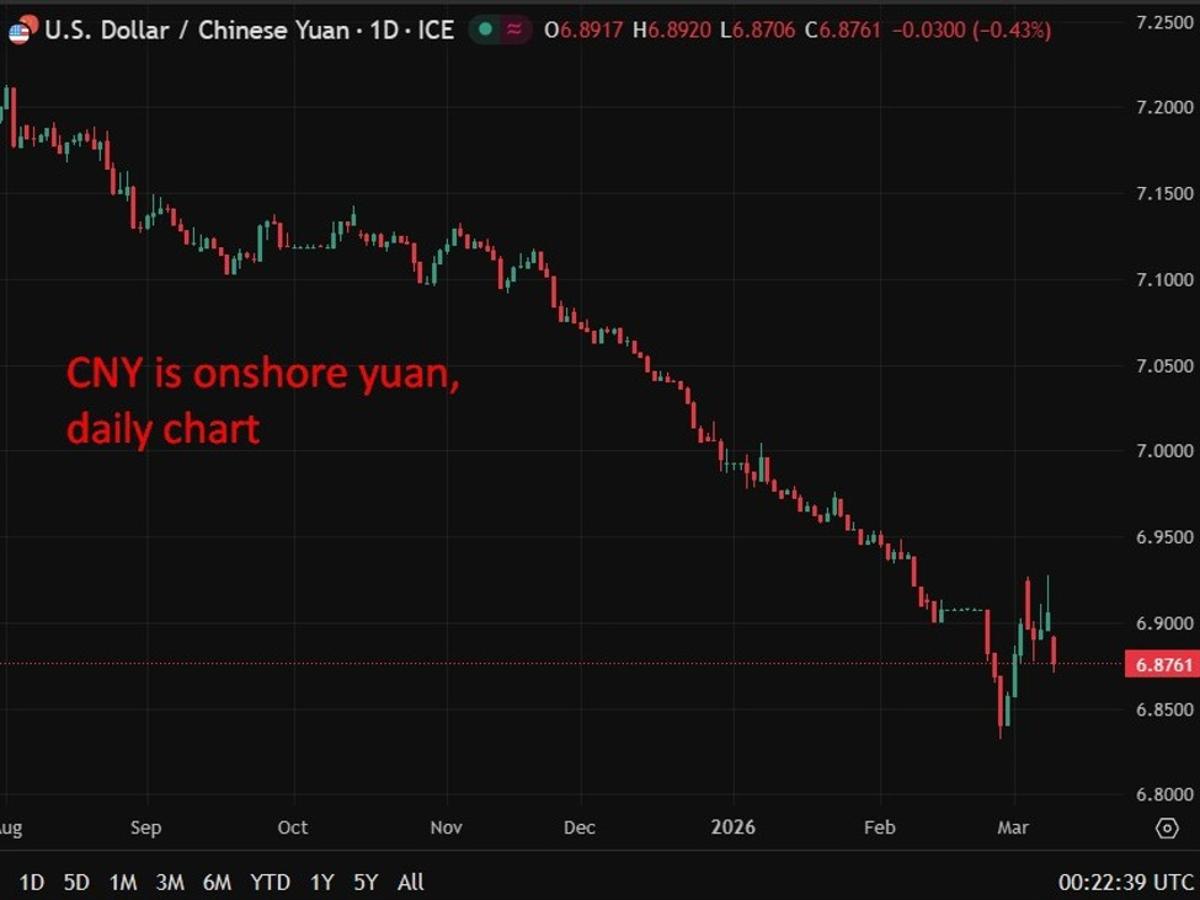
PBOC Is Expected to Set the USD/CNY Reference Rate at 6.8824 – Reuters Estimate
•March 11, 2026
0
Key Takeaways
- •Midpoint set at 6.8824, strongest in 35 months
- •Band allows ±2% movement around the reference rate
- •PBOC uses fixing to signal policy direction
- •Strong yuan may curb export competitiveness
- •Investors watch fixing for capital flow cues
Summary
The People’s Bank of China set the USD/CNY reference rate at 6.8824, a 35‑month low for the dollar and a record‑strength yuan. The fixing, announced around 0115 GMT, follows a managed‑float system that permits a ±2% trading band. By choosing a stronger midpoint, the PBOC signals a willingness to counter depreciation pressures despite a firm US dollar. Market participants will watch whether the central bank allows the yuan to appreciate further later in the day.
Pulse Analysis
China’s daily USD/CNY fixing remains a barometer of monetary policy intent. The PBOC calculates the midpoint using the prior close, global currency trends, and domestic variables such as capital flows and growth momentum. Because the yuan trades within a narrow ±2% band, any deviation from market expectations is quickly interpreted as a deliberate policy cue, allowing the central bank to steer market sentiment without overt intervention.
A stronger yuan at 6.8824 carries mixed implications for the Chinese economy. Export‑oriented firms may face tighter margins as overseas buyers feel the impact of a higher conversion rate, potentially prompting a shift toward higher‑value products or cost efficiencies. Conversely, a firmer currency can reduce imported inflation, support domestic consumption, and signal confidence in financial stability, which may attract foreign portfolio inflows seeking a stable macro environment.
For global investors, the PBOC’s fixing offers insight into how Beijing balances external pressures—such as a resilient US dollar and shifting rate expectations—with internal goals like growth and capital account management. Should the central bank allow the yuan to appreciate further, it could ease pressure on the country’s foreign‑exchange reserves and signal a gradual move toward market‑driven pricing. Traders will therefore monitor subsequent intraday moves and any ancillary policy tools, such as liquidity adjustments, to gauge the trajectory of China’s exchange‑rate strategy.
Comments
Want to join the conversation?