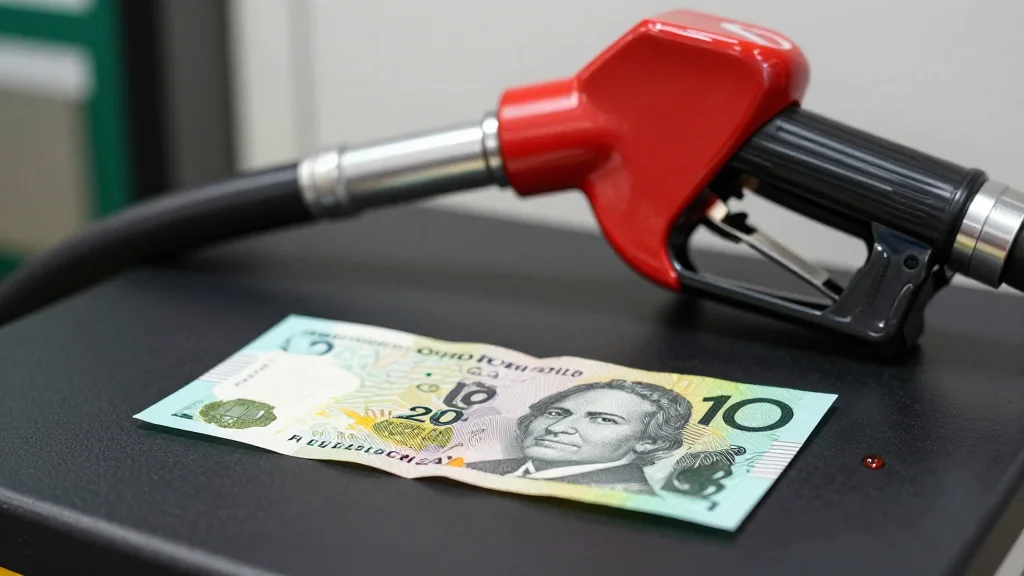
Australia's CPI Jumps to 4.6% as Energy Shock Fuels RBA Rate Hike Odds

Companies Mentioned
Why It Matters
The CPI surge and its impact on RBA policy are pivotal for the Australian dollar, which has been a bellwether for risk sentiment in the Asia‑Pacific region. A tighter monetary stance would likely strengthen the AUD, affecting trade‑weighted currency indices and influencing capital flows into commodity‑linked assets. Conversely, a decision to hold rates could signal a more accommodative stance, pressuring the AUD and potentially prompting a re‑pricing of emerging‑market currencies that are sensitive to Australian interest‑rate differentials. Beyond FX, the data highlights the vulnerability of advanced economies to external energy shocks. The 32.8% jump in fuel prices, driven by Middle‑East tensions, illustrates how geopolitical events can quickly translate into domestic inflation, forcing central banks to balance price stability against growth concerns. The RBA’s response will be watched by peers such as the Bank of Canada and the Bank of England, which face similar energy‑price dynamics.
Key Takeaways
- •Australia's March CPI rose 4.6% YoY, the highest since Sep 2023.
- •Fuel prices jumped 32.8% – the biggest monthly increase since 2017.
- •Market odds of a RBA rate hike to 4.35% now sit around 75%.
- •The Aussie dollar gained ~0.4% against the USD following the data.
- •Deputy Governor Andrew Hauser warned of "stagflation" as a central‑banker's nightmare.
Pulse Analysis
The latest CPI reading underscores a classic policy dilemma: how to tame a price surge that originates abroad without choking domestic growth. The RBA’s previous two hikes have already lifted the cash rate to 4.10%, yet the underlying trimmed‑mean inflation remains stubbornly above the 2‑3% target. If the central bank opts for a third 25‑basis‑point increase, it will reaffirm a data‑dependent, inflation‑first stance, likely cementing the AUD’s recent rally and reinforcing the carry‑trade narrative that favors higher‑yielding currencies.
However, the broader macro backdrop suggests caution. Household disposable income is already strained by record fuel costs, and consumer confidence has slipped to near‑record lows. A further rate hike could accelerate mortgage stress, especially for borrowers whose fixed‑rate periods are ending. The RBA must therefore weigh the marginal benefit of a tighter policy against the risk of pushing the economy toward a stagflation scenario—a risk highlighted by Deputy Governor Hauser and echoed in market commentary.
Looking ahead, the RBA’s decision will set the tone for other central banks grappling with similar energy‑price shocks. A decisive hike could trigger a wave of tightening across the Pacific, while a hold might embolden policymakers elsewhere to pause and assess the durability of inflationary pressures. In either case, the AUD will remain a key barometer for how global commodity and energy dynamics translate into monetary policy and currency markets.
Australia's CPI Jumps to 4.6% as Energy Shock Fuels RBA Rate Hike Odds
Comments
Want to join the conversation?
Loading comments...