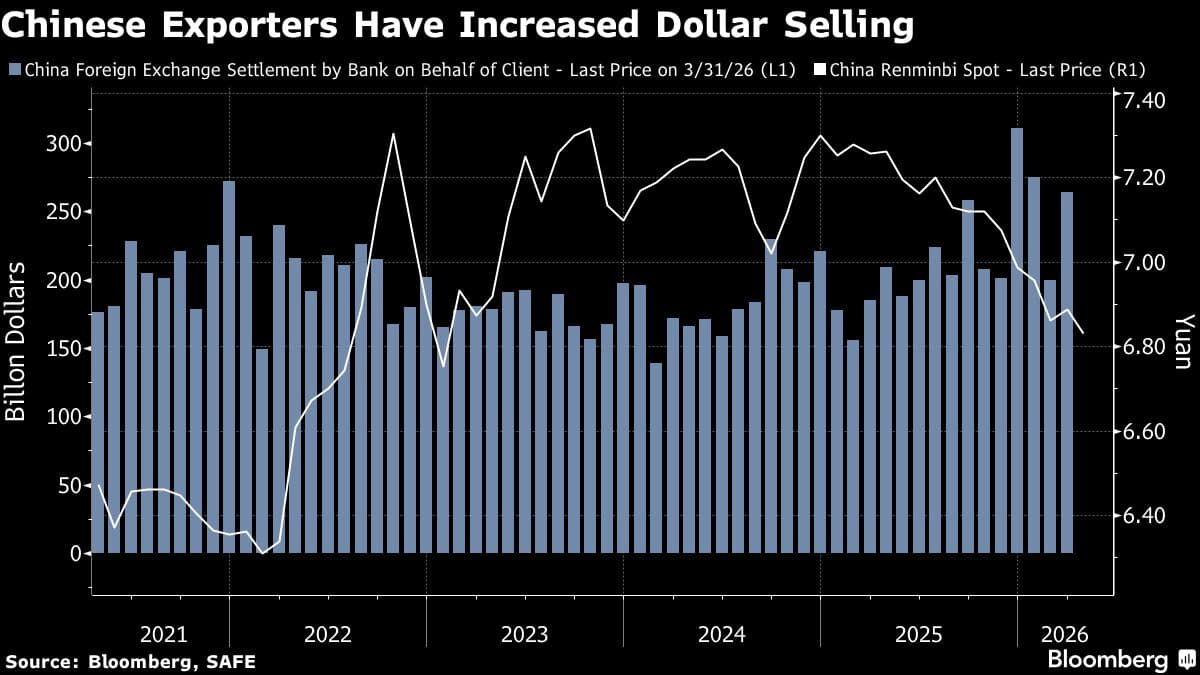
China Exporters Beset by Yuan Surge Look to Sell Dollar Rallies
Why It Matters
A stronger yuan squeezes export margins, prompting firms to adopt aggressive currency‑hedging tactics that could reshape pricing and cash‑flow management in China’s export‑driven industries.
Key Takeaways
- •Exporters face losses as yuan strengthens against dollar
- •Firms plan to sell dollars on any rally
- •Anticipated further yuan appreciation drives hedging strategies
- •Canton Fair highlights currency risk for Chinese exporters
- •Dollar‑linked pricing may become standard for overseas sales
Pulse Analysis
The recent surge in the Chinese yuan has caught many exporters off guard, turning a traditionally competitive advantage into a margin‑eroding liability. While the People’s Bank of China has signaled a willingness to let market forces dictate the exchange rate, the rapid appreciation has outpaced many companies’ risk‑management frameworks. For firms like Gloria Yu’s bicycle accessories business, the timing of contracts and invoicing in dollars now directly impacts profitability, prompting a reevaluation of pricing structures and supply‑chain financing.
In response, exporters are increasingly turning to proactive dollar‑selling strategies, effectively short‑selling the greenback whenever it rallies. This approach mirrors classic hedging techniques but is being applied more aggressively as firms anticipate continued yuan strength. Financial institutions in Guangzhou and Shanghai are seeing heightened demand for forward contracts, options, and FX swaps tailored to export‑oriented clients. By locking in dollar proceeds ahead of time, companies aim to stabilize cash flows and protect against further currency volatility, albeit at the cost of potentially foregoing upside gains if the yuan later weakens.
The broader implications extend beyond individual firms. A systematic shift toward dollar‑linked pricing could alter competitive dynamics in global markets, as Chinese goods become relatively more expensive for foreign buyers. This may incentivize buyers to seek alternative sourcing or negotiate longer contract terms with built‑in currency adjustments. Policymakers might also feel pressure to intervene, either by easing monetary policy or providing targeted FX support to export‑heavy regions. For investors and analysts, monitoring yuan trends and exporters’ hedging activity will be crucial for assessing the health of China’s export sector and its ripple effects on global trade flows.
China Exporters Beset by Yuan Surge Look to Sell Dollar Rallies
Comments
Want to join the conversation?
Loading comments...