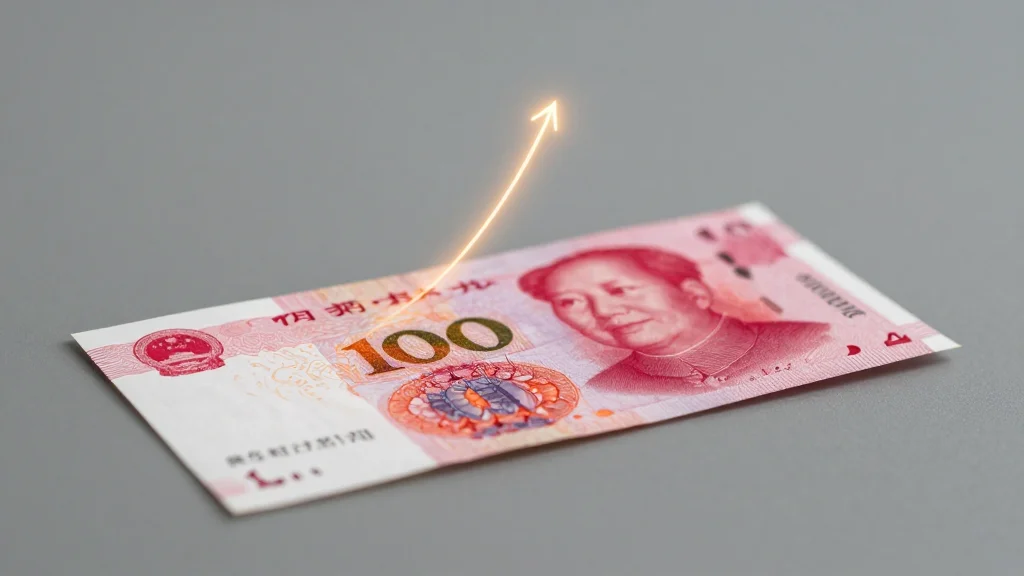
China's CPI Jumps to 1.2% in April, Fueling Yuan Weakness

Why It Matters
The acceleration of China's consumer price inflation to 1.2% signals a potential shift in the country's monetary policy, which could tighten liquidity and weaken the yuan. A softer yuan raises the cost of imported commodities for Chinese manufacturers, influencing global supply chains and commodity price benchmarks. Moreover, currency movements affect the valuation of Chinese equities and the attractiveness of the country's bonds to foreign investors, shaping capital flows across emerging markets. For policymakers worldwide, China's inflation trajectory offers a real‑time case study of how energy price shocks and domestic demand interact in a large, partially open economy. The outcome will inform how other central banks balance growth support against price stability, especially as they navigate their own post‑pandemic inflation challenges.
Key Takeaways
- •China's CPI rose to 1.2% in April, above the 0.9% forecast.
- •Factory‑gate inflation hit a 45‑month high, driven by rising energy costs.
- •The yuan fell roughly 0.6% against the dollar following the data release.
- •Analysts warn the PBOC may consider tightening policy to curb inflation.
- •A weaker yuan could raise import costs for Chinese manufacturers and affect global commodity prices.
Pulse Analysis
The latest inflation data puts Beijing at a crossroads. Historically, the PBOC has been reluctant to raise rates in a fragile growth environment, preferring targeted liquidity tools. However, the current CPI reading, coupled with a sharp rise in factory‑gate prices, narrows the policy space. If the central bank opts for a modest rate hike or a higher reserve requirement, it would signal a decisive pivot toward price stability, likely triggering a short‑term sell‑off in the yuan and a re‑pricing of risk assets tied to China.
From a market perspective, the yuan's depreciation could have a two‑fold effect. Export‑oriented firms may benefit from a competitive pricing edge, but import‑dependent sectors—particularly those reliant on energy and raw materials—will face higher cost pressures, potentially eroding profit margins. This dynamic could reshape sectoral performance within China's equity markets, favoring consumer‑discretionary and technology firms over heavy industry.
Globally, the ripple effect extends to commodity markets. A weaker yuan makes dollar‑priced commodities more expensive for Chinese buyers, which could temper demand for metals and oil, dampening price rallies that have been fueled by China's reopening. Investors should watch for shifts in China's import data and any forward guidance from the PBOC in the next policy meeting, as these will be the primary barometers for the yuan's future path and the broader implications for emerging‑market currencies.
China's CPI Jumps to 1.2% in April, Fueling Yuan Weakness
Comments
Want to join the conversation?
Loading comments...