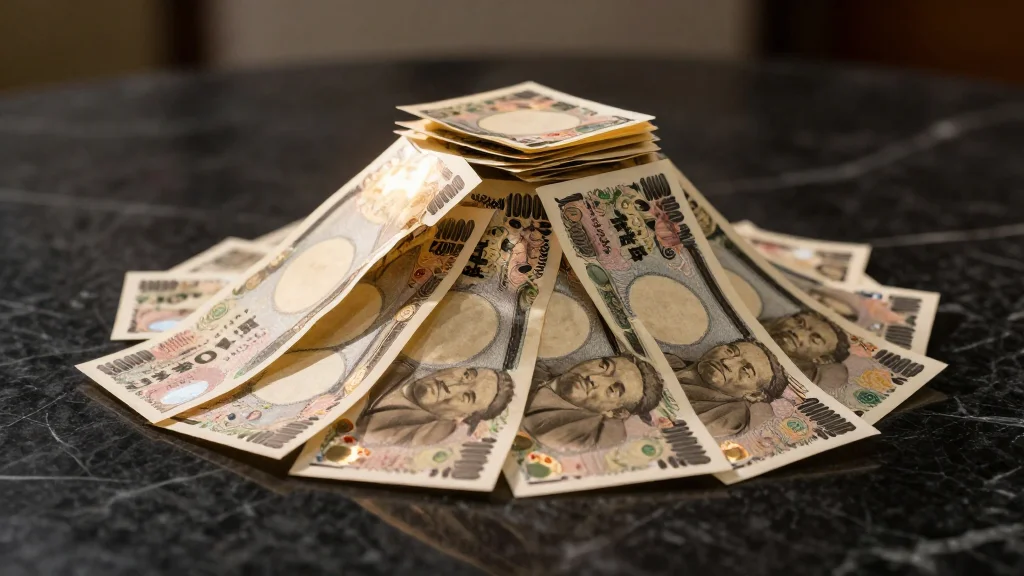
Citi Says Japan Could Deploy Up to ¥30 Trillion in Yen‑Buy Interventions

Companies Mentioned
Why It Matters
Japan’s potential to deploy up to ¥30 trillion in yen‑buying operations could reshape the dynamics of the global foreign‑exchange market. By absorbing a large share of dollar supply, the intervention would support the yen, easing pressure on Japan’s import‑dependent economy and potentially stabilizing inflationary trends. At the same time, a massive drawdown of Japan’s $1.3 trillion reserves would signal a willingness among major economies to use FX tools aggressively, prompting other central banks to reconsider their own intervention thresholds. For investors, the prospect of a large‑scale yen‑support operation introduces new volatility risk to currency‑linked assets, from equities of export‑oriented Japanese firms to sovereign bond yields. Traders will need to factor in the possibility of rapid, policy‑driven moves that could override technical trends, while policymakers worldwide will watch Japan’s actions as a barometer for the acceptability of deep reserve utilization in defending national currencies.
Key Takeaways
- •Citi estimates ¥10 trillion ($63 bn) spent buying yen in the past two weeks.
- •Potential capacity to expand purchases to ¥30 trillion ($190 bn) if reserves are drawn down.
- •Japan’s foreign‑exchange reserves exceed $1.3 trillion, providing the funding base.
- •Previous interventions: ¥9.1 trillion ($65 bn) in 2022 and ¥15.2 trillion ($98 bn) in 2024.
- •USD/JPY fell to 155 yen intra‑session before rebounding to around 158 yen.
Pulse Analysis
The yen’s recent slide past the ¥160 per dollar mark has forced Tokyo to revive a playbook that was largely dormant after the 2022 and 2024 interventions. Citi’s projection of a ¥30 trillion ceiling is not merely a theoretical exercise; it reflects a strategic calculus that weighs the cost of reserve depletion against the economic pain of a weak yen—higher import costs, squeezed corporate margins, and a potential uptick in inflation. Historically, Japan has been reluctant to exhaust its reserves, preferring to let market forces dictate the currency’s path. However, the current confluence of a strong dollar, elevated oil prices, and a resilient equity market creates a perfect storm that could justify a more aggressive stance.
From a market‑structure perspective, such a large‑scale intervention would likely tighten dollar liquidity in the Asia‑Pacific region, creating ripple effects for other emerging‑market currencies that are often priced against the yen or the dollar. Traders could see heightened spreads and increased volatility, especially in cross‑currency pairs like USD/THB or EUR/JPY. Moreover, the signal that a major economy is prepared to burn through a sizable chunk of its reserves may embolden other central banks to consider similar moves, potentially reigniting a debate about the role of sovereign FX interventions in an era dominated by algorithmic trading and high‑frequency flows.
Looking forward, the key variable will be the policy narrative from Japan’s Ministry of Finance. If officials frame the intervention as a temporary, targeted response to a specific market distortion, the market may view it as a one‑off event. Conversely, language that hints at a willingness to sustain large‑scale purchases could anchor expectations of a more interventionist stance, prompting a re‑pricing of risk across the FX spectrum. Investors should therefore monitor not only the raw numbers of yen purchases but also the tone of official communications, as both will dictate the yen’s trajectory and the broader health of global FX liquidity.
Citi Says Japan Could Deploy Up to ¥30 trillion in Yen‑Buy Interventions
Comments
Want to join the conversation?
Loading comments...