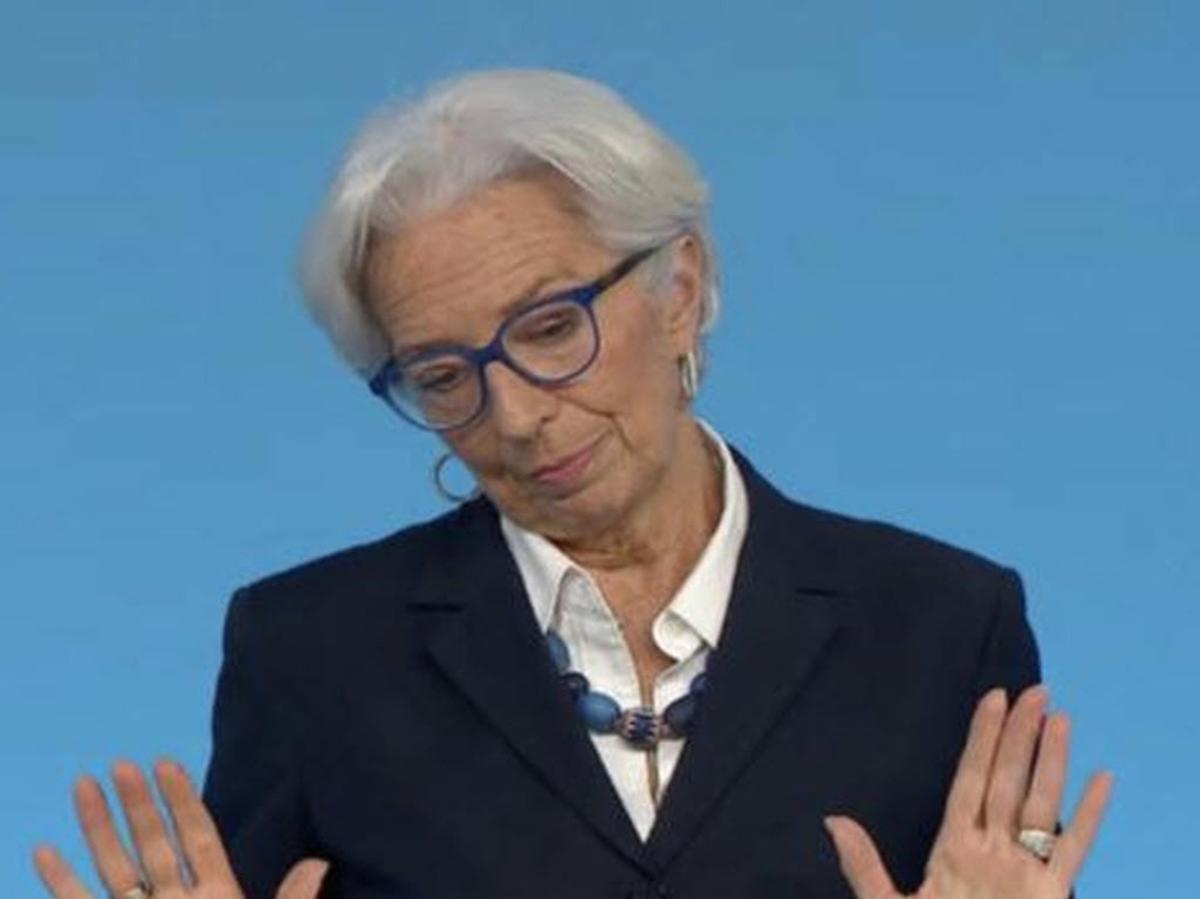
ECB President Lagarde: My Baseline Is that I Will Stay Until the End of My Term
•February 26, 2026
0
Why It Matters
An early exit could reshape ECB leadership ahead of a pivotal French election, affecting monetary policy continuity and market confidence across the eurozone.
Key Takeaways
- •Lagarde signals intent to serve full ECB term.
- •Speculation of departure before April 2025 persists.
- •Early exit could align with French presidential election.
- •Potential successor may be politically favored by Macron.
- •Market watches for policy continuity amid leadership uncertainty.
Pulse Analysis
Christine Lagarde’s recent remarks underscore a delicate balancing act between personal commitment and political flexibility. By describing her stay until the end of the term as a "baseline," she signals confidence while preserving the option to step down earlier if circumstances demand. This nuanced language reflects a broader trend among central bankers to maintain strategic ambiguity, allowing them to adapt to evolving economic data and political pressures without committing to a rigid timeline.
The prospect of an early departure before April 2025 carries significant political weight. A resignation ahead of France’s presidential election would give President Emmanuel Macron and other EU leaders a decisive role in nominating a successor, potentially aligning the ECB’s future leadership with domestic political agendas. Such a scenario raises questions about the central bank’s independence, especially if the new president is perceived as a political appointee rather than a technocratic figure. The timing also intersects with key policy cycles, including the ECB’s inflation‑targeting framework and upcoming monetary‑policy meetings, amplifying the stakes for both policymakers and markets.
Financial markets are already factoring in the leadership uncertainty, with euro‑zone bond yields and currency volatility reflecting heightened risk premia. Investors seek reassurance that monetary policy will remain consistent, regardless of who occupies the chair. An early transition could prompt a reassessment of forward guidance, influencing asset allocation decisions across equities, fixed income, and foreign exchange. Consequently, stakeholders—from sovereign debt managers to multinational corporations—are closely monitoring any signals from Lagarde and EU officials, as the eventual outcome will shape the euro area’s economic trajectory and the credibility of its central bank.
ECB president Lagarde: My baseline is that I will stay until the end of my term
0
Comments
Want to join the conversation?
Loading comments...