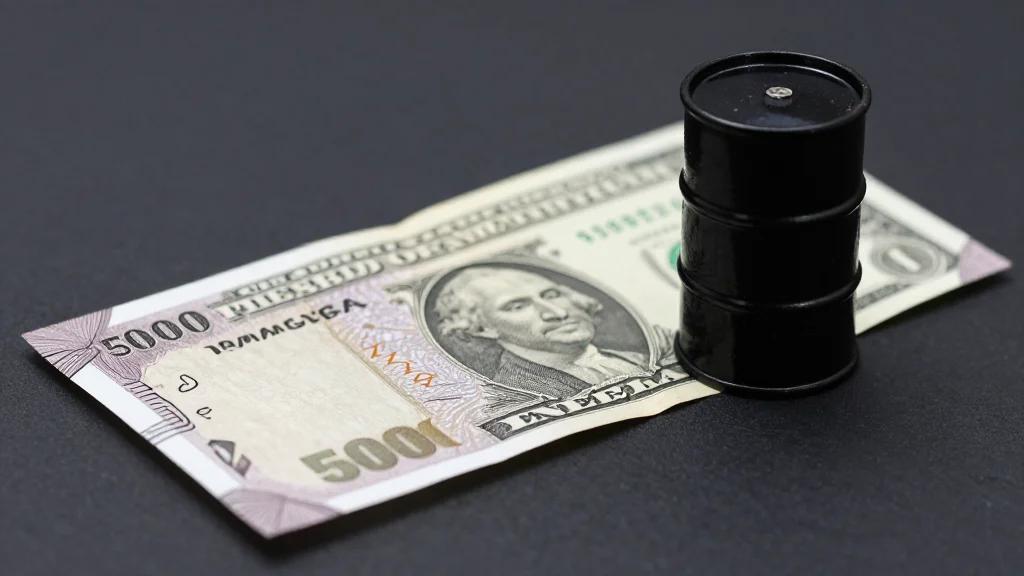
Indian Rupee Slides to 93.75 per Dollar as Oil Spikes and West Asia Tensions Weigh

Why It Matters
The rupee’s slide to 93.75 per dollar underscores the vulnerability of emerging‑market currencies to commodity price shocks and geopolitical risk. For India, a weaker rupee raises the cost of oil imports, widens the trade deficit, and can strain corporate earnings that are dollar‑denominated. The RBI’s NDF policy change also signals a shift in how the central bank balances market liquidity against speculative risk, a trade‑off that could influence future monetary policy decisions. Beyond India, the episode highlights how tightly linked currency markets are to global energy dynamics and regional security developments. Investors in other emerging economies will likely monitor similar pressures, especially where central banks are experimenting with derivative market reforms.
Key Takeaways
- •Rupee fell to 93.75 per dollar, its third consecutive decline.
- •Crude oil price spikes and West Asia peace‑talk uncertainty drove the weakness.
- •RBI partially rolled back April 1 NDF restrictions, keeping a $100 million cap.
- •Foreign capital outflows and equity market selling added downward pressure.
- •Future RBI policy meetings will be closely watched for further NDF guidance.
Pulse Analysis
The rupee’s recent trajectory reflects a classic confluence of external and domestic forces. Historically, India’s currency has been sensitive to oil price movements because the nation imports roughly 80% of its crude. When oil prices climb, the trade deficit widens, and the rupee typically depreciates. This time, the price jump coincided with a diplomatic impasse in West Asia, amplifying risk aversion among foreign investors and prompting a pull‑back from Indian equities.
The RBI’s decision to ease NDF limits is a nuanced move. On one hand, it restores a tool that market participants use for hedging, potentially stabilising the foreign‑exchange market in the medium term. On the other, it re‑introduces a speculative avenue that can exacerbate short‑term volatility, especially when macro‑economic fundamentals are already under stress. The $100 million cap acts as a safety valve, but its effectiveness will depend on enforcement and the willingness of banks to stay within the limit.
Going forward, the rupee’s path will likely hinge on two variables: oil price direction and the resolution of West Asia tensions. A de‑escalation in the region could ease risk premiums and attract capital back to India, while a sustained oil rally would keep the currency under pressure. The RBI’s next policy signal—whether to tighten NDF exposure or to further liberalise—will be a key barometer for market participants assessing the balance between liquidity and stability in India’s foreign‑exchange market.
Indian rupee slides to 93.75 per dollar as oil spikes and West Asia tensions weigh
Comments
Want to join the conversation?
Loading comments...