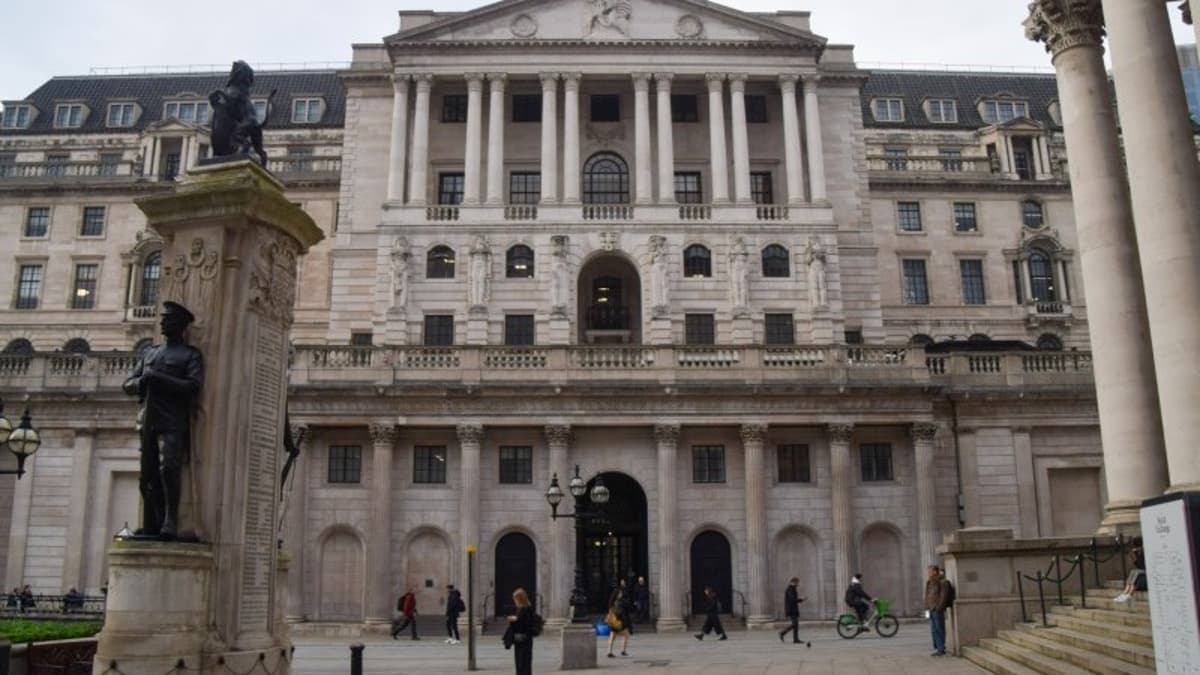
Iran Deal Takes Bank of England Rate Hike Back Off Table
Why It Matters
The shift reduces near‑term inflation risk, lowering the likelihood of immediate monetary tightening and preserving market stability. It also underscores how geopolitical developments directly influence central‑bank policy in the UK.
Key Takeaways
- •Markets price 25% chance of a July BoE rate hike
- •Energy cap set to rise 13% in July, fall 7% in October
- •Oil projected at $97/bbl in Q3, $120/bbl if Hormuz stays disrupted
- •BoE likely to vote 7‑2 against a rate change this week
Pulse Analysis
The Bank of England’s policy outlook has been dramatically reshaped by the recent US‑Iran nuclear agreement, which has eased fears of a prolonged disruption in the Strait of Hormuz. Analysts now view the prospect of a July rate hike as marginal, with market pricing indicating only a quarter‑chance of any move. This softening of expectations reflects a broader reassessment of inflation dynamics, as the central bank’s 4% ceiling—once considered a red line—appears increasingly unattainable given current energy price trajectories.
Energy markets are at the heart of the new inflation narrative. Natural‑gas futures for the coming winter have slipped back to pre‑war levels, directly influencing the UK’s household energy price cap, which is slated to jump 13% in July but could retreat 7% by October. Oil price forecasts remain modest, with a baseline of $97 per barrel for the third quarter, though a renewed Hormuz bottleneck could push prices to $120 per barrel. Even in the higher‑price scenario, inflation is projected to peak near 3.8%, still shy of the Bank’s 4% trigger for tightening, suggesting that immediate rate hikes remain unlikely.
Policy implications are clear: the BoE is expected to vote 7‑2 against a rate change, maintaining the status quo while monitoring the evolving geopolitical landscape. The committee’s split reflects differing views on whether post‑pandemic price‑setting behavior has permanently shifted. Nonetheless, the prevailing data—slowing wage growth, a resilient jobs market, and subdued second‑round inflation risks—support a longer‑term view that rate cuts may not arrive until 2027. This timeline, though not yet priced by markets, highlights the delicate balance between inflation control and economic growth in a post‑war, post‑deal environment.
Iran deal takes Bank of England rate hike back off table
Comments
Want to join the conversation?
Loading comments...