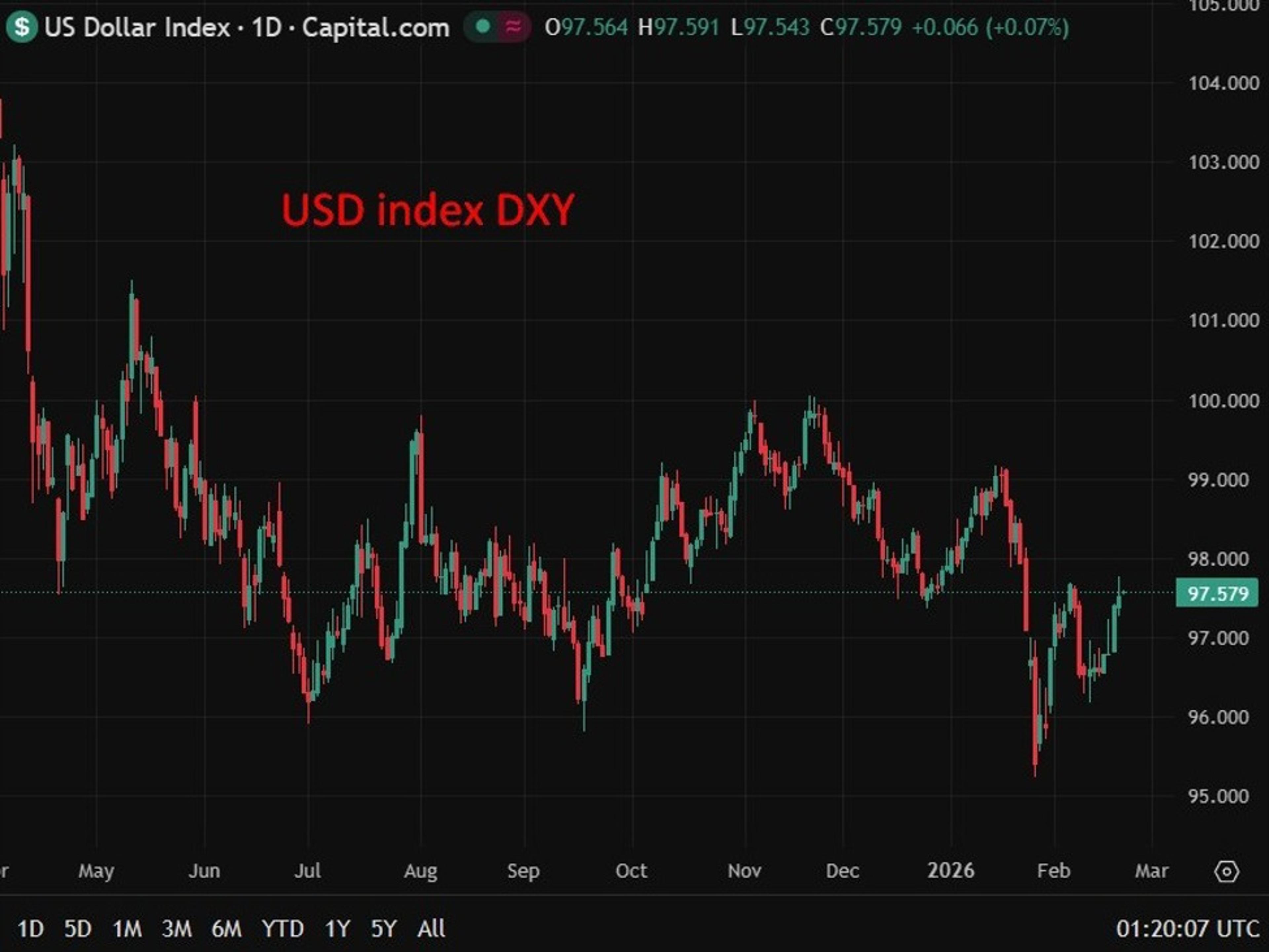
USD Gains on Strong US Data Unlikely to Last; Policy Uncertainty, Political Risks to Cap
•February 20, 2026
0
Why It Matters
The outlook suggests that despite solid economic data, policy and political risks may cap further dollar gains, influencing currency markets and global capital flows.
Key Takeaways
- •Dollar strength driven by durable goods, housing, industrial data.
- •Fed minutes signal caution on further rate cuts.
- •Political uncertainty under Trump threatens dollar sentiment.
- •White House criticism of Fed analysis raises independence concerns.
- •MUFG expects volatility, limited upside for greenback.
Pulse Analysis
The latest surge in the U.S. dollar was anchored in a trio of upbeat economic releases—durable‑goods orders, housing activity, and industrial production—all surpassing forecasts. These data points reinforced expectations of resilient growth, prompting investors to price in higher yields. Coupled with Federal Reserve minutes that emphasized a cautious approach to additional rate cuts, the market initially interpreted the backdrop as supportive of a stronger greenback. However, such momentum often hinges on the perception of policy continuity and credibility.
Beyond the numbers, the political environment under President Donald Trump introduces a layer of uncertainty that can quickly erode confidence in the currency. Recent remarks from National Economic Council Director Kevin Hassett, which criticized a New York Fed analysis on tariffs, exemplify how the White House may challenge the autonomy of key monetary institutions. Market participants closely monitor any sign of interference, as perceived threats to Fed independence can destabilize expectations around inflation control and interest‑rate pathways, thereby dampening demand for dollar‑denominated assets.
For investors, the MUFG outlook signals a need for caution. While short‑term data surprises may generate episodic rallies, structural and political headwinds are likely to limit sustained upside and increase volatility. Portfolio managers might consider diversifying currency exposure, employing hedges, or focusing on assets less sensitive to U.S. policy swings. Understanding the interplay between economic fundamentals and political risk will be crucial for navigating the foreign‑exchange landscape in the months ahead.
USD gains on strong US data unlikely to last; policy uncertainty, political risks to cap
MUFG says recent dollar gains driven by stronger U.S. data and cautious Fed minutes are unlikely to last. Political uncertainty and concerns about Fed independence under President Trump may keep investor sentiment toward the greenback fragile.
Summary:
-
MUFG’s Derek Halpenny says recent U.S. dollar strength is unlikely to be sustained.
-
Durable goods, housing and industrial production data all beat expectations.
-
Fed minutes showed caution over further rate cuts, supporting the greenback.
-
Halpenny argues dollar sentiment remains fragile under President Trump.
-
Policy unpredictability and rhetoric around Fed independence weigh on outlook.
-
National Economic Council Director Kevin Hassett criticised New York Fed tariff analysis.
-
Halpenny sees such criticism as an example of potential White House interference risk
The U.S. dollar’s rebound following stronger-than-expected economic data and hawkish-leaning Federal Reserve minutes is unlikely to prove durable, according to MUFG Bank’s Derek Halpenny.
The greenback firmed after a run of upside surprises in key activity indicators. Data on durable goods orders, housing activity and industrial production all exceeded expectations, reinforcing the view that U.S. growth momentum remains resilient. In addition, minutes from the latest meeting of the Federal Reserve highlighted caution among policymakers over delivering further interest rate cuts, suggesting a more patient approach to easing.
While that combination typically supports the dollar through higher yield expectations and growth outperformance, Halpenny argues the broader backdrop leaves the currency vulnerable.
He contends that investor sentiment toward the dollar is likely to remain fragile as long as Donald Trump remains in office, citing policy unpredictability and recurring tensions around central bank independence. In his view, political noise risks overshadowing near-term data strength.
Halpenny pointed specifically to comments from National Economic Council Director Kevin Hassett, who criticised analysis from the New York Fed regarding tariffs. The episode, he suggested, serves as an example of how the White House could challenge or pressure institutional independence, a factor that can weigh on foreign investor confidence.
Markets remain sensitive to any perceived erosion of Fed autonomy, particularly at a time when monetary policy credibility plays a central role in anchoring inflation expectations and sustaining capital inflows.
In that context, MUFG argues that while cyclical data surprises may generate episodic dollar strength, structural and political risks could cap upside and contribute to ongoing volatility.
Because its Friday, here's a Dolla
This article was written by Eamonn Sheridan at investinglive.com.
0
Comments
Want to join the conversation?
Loading comments...