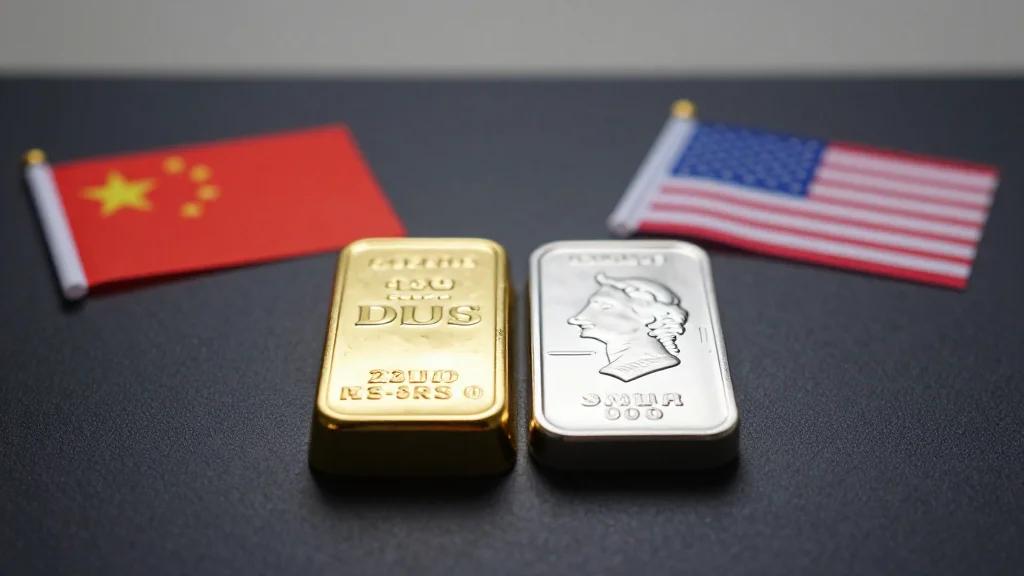
PBOC Expected to Set USD/CNY at 6.8173 as Yuan Slides to Three‑Year Low

Why It Matters
The yuan’s slide to a three‑year low reshapes the competitive landscape for Chinese exporters, potentially boosting price advantage in overseas markets while raising the cost of foreign debt repayments. For investors, the PBOC’s expected midpoint signals how Beijing balances growth, capital stability, and external pressures, informing decisions on emerging‑market exposure and currency‑hedge strategies. Additionally, the move highlights the interconnectedness of geopolitical developments—such as U.S.–Iran talks—and currency markets, underscoring the need for real‑time risk assessment. A sustained weaker yuan could also influence the People’s Bank of China’s broader financial reforms, including the gradual liberalization of the onshore‑offshore currency corridor and the push for a more market‑driven exchange rate mechanism. These reforms have implications for foreign direct investment, cross‑border financing, and the global positioning of the renminbi as a reserve currency.
Key Takeaways
- •PBOC expected to set USD/CNY reference rate at 6.8173 (Reuters estimate).
- •Yuan hits its lowest level in three years amid dollar weakness.
- •Managed‑floating system allows a ±2 % daily trading band around the midpoint.
- •Market sentiment tied to hopes for U.S.–Iran diplomatic talks.
- •Potential for PBOC intervention if yuan approaches lower band limit.
Pulse Analysis
The forecasted 6.8173 fixing is more than a technical number; it reflects a strategic choice by Beijing to let market forces play a larger role in currency valuation. Historically, the PBOC has intervened aggressively when the yuan approached the edges of its band, especially during periods of capital flight or sharp dollar rallies. This time, however, the central bank appears to be testing the elasticity of its managed float, perhaps to signal confidence in domestic liquidity buffers and to avoid the political fallout of overt market manipulation.
From a macro perspective, the yuan’s depreciation aligns with China’s broader goal of sustaining export momentum amid a slowing global economy. A weaker currency makes Chinese goods more price‑competitive, offsetting weaker demand in key markets. Yet the trade‑off is higher import costs and increased pressure on firms with dollar‑denominated debt. The PBOC’s calibrated approach—allowing a modest slide while retaining the option to step in—mirrors its recent pattern of ‘leaning against the wind’ without abandoning the credibility of its exchange‑rate framework.
Looking forward, the yuan’s trajectory will be a litmus test for the interplay between geopolitical risk and monetary policy. If U.S.–Iran negotiations bear fruit and the dollar weakens further, the yuan could breach the lower 2 % band, forcing the PBOC to decide between a defensive intervention or a continued market‑driven path. Conversely, a resurgence in U.S. rate hikes or renewed geopolitical tension could reverse the trend, prompting a rapid appreciation and potential capital inflows. Investors should therefore monitor not only the daily fixing but also the broader policy signals emanating from Beijing’s financial regulators, as these will shape the risk‑reward calculus for currency exposure in the coming months.
PBOC Expected to Set USD/CNY at 6.8173 as Yuan Slides to Three‑Year Low
Comments
Want to join the conversation?
Loading comments...