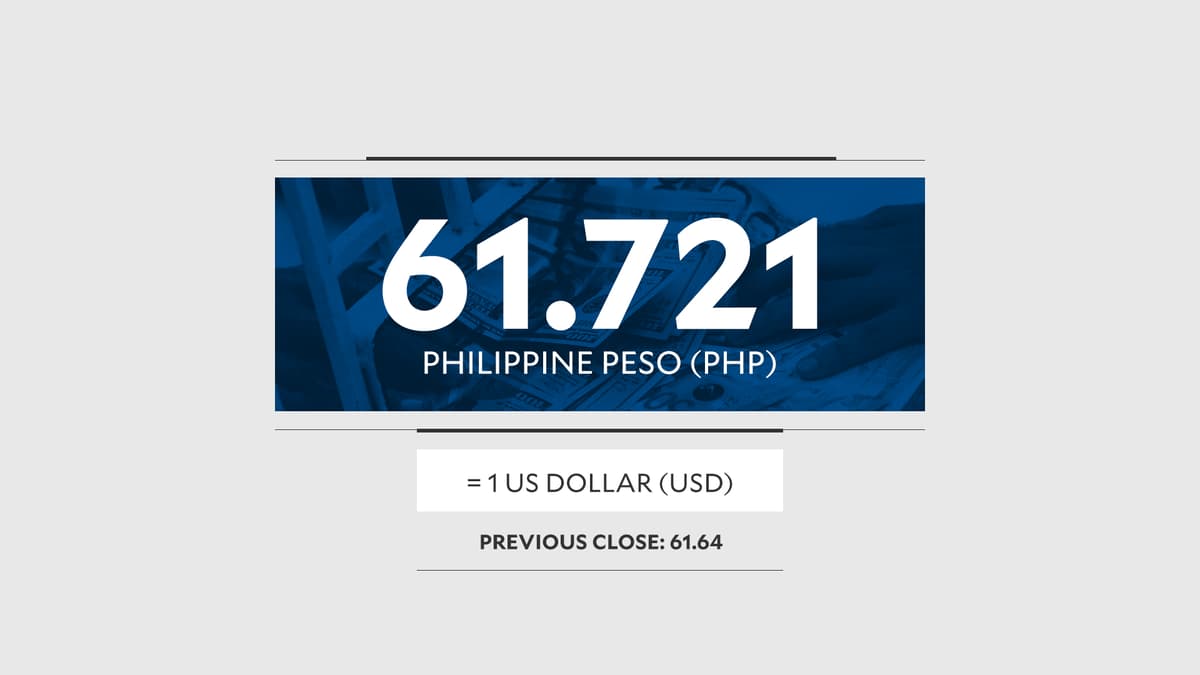
Peso Closes Week at New Record Low
Why It Matters
A weaker peso raises import costs and inflation pressure in a consumption‑driven economy, while the Fed‑driven dollar strength signals tighter global financing conditions for emerging markets. The slowdown forecast underscores heightened risk for investors and policymakers alike.
Key Takeaways
- •Peso hit 61.721 per dollar, a new weekly record low.
- •Dollar rose >1% as Fed likely keeps rates high.
- •Trading volume fell to $1.2B, down from $1.6B.
- •Oxford Economics cuts Philippines growth forecast to 3.5%.
- •Central bank may intervene to support peso at key levels.
Pulse Analysis
The latest slide in the Philippine peso reflects a broader macro‑economic tug‑of‑war between a strengthening US dollar and domestic vulnerabilities. As the Federal Reserve signals a commitment to keep policy rates elevated to combat persistent inflation, the greenback has surged, pulling emerging‑market currencies lower. For the Philippines, the peso’s dip to 61.721 per dollar not only inflates the cost of essential imports but also tightens monetary conditions, eroding real wages in a market already strained by rising consumer prices.
Economic analysts at Oxford Economics have revised the country’s 2026 growth projection to 3.5%, a sharp downgrade from the near‑6% outlook earlier this year. The revision places the Philippines on a slower growth trajectory than many of its regional peers, though it still outpaces economies such as South Korea and Japan. The slowdown is attributed to weaker domestic demand, heightened inflation, and geopolitical headwinds stemming from the Middle East conflict, which together threaten to curb spending and investment.
Policymakers face a delicate balancing act. While the Bangko Sentral ng Pilipinas may step in with targeted interventions to stabilize the peso at critical support levels, such actions risk depleting foreign‑exchange reserves if the dollar’s rally persists. Investors are likely to monitor the central bank’s response, the trajectory of US Treasury yields, and any shifts in Fed policy. In the meantime, businesses dependent on imported inputs must hedge currency risk, and consumers may feel the pinch of higher prices, underscoring the broader implications of a weaker peso for the Philippine economy.
Peso closes week at new record low
Comments
Want to join the conversation?
Loading comments...