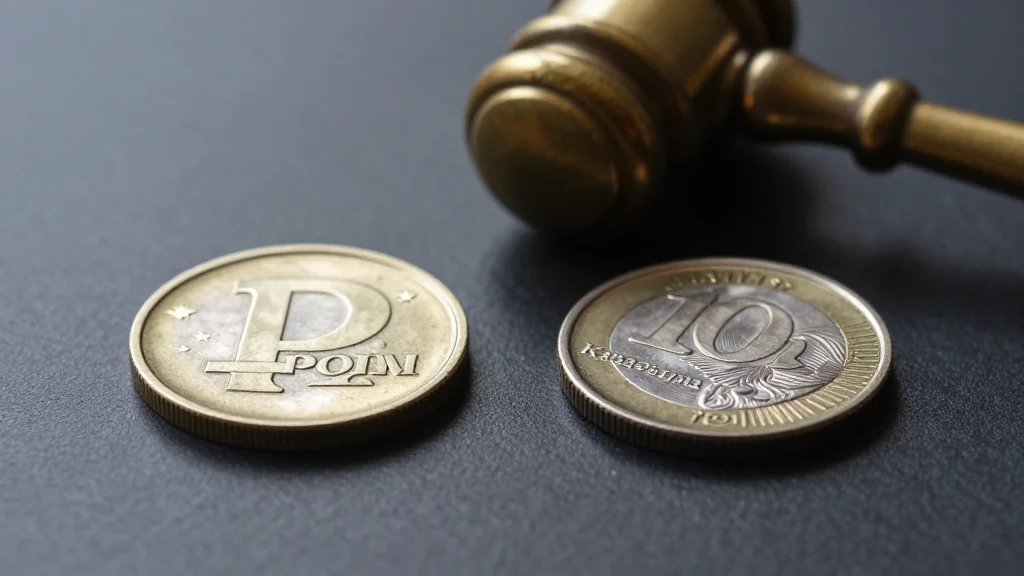
Russia's Ruble Holds Steady After New Ten‑Ge Swap, While Sanctions Target Ruble‑Pegged Crypto

Companies Mentioned
Why It Matters
The ruble's steadiness after the ten‑ge swap signals that traditional central‑bank tools remain effective in shoring up a currency under sanctions pressure. At the same time, the UK's crackdown on ruble‑pegged crypto highlights the growing intersection of digital assets and geopolitical finance. Together, these moves illustrate how state actors are adapting conventional and novel mechanisms to preserve financial stability and limit sanction evasion. For market participants, the developments affect everything from corporate hedging strategies to retail investors holding ruble‑denominated assets. A stable ruble reduces foreign‑exchange risk for Russian exporters, while tighter crypto controls may push illicit flows into more opaque channels, raising compliance costs for global financial institutions.
Key Takeaways
- •Russia and Kazakhstan signed a ruble‑tenge currency swap, exchanging up to 10 billion roubles.
- •The swap aims to boost liquidity for Russian banks and support cross‑border trade.
- •The UK added the A7 crypto network and exchange HTX to its sanctions list, targeting ruble‑pegged stablecoins.
- •A7 is alleged to have moved over $90 billion in the past year, roughly half of Russia's annual military budget.
- •The ruble steadied on the Moscow Exchange following the swap, despite broader market volatility.
Pulse Analysis
The recent ruble‑tenge swap reflects a classic central‑bank response to external pressure: provide a reliable source of foreign currency to mitigate funding squeezes. Historically, Russia has relied on bilateral swaps with neighboring economies to bypass Western restrictions, and this latest deal reinforces that pattern. By locking in a sizable pool of tenge, Russia can smooth out short‑term liquidity gaps without exposing the ruble to volatile market inflows that might otherwise trigger sharp corrections.
Simultaneously, the UK's sanctions on the A7 network and HTX underscore a new front in the financial war: digital assets. As traditional banking channels shrink, Russia has turned to crypto‑based stablecoins to move funds across borders. The crackdown signals that regulators are catching up, and that crypto platforms will face increasing compliance burdens. This dual pressure—official currency support on one side and digital asset restrictions on the other—creates a delicate balancing act for Moscow.
Going forward, the ruble's trajectory will hinge on how effectively the swap can be leveraged to sustain trade financing and whether crypto sanctions can meaningfully choke off alternative funding routes. If the swap delivers the intended liquidity boost, the ruble may maintain its recent stability, encouraging foreign investors to re‑enter the market. Conversely, if crypto evasion persists despite sanctions, the Kremlin may seek additional digital workarounds, prompting further regulatory responses from the West. The interplay between these traditional and emerging financial tools will shape the ruble's resilience in a sanctions‑laden environment.
Russia's Ruble Holds Steady After New Ten‑Ge Swap, While Sanctions Target Ruble‑Pegged Crypto
Comments
Want to join the conversation?
Loading comments...