Currencies News and Headlines
  • All Technology
  • AI
  • Autonomy
  • B2B Growth
  • Big Data
  • BioTech
  • ClimateTech
  • Consumer Tech
  • Crypto
  • Cybersecurity
  • DevOps
  • Digital Marketing
  • Ecommerce
  • EdTech
  • Enterprise
  • FinTech
  • GovTech
  • Hardware
  • HealthTech
  • HRTech
  • LegalTech
  • Nanotech
  • PropTech
  • Quantum
  • Robotics
  • SaaS
  • SpaceTech
AllNewsDealsSocialBlogsVideosPodcastsDigests

Currencies Pulse

EMAIL DIGESTS

Daily

Every morning

Weekly

Sunday recap

NewsDealsSocialBlogsVideosPodcasts
CurrenciesNewsUS Dollar Positioning Hits Record Underweight in Bank of America Survey
US Dollar Positioning Hits Record Underweight in Bank of America Survey
CurrenciesGlobal Economy

US Dollar Positioning Hits Record Underweight in Bank of America Survey

•February 17, 2026
0
ForexLive — Feed
ForexLive — Feed•Feb 17, 2026

Companies Mentioned

Bank of America

Bank of America

Why It Matters

A record bearish stance on the dollar can pressure exchange rates and global capital flows, while any reversal may trigger sharp short‑covering volatility.

Key Takeaways

  • •Net dollar exposure hits record underweight since 2012.
  • •Short positions surpass previous extreme levels, including April lows.
  • •Labour market weakness identified as main downside catalyst.
  • •Fed independence concerns eased, yet dollar demand remains low.
  • •One‑sided positioning may cause volatile moves if data surprise.

Pulse Analysis

The latest Bank of America FX sentiment survey reveals that net exposure to the U.S. dollar has slipped to its most underweight level since the survey began in January 2012. This record‑negative positioning reflects a broad consensus that the greenback is vulnerable to a slowdown in U.S. growth and a potential easing of monetary policy. By eclipsing the short‑position extremes recorded in April 2023, the data underscores a decisive shift in market conviction away from the dollar, a trend that could reshape cross‑border investment strategies.

Survey respondents point to deteriorating labour market conditions as the primary catalyst for further dollar weakness. Even modest upticks in unemployment or a slowdown in hiring would reinforce expectations of Federal Reserve rate cuts, widening interest‑rate differentials against other major currencies. While political concerns over Fed independence have receded after the nomination of Kevin Warsh, the underlying macro narrative remains unchanged: a softer labour market fuels speculation of a more accommodative policy stance, keeping pressure on the dollar.

Such one‑sided positioning creates a classic asymmetry where any surprise—whether a stronger‑than‑expected jobs report or an inflation spike—could trigger rapid short‑covering and heightened volatility. Traders and corporates should therefore monitor upcoming employment data, CPI releases, and Fed communications closely, as these events are likely to test the durability of the bearish bias. For investors, the current landscape offers both opportunities to profit from a weaker dollar and risks of abrupt reversals, making disciplined risk management essential.

US dollar positioning hits record underweight in Bank of America survey

Dollar positioning has reached its most negative level on record in Bank of America’s survey, reflecting broad expectations of US softness and potential Fed easing, with labour market risks seen as the main catalyst for further weakness.

Summary:

  • Investor positioning in the US dollar has fallen to its most negative level since at least January 2012.

  • Net exposure to the greenback is at a record underweight in Bank of America’s latest survey.

  • Short positioning exceeds previous bearish extremes, including last April’s lows.

  • Concerns over Fed independence have eased, but this has not revived demand for the dollar.

  • Survey respondents see further US labour market weakness as the key downside risk for the currency.

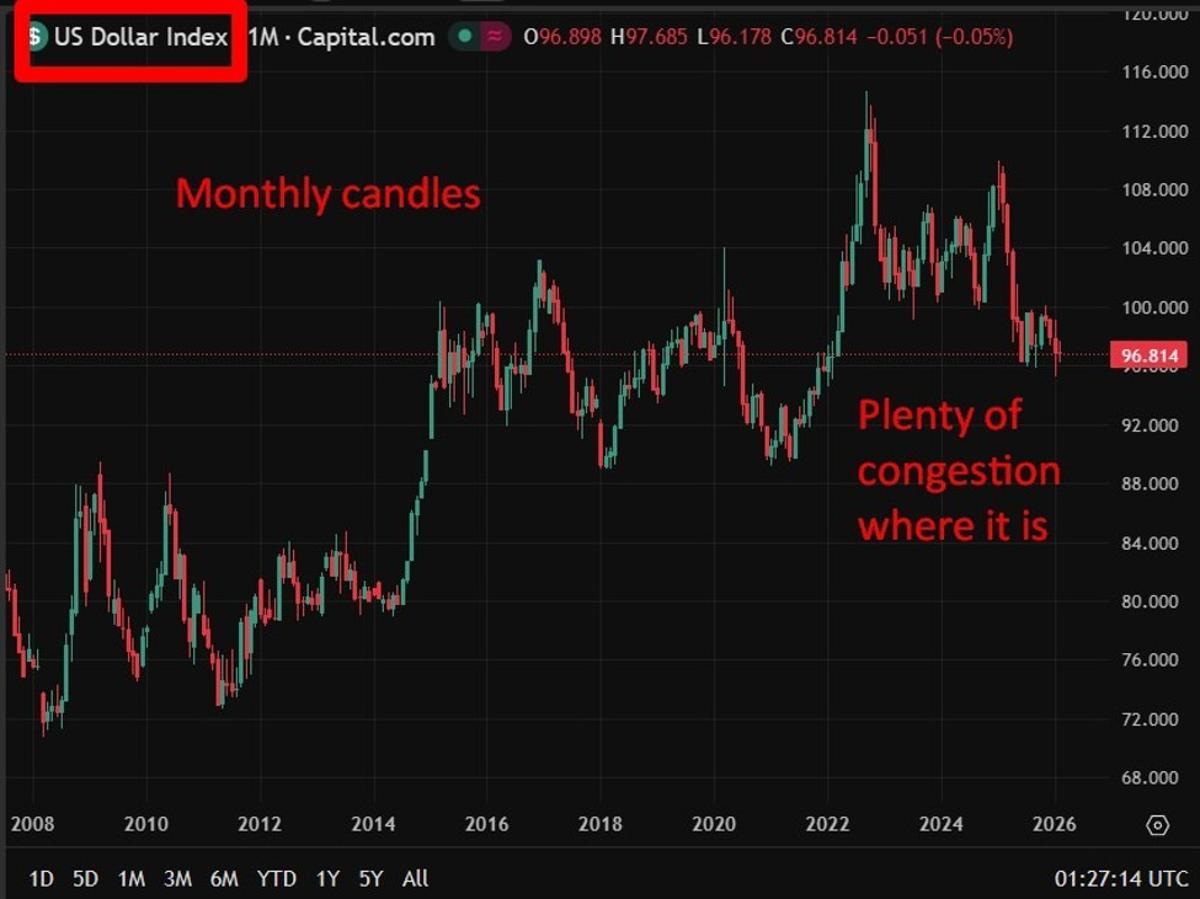
Investor sentiment toward the US dollar has turned decisively bearish, with positioning now at the most underweight level on record in Bank of America’s FX and rates sentiment survey, which dates back to January 2012.

The February survey shows net exposure to the dollar falling to unprecedented lows, with short positioning, effectively bets that the currency will decline, reaching its most extreme level in more than 14 years. Exposure has dropped below the previous trough seen last April, underscoring the scale of the shift in conviction against the greenback.

The positioning reflects a broad consensus that the dollar faces downside risks. Market participants appear to be leaning toward a softer outlook for US growth and inflation, alongside expectations that Federal Reserve policy could ease over time. Notably, concerns about the Fed’s institutional independence have diminished following President Donald Trump’s nomination of Kevin Warsh as the next Fed Chair. However, the easing of those political anxieties has not translated into renewed appetite for US assets or a rebound in dollar demand.

Instead, respondents to the survey cite further deterioration in the US labour market as the primary catalyst that could drive the currency lower. While headline employment data have remained relatively stable, any meaningful softening in hiring or a rise in unemployment could reinforce expectations of rate cuts and widen interest rate differentials against the dollar.

At the same time, such extreme positioning introduces asymmetry. When market consensus becomes heavily one-sided, currency moves can become more volatile, particularly if incoming data or Fed communication challenge prevailing assumptions. A surprise upside inflation print or firmer labour market data could force rapid short-covering.

For now, however, the message from positioning data is clear: investors are aligned for a weaker dollar. Whether that trade extends or reverses will depend largely on the evolution of US macro data and signals from the Federal Reserve in coming months.

This article was written by Eamonn Sheridan at investinglive.com.

Read Original Article
0

Comments

Want to join the conversation?

Loading comments...